

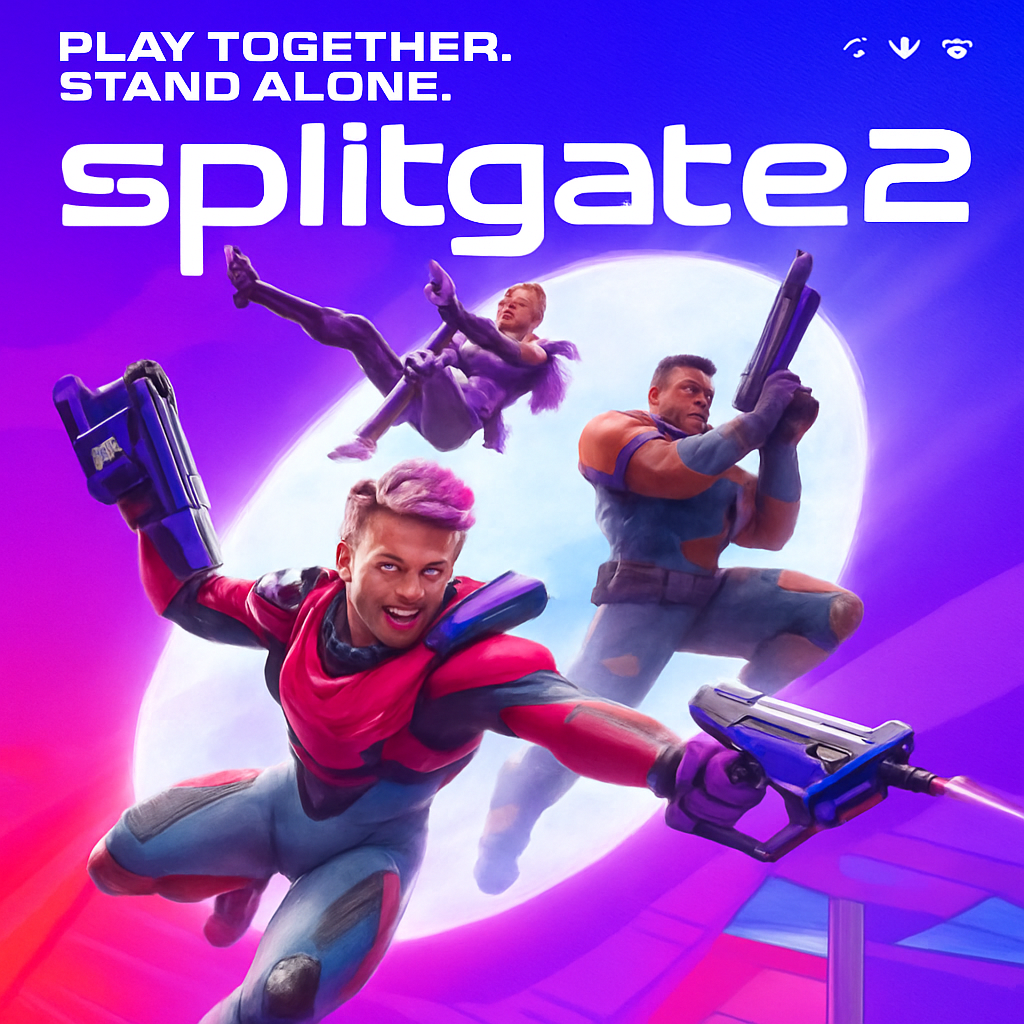
Splitgate 2 – Movement as Strategy, Freedom as Skill, and the Evolution of Portal Combat
Introduction: When Aim Is No Longer Enough
Splitgate 2 enters a crowded FPS landscape with a quiet confidence: it does not try to outgun its competitors—it tries to outthink them. Where many shooters focus on weapon balance, loadouts, or raw mechanical speed, Splitgate 2 builds its identity around spatial intelligence. This is a game that asks not only how well you shoot, but how well you understand space.
As the sequel to a cult hit that blended arena shooting with portal mechanics, Splitgate 2 carries a clear burden: evolve without losing its soul. Rather than overcomplicating its systems, it doubles down on what made the original special—movement freedom—while refining pacing, map design, and competitive clarity. This review explores Splitgate 2 through design intent, player psychology, and how it reshapes the meaning of “skill” in modern shooters.
Quick Info (Overview Box)
Release Year: 2024
Genre: Arena FPS / Sci-Fi Shooter
Platforms: PC, PlayStation, Xbox
Game Modes: Casual, Ranked, Team-Based Modes, Custom Games
Target Audience: FPS players who enjoy movement mastery, vertical combat, and high-skill expression
1. Core Identity: A Shooter About Spatial Thinking
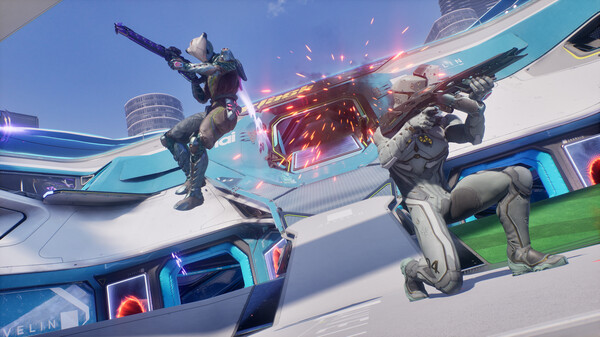
At its core, Splitgate 2 is not about guns—it is about angles. Portals allow players to bend traditional FPS logic by redefining sightlines, escape routes, and engagement timing.
This immediately separates Splitgate 2 from conventional shooters. Map knowledge is no longer static. Every surface becomes a potential doorway, every wall a tactical choice. Victory often goes to the player who sees possibility rather than opportunity.
This makes the game mentally stimulating in a way most shooters are not. You are not just reacting—you are planning two moves ahead.
2. Movement as a Primary Skill, Not a Bonus
Many shooters treat movement as secondary to aim. Splitgate 2 does the opposite. Movement is the skill.
Portals enable instant repositioning, vertical traversal, and unexpected flanks. However, this freedom comes with responsibility. Poor portal placement creates chaos for the user, not the enemy. Effective movement requires foresight, spatial awareness, and restraint.
As a result, Splitgate 2 rewards players who slow down mentally—even as they move faster physically.
3. Gunplay: Familiar, Intentionally Grounded
Weapon mechanics in Splitgate 2 are deliberately conventional. Guns feel responsive and readable, but they are not the focus of innovation.
This is a smart choice. By keeping gunplay familiar, the game ensures that portals enhance combat rather than replace it. Aim still matters. Positioning still matters. Portals simply multiply the impact of those fundamentals.
The result is a balanced relationship between mechanical skill and tactical creativity.
4. Maps Designed for Thinking, Not Camping
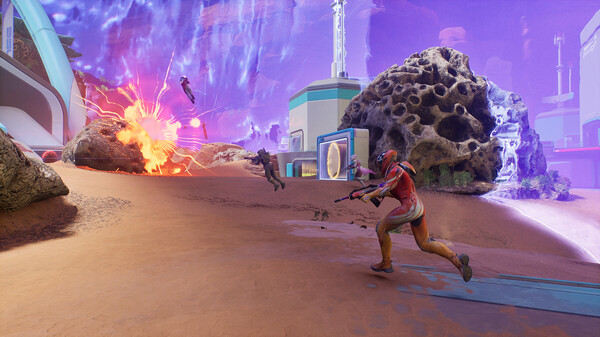
Map design is where Splitgate 2 truly shines. Levels are built with vertical layers, portal-friendly surfaces, and interconnected routes that encourage experimentation.
Unlike traditional arena maps that favor choke points and predictable lanes, Splitgate 2 maps feel porous. Control is temporary. High ground is conditional. Safety is always negotiable.
This design discourages passive play. Standing still is often more dangerous than moving—especially when opponents can appear behind you without warning.
5. Player Psychology: Confidence Versus Overreach
Portals create power—but also temptation. One of the most interesting aspects of Splitgate 2 is how it exposes player psychology.
Confident players push aggressively through portals, sometimes too aggressively. Disciplined players use portals defensively, for information gathering and controlled repositioning.
The game subtly rewards restraint. Overusing portals leads to disorientation and predictable patterns. Mastery comes from knowing when not to portal.
6. Information Control and Visual Awareness
Because portals allow players to see through walls, information becomes a weapon. A well-placed portal is not just a movement tool—it is a surveillance device.
This introduces a unique layer of mind games. Players must constantly ask:
Who can see me?
Where can I be seen from?
What information am I unintentionally giving away?
Splitgate 2 turns visibility into a strategic resource, forcing players to manage exposure as carefully as health or ammo.
7. Teamplay: Chaos Requires Communication
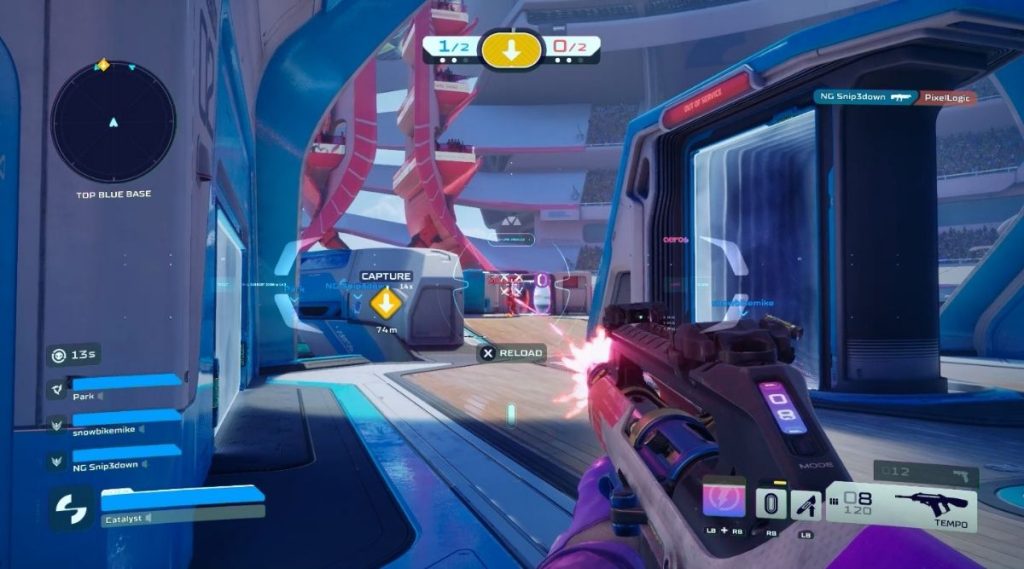
In team modes, Splitgate 2 becomes exponentially more complex. Portals created by teammates affect shared space, sightlines, and movement paths.
Uncoordinated teams often sabotage themselves without realizing it. Poor portal placement can expose allies or disrupt planned pushes. Conversely, coordinated teams can execute multi-angle assaults that feel almost unfair.
This makes communication essential. Splitgate 2 rewards teams that plan together—not just shoot together.
8. Learning Curve: Accessible Entry, Deep Mastery
Despite its complexity, Splitgate 2 is surprisingly approachable. Basic portal usage is intuitive, and early matches are playable without deep knowledge.
However, mastery is another story. Advanced techniques—portal chaining, baiting sightlines, vertical resets—take time to internalize.
This layered learning curve ensures that Splitgate 2 remains engaging long-term without alienating new players.
9. Competitive Integrity and Ranked Play
Ranked modes in Splitgate 2 emphasize consistency over highlight moments. Because portals introduce volatility, disciplined play is rewarded more than flashy aggression.
The competitive environment favors players who understand map flow, manage cooldowns, and support teammates with intelligent positioning.
This makes ranked play mentally demanding but deeply satisfying for players who enjoy thinking under pressure.
10. Longevity: A Game Built on Possibility
The true strength of Splitgate 2 lies in its flexibility. Because portals fundamentally alter how maps function, content longevity does not rely solely on new maps or weapons.
Even familiar environments feel different as player understanding evolves. The game grows alongside its community.
This gives Splitgate 2 a strong foundation for long-term relevance—provided it maintains balance and clarity.
Pros
Unique portal-based movement creates unmatched spatial depth
High skill ceiling without excluding new players
Strong emphasis on positioning, awareness, and creativity
Map design encourages constant engagement and adaptation
Teamplay rewards coordination and communication
Cons
Can feel overwhelming for players who prefer traditional FPS pacing
Poor team coordination can create internal chaos
Visual clutter during heavy portal usage may confuse some players
Requires strong spatial awareness, which may not appeal to all
Conclusion: A Shooter That Rewards Thinking in Motion
Splitgate 2 is not a shooter for players who want comfort. It is a shooter for players who want possibility. It challenges assumptions about space, positioning, and how combat encounters should unfold.
For players who enjoy mastering systems, experimenting with movement, and outthinking opponents rather than simply out-aiming them, Splitgate 2 offers one of the most intellectually engaging FPS experiences available today.
It does not ask how fast you react.
It asks how well you understand the space you’re standing in.