

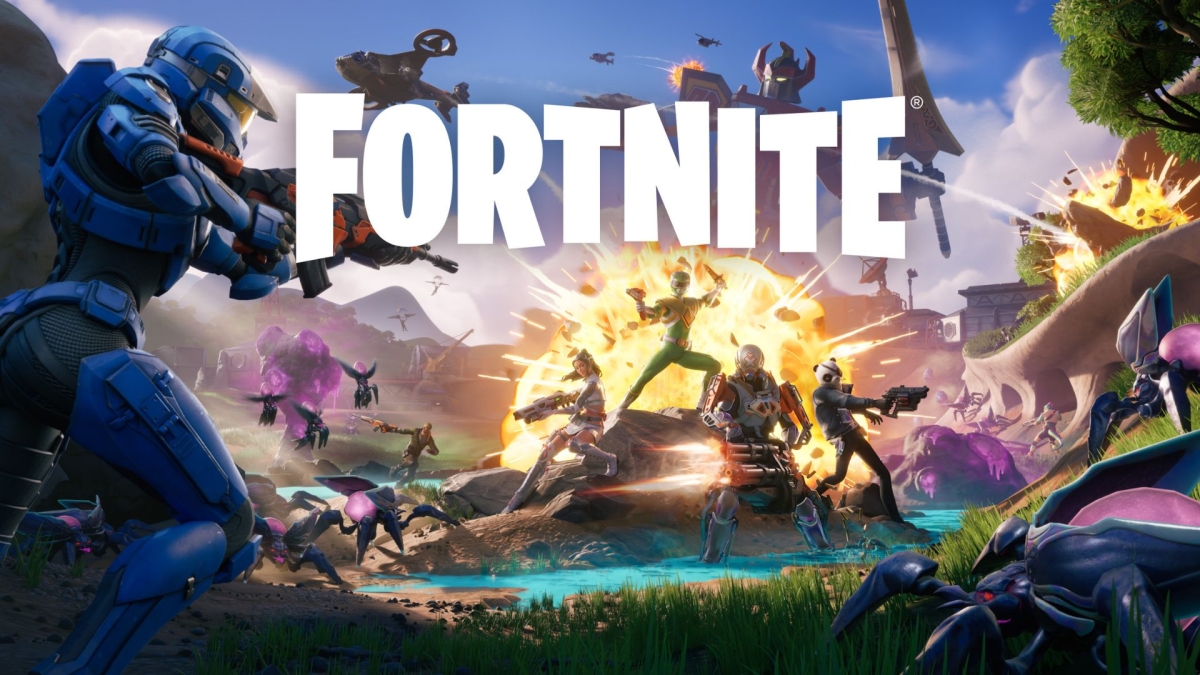
Fortnite – A Platform Disguised as a Game, and the Evolution of Digital Playgrounds
Introduction: More Than a Battle Royale
Fortnite began life as a battle royale, but that description has been outdated for years. Today, Fortnite is better understood as a live digital platform—a constantly evolving ecosystem where competitive play, social interaction, creativity, and pop culture collide. Few games have reshaped player expectations as dramatically, not because of technical realism or mechanical depth alone, but because of how they redefine what a “game” can be.
This review does not treat Fortnite as a single genre experience. Instead, it examines Fortnite as a system of systems: a competitive shooter, a social space, a creative engine, and a cultural interface. Its success is not accidental—it is the result of deliberate design choices that prioritize accessibility, expression, and adaptability over traditional notions of mastery.
Quick Info (Overview Box)
Release Year: 2017
Genre: Battle royale / Live-service platform
Platforms: PC, PlayStation, Xbox, Nintendo Switch, Mobile
Game Modes: Battle Royale, Zero Build, Creative, LEGO Fortnite, Festival, Racing, Community Experiences
Target Audience: Broad audience ranging from casual players and creators to competitive and esports-focused players
1. Core Identity: A Game That Refuses to Stand Still
The defining characteristic of Fortnite is its refusal to stabilize. Maps change. Mechanics rotate. Entire systems appear and disappear. Rather than pursuing balance permanence, Fortnite embraces seasonal disruption as a feature.
This creates a unique relationship between player and game. Knowledge is temporary. Mastery decays. Players are encouraged to re-learn, re-adapt, and re-engage constantly. Unlike static competitive games, Fortnite thrives on novelty over optimization.
This design choice sacrifices long-term mechanical purity in exchange for cultural momentum—and it works.
2. Building: The Most Divisive Innovation
No single mechanic defines Fortnite more than building. The ability to construct walls, ramps, and structures mid-combat transformed battle royale gameplay into something uniquely vertical and expressive.
At high levels, building becomes a mechanical language—fast edits, piece control, and spatial dominance separate elite players from casual ones. It introduces a skill ceiling far beyond traditional shooters.
At the same time, building alienated many players. The mechanical barrier grew steep, and casual enjoyment suffered. Fortnite’s response—introducing Zero Build—was not a retreat, but an evolution. Instead of forcing a single vision, Fortnite split itself to serve multiple player psychologies.
3. Zero Build: Redefining Accessibility Without Dilution
Zero Build fundamentally altered Fortnite’s identity without erasing its core. By removing building, the game refocused on positioning, gunplay, mobility, and awareness.
This mode lowered entry barriers while preserving Fortnite’s pacing, art style, and systems. Importantly, it did not replace the original – it coexisted with it.
This duality is rare in competitive games. Fortnite chose inclusivity over purity, and in doing so expanded its lifespan dramatically.

4. Gunplay: Intentionally Forgiving
Fortnite’s gunplay is often criticized by traditional FPS players for lacking precision. Bloom-based accuracy, generous hitboxes, and exaggerated recoil are not accidents—they are accessibility tools.
The game prioritizes readability and approachability over mechanical realism. Weapons are designed to feel impactful even when aim is imperfect. This lowers frustration and keeps engagements fast and dramatic.
While this limits pure aim expression, it aligns with Fortnite’s broader philosophy: the moment should be fun, even if it isn’t fair by esports standards.
5. Movement and Mobility as Spectacle
Few games offer as many movement options as Fortnite. Sliding, mantling, sprinting, grappling, vehicles, launch pads—mobility is constantly redefined.
This serves two purposes:
It prevents stagnation by constantly reshaping map flow
It transforms traversal into entertainment
Movement in Fortnite is not just functional—it is performative. Players do not simply rotate; they arrive. This reinforces the game’s identity as a spectacle-driven experience.
6. Aesthetics, Tone, and the Absence of Shame
Fortnite’s visual identity is unapologetically playful. Bright colors, exaggerated animations, and cartoon physics remove the emotional weight often associated with violence in games.
This tonal choice allows Fortnite to host wildly different experiences—concerts, memes, competitive tournaments—without tonal dissonance. Nothing feels out of place because the game never pretends to be serious.
This lack of self-seriousness is one of Fortnite’s greatest strengths. It welcomes players who might otherwise feel excluded by hyper-competitive or hyper-realistic games.
7. Fortnite as a Social Space
For many players, Fortnite is not primarily about winning. It is about being somewhere. Friends gather, emote, talk, experiment, and exist together.
Voice chat, emotes, shared experiences, and cross-platform access make Fortnite one of the most effective social games ever built. It functions as a digital hangout as much as a competitive arena.
This social gravity explains why Fortnite remains relevant even when players take breaks from competitive modes.

8. Creative Mode: From Game to Engine
Creative Mode transformed Fortnite from a game into a platform. Players can now design maps, modes, narratives, and experiences that rival standalone games.
This shift decentralizes content creation. Epic Games becomes a curator rather than sole author. The community defines what Fortnite is on any given day.
As a result, Fortnite is no longer bound by genre. It is a container for genres, limited only by imagination and tooling.
9. Monetization and Player Expression
Fortnite’s monetization is almost entirely cosmetic, but it is deeply tied to identity. Skins, emotes, and collaborations are not just purchases—they are self-expression.
Players communicate taste, humor, and affiliation through appearance. This transforms monetization into a social language rather than a power system.
While aggressive in volume, Fortnite’s monetization avoids pay-to-win pitfalls and aligns with its platform identity.
10. Cultural Impact and Design Legacy
Fortnite’s true impact extends beyond its player base. It has influenced how games handle:
Live updates and seasonal content
Crossovers and transmedia events
Cross-platform play
Community-driven creation
It blurred the line between game, social network, and entertainment hub. Many games borrow pieces of Fortnite – but few replicate its coherence.
Pros
Exceptionally accessible across skill levels and platforms
Multiple modes support vastly different playstyles
Strong social and creative ecosystems
Constant evolution keeps experience fresh
Cultural relevance unmatched by most games
Cons
Frequent changes can feel destabilizing
Competitive balance is often temporary
Gunplay lacks precision for FPS purists
Visual clutter can overwhelm new players
Identity may feel diluted to some audiences
Conclusion: Fortnite as a Living Space
Fortnite is not defined by mechanics alone. It is defined by movement—of systems, of culture, of players. It evolves not toward perfection, but toward relevance.
For some, this makes it unfocused. For others, it makes it timeless. Fortnite does not ask players to master a single skill—it invites them to participate in an ongoing experiment.
It is not just a game you play.
It is a place you return to.