

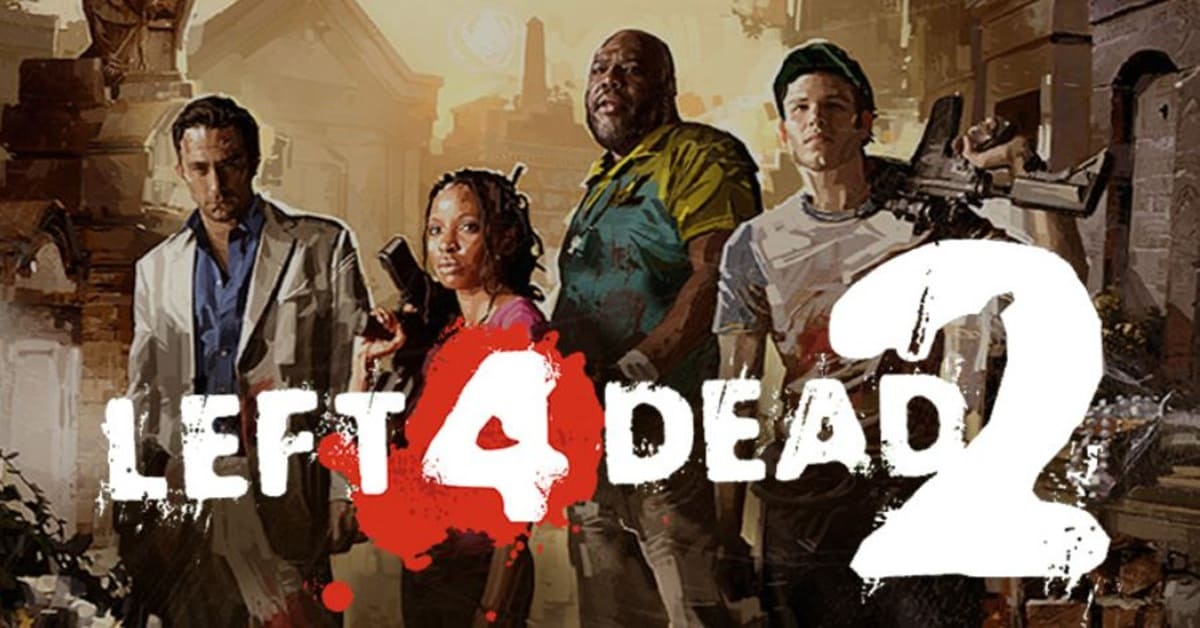
Left 4 Dead 2 – Cooperative Tension, AI Storytelling, and the Science of Replayable Chaos
Introduction: A Game That Never Plays the Same Way Twice
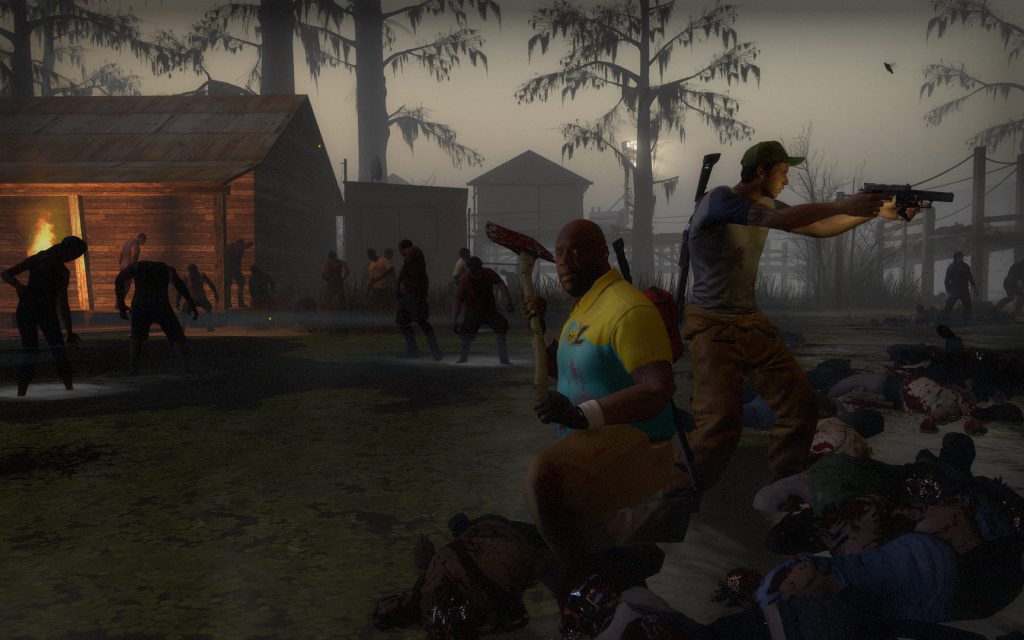
Left 4 Dead 2 is often remembered as a classic cooperative zombie shooter, but that description barely captures why it has endured for so long. Beneath its surface-level simplicity lies one of the most elegant and influential systems in multiplayer game design: a dynamic experience shaped by artificial intelligence, player behavior, and collective stress. It is not a game about zombies—it is a game about coordination under pressure.
Rather than overwhelming players with progression systems, unlock trees, or narrative exposition, Left 4 Dead 2 strips everything down to essentials: four survivors, a hostile environment, and a shared objective. What makes it special is not what the game gives players, but what it demands from them—awareness, trust, adaptability, and restraint. This review examines Left 4 Dead 2 as a systems-driven cooperative experiment, focusing on pacing, psychology, and why its design remains difficult to replicate even today.
Quick Info (Overview Box)
Release Year: 2009
Genre: Cooperative FPS / Survival horror
Platforms: PC, Xbox
Game Modes: Campaign (Co-op), Versus, Survival, Scavenge, Realism
Target Audience: Players who enjoy cooperative gameplay, emergent challenge, replayable systems, and high-pressure team dynamics
1. Core Design Philosophy: Cooperation Is Not Optional
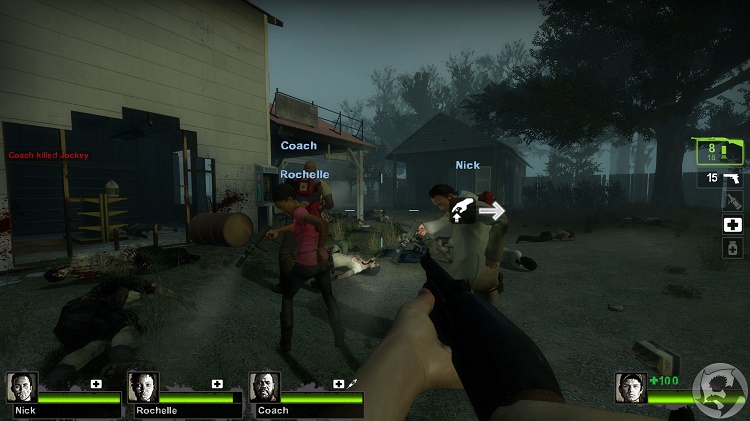
At the heart of Left 4 Dead 2 is a simple but uncompromising rule: you survive together, or you don’t survive at all. There is no lone-wolf fantasy here. Every system is designed to punish isolation and reward proximity.
Health items are limited. Revives require exposure. Special infected are explicitly designed to incapacitate players and force rescues. Even movement speed subtly encourages staying grouped. The game does not merely suggest teamwork—it enforces it.
This philosophy creates immediate social tension. Players are constantly evaluating not just the environment, but each other. Who is lagging behind? Who is hoarding supplies? Who panics under pressure? Left 4 Dead 2 turns cooperation into a behavioral test.
2. The AI Director: Invisible but All-Powerful
One of the most important innovations in Left 4 Dead 2 is the AI Director. This system dynamically controls enemy spawns, item placement, music cues, and pacing based on player performance.
If players are struggling, pressure eases. If they are dominating, the game pushes back harder. Importantly, this adjustment is not purely mechanical—it is psychological. Music swells to signal danger. Silence lingers to build dread.
The result is an experience that feels authored but is never scripted. Players often believe they are playing a handcrafted sequence, when in reality the game is responding to them in real time. This is why Left 4 Dead 2 remains replayable long after players memorize maps.
3. Special Infected: Tools of Team Disruption
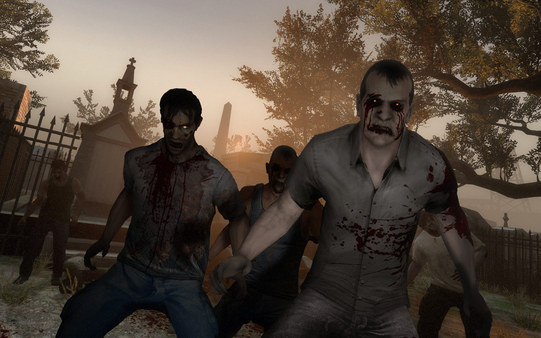
Zombies in Left 4 Dead 2 are not threats because of numbers alone—they are threats because of roles. Special infected are explicitly designed to disrupt teamwork.
Smokers isolate players
Hunters punish slow reactions
Chargers break formations
Spitters deny space
Jockeys create chaos
Each enemy is a lesson in positioning and awareness. Rarely does a single special infected kill a team outright—but combined mistakes cascade quickly.
This design ensures that failure is rarely mysterious. Teams usually know why they lost, even if they couldn’t prevent it. The game teaches through consequence, not tutorials.
4. Weapons as Tools, Not Identity
Unlike modern shooters, Left 4 Dead 2 does not tie player identity to weapons. There are no classes, no builds, and no long-term customization.
Weapons are situational tools. A shotgun excels in tight corridors but struggles at range. Rifles reward precision but demand ammo discipline. Melee weapons provide crowd control but carry risk.
This fluidity keeps focus on teamwork rather than personal expression. You are not “a sniper” or “a tank”—you are a survivor adapting moment to moment. The game actively discourages attachment to loadouts.
5. Maps Built for Pressure, Not Exploration
Campaign maps in Left 4 Dead 2 are linear by design, but they are not simplistic. Routes branch just enough to create uncertainty without encouraging aimless wandering.
Every environment is constructed around stress:
Narrow hallways amplify panic
Open areas increase vulnerability
Safe rooms offer temporary relief
Importantly, the game controls visibility. Corners hide threats. Verticality creates danger zones. The map itself participates in the experience, shaping player movement and decision-making.
This design ensures constant forward momentum. Stopping too long is dangerous. Rushing is worse. The optimal pace exists somewhere in between—and finding it is a team effort.
6. Sound Design as a Gameplay System
Audio in Left 4 Dead 2 is not decorative—it is functional. Each special infected has a unique audio cue that allows attentive players to react before visual confirmation.
Music dynamically escalates during hordes and recedes during calm moments, training players to anticipate danger. Silence becomes as meaningful as noise.
This reliance on sound elevates player awareness and rewards communication. Teams that call out audio cues survive longer. Teams that ignore them are punished quickly.
Few games integrate sound so deeply into moment-to-moment decision-making.
7. Player Psychology: Panic, Blame, and Trust
One of the most fascinating aspects of Left 4 Dead 2 is how it exposes group psychology under stress. Panic spreads quickly. One mistake often leads to rushed decisions, which lead to more mistakes.
The game creates natural moments of blame and forgiveness. Who triggered the alarm? Who ran ahead? Who didn’t cover the rear? These moments can fracture teams—or strengthen them.
Successful groups learn emotional regulation. They communicate calmly, accept mistakes, and adapt. In this way, Left 4 Dead 2 becomes a subtle lesson in collaborative problem-solving.
8. Versus Mode: Asymmetry and Mind Games
Versus mode transforms Left 4 Dead 2 into a competitive psychological game. Players control special infected, coordinating ambushes and timing attacks.
This mode reveals the full depth of the systems. Suddenly, spawn timing, positioning, and patience matter more than reflexes. Teams that rush attacks fail. Teams that wait for mistakes succeed.
Versus also highlights how balanced the design is. Survivors are powerful when coordinated. Infected are deadly when synchronized. Victory comes from understanding the other side’s limitations.
9. Longevity Through Systemic Design
Despite its age, Left 4 Dead 2 remains playable because it does not rely on novelty. Its longevity comes from interaction between systems rather than content volume.
Mods extend its life, but they are not essential. Even in vanilla form, the AI Director ensures variability. No two runs feel identical, even on the same map with the same team.
This makes the game resistant to exhaustion. Players return not to unlock things, but to experience something unpredictable again.
10. Design Trade-Offs and Modern Perspective
Viewed through a modern lens, Left 4 Dead 2 lacks features many players expect. There is minimal progression. No persistent rewards. Limited personalization.
For some, this feels outdated. For others, it feels refreshing. The absence of grind keeps focus on the moment rather than long-term accumulation.
The game asks players to show up, perform, and cooperate—without promising permanent gain. That is a bold design stance in today’s landscape.
Pros
Exceptionally strong cooperative design
AI Director creates endless replayability
Clear audio-visual feedback under pressure
Encourages communication and teamwork
Minimal progression keeps focus on gameplay
Cons
Limited customization and long-term progression
Linear maps may feel restrictive to some players
Solo play is less engaging than co-op
Dated visuals by modern standards
Relies heavily on having a coordinated group
Conclusion: A Masterclass in Cooperative Design
Left 4 Dead 2 endures because it understands something fundamental: cooperation is not about sharing rewards, but sharing risk. The game builds tension not through spectacle, but through systems that demand attention, trust, and adaptation.
For players who value teamwork, emergent challenge, and replayability over progression and customization, Left 4 Dead 2 remains one of the most effective cooperative experiences ever created.
It does not ask how strong you are.
It asks how well you work together.