

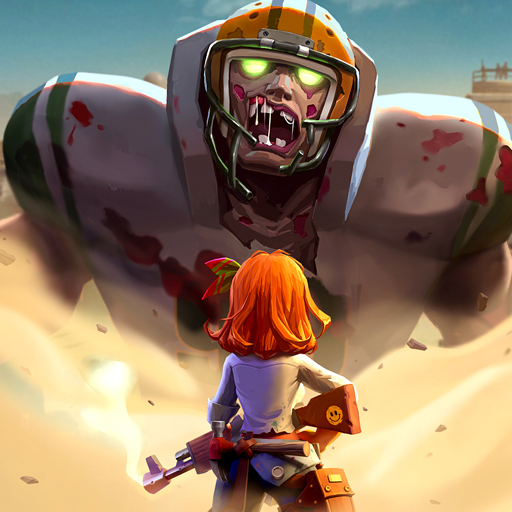
Zombie Waves – Repetition, Power Curves, and the Psychology of Endless Survival
Introduction: A Game About Pressure, Not Progress
Zombie Waves presents itself as a familiar concept: waves of enemies, incremental upgrades, and the promise of becoming stronger over time. On the surface, it looks like another entry in the crowded field of wave-based action games. Yet its real design focus is not mechanical novelty or narrative depth—it is pressure management. Zombie Waves is less about reaching an endpoint and more about how long a player can maintain focus, rhythm, and decision-making in an environment designed to overwhelm gradually.
Rather than offering a curated experience with peaks and finales, Zombie Waves operates as a loop. A loop that tightens, accelerates, and eventually breaks the player. This review explores Zombie Waves as a psychological endurance test, examining how repetition, scaling difficulty, and power fantasies interact to keep players engaged longer than they might expect.
Quick Info (Overview Box)
Release Year: 2023
Genre: Action / Roguelite / Survival
Platforms: PC, Mobile
Game Modes: Single-player survival, challenge modes
Target Audience: Players who enjoy incremental power growth, wave-based combat, and short-to-medium session gameplay
1. Core Design Philosophy: Endless Threat, Finite Control
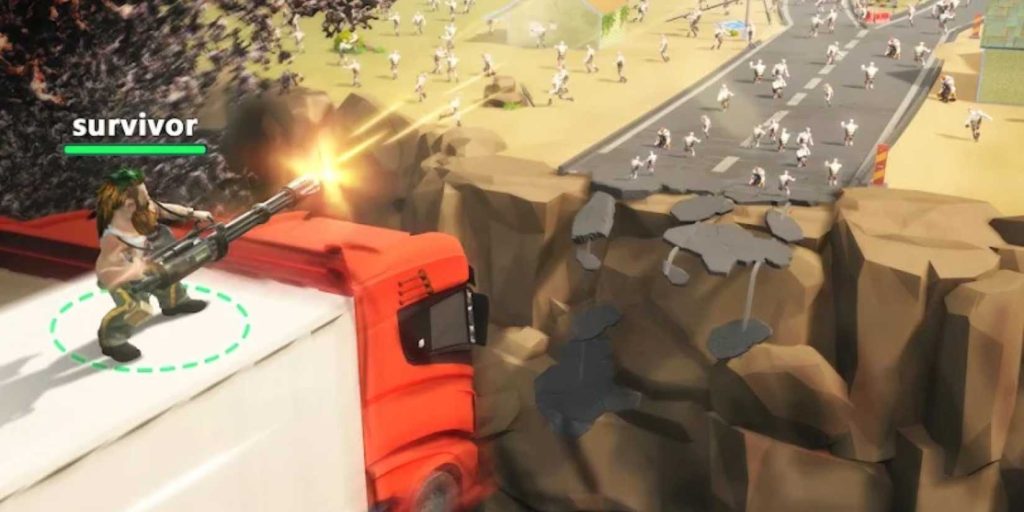
At its heart, Zombie Waves is built on asymmetry. The enemies are endless. The player is not. This imbalance defines the entire experience.
The game does not ask whether you can win—it asks how long you can delay failure. Every system reinforces this inevitability. Enemies spawn faster. Numbers increase. Space shrinks. The player’s power grows, but never enough to feel safe.
This creates a unique tension. Progress feels meaningful in the moment, yet always temporary. Zombie Waves thrives on the knowledge that collapse is coming.
2. The Wave Structure: Predictability as Comfort
Unlike dynamic AI-driven games, Zombie Waves embraces predictability. Enemy types appear in recognizable patterns. Difficulty ramps steadily rather than erratically.
This predictability serves an important psychological function. Players enter a flow state. They learn rhythms. They anticipate pressure points. The game becomes almost meditative—until it isn’t.
When the difficulty finally spikes, it feels earned rather than cheap. The player knows exactly when they fell behind, which reinforces a sense of fairness even in failure.
3. Combat: Efficiency Over Expression
Combat in Zombie Waves is not about flair or creativity. It is about efficiency. Movement, aiming, and positioning are functional rather than expressive.
Weapons are tools, not identities. You use what works, discard what doesn’t, and optimize for crowd control and survival time. The game rewards clean execution and penalizes wasted motion.
This utilitarian design keeps focus on decision-making rather than mechanics. Zombie Waves is less about how you fight, and more about when and where you fight.

4. Power Scaling and the Illusion of Dominance
One of Zombie Waves’ strongest hooks is its power curve. Early upgrades feel dramatic. Damage spikes. Abilities stack. For a moment, the player feels unstoppable.
This feeling is intentional—and temporary. As the waves intensify, the same upgrades feel insufficient. The game carefully engineers this emotional arc: empowerment followed by erosion.
This creates a compelling loop. Players chase the high of dominance again, restarting runs in pursuit of slightly better efficiency or smarter upgrade paths.
5. Upgrade Choices Under Time Pressure
Upgrades in Zombie Waves are rarely complex, but they are meaningful. Small percentage increases compound quickly. Choosing between survivability and damage becomes increasingly stressful.
Importantly, upgrades are often presented under pressure. The game does not pause the world for contemplation. Decisions are made quickly, sometimes imperfectly.
This reinforces tension. Mistakes are not catastrophic immediately—but they linger. Players feel responsibility for their eventual failure long before it happens.
6. Enemy Design: Numbers Over Personality
Zombies in Zombie Waves are not individually memorable. They are not meant to be. Their threat comes from volume, speed, and persistence rather than unique behavior.
Occasional elite enemies break the monotony, forcing repositioning or focus fire. These moments punctuate the loop without disrupting it.
By avoiding over-designed enemies, Zombie Waves keeps attention on macro survival rather than micro reactions. The enemy horde functions as a force of nature, not a cast of characters.
7. Space, Movement, and Confinement
Maps in Zombie Waves often feel intentionally restrictive. Open areas become dangerous as numbers rise. Tight spaces become traps.
The shrinking sense of safety is one of the game’s most effective tools. Players feel space disappearing even if the map itself does not change.
Movement becomes less about exploration and more about micro-adjustments. Small positioning errors compound under pressure, reinforcing the game’s focus on discipline.
8. Player Psychology: Chasing the “Better Run”
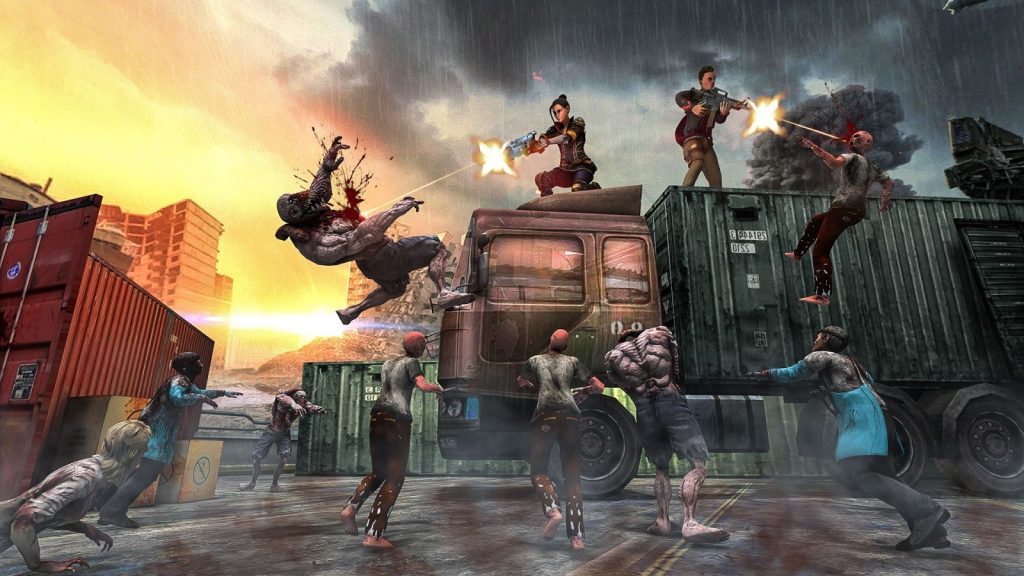
Zombie Waves excels at fostering a specific mindset: I can do better next time. Failure rarely feels random. Players can usually identify what went wrong.
This clarity fuels replayability. Each run becomes a data point. Each death feels like feedback rather than punishment.
The game does not motivate through narrative or rewards—it motivates through self-competition. Players are chasing their own previous performance, not an external goal.
9. Session Design and Accessibility
Zombie Waves is designed for flexible play. Runs can be short or extended. Progress is compartmentalized rather than sprawling.
This makes it well-suited for players who want intensity without commitment. You can engage deeply for twenty minutes or grind longer sessions without narrative pressure.
However, this structure also limits emotional attachment. The game values engagement over immersion.
10. Longevity and Design Limits
The same systems that make Zombie Waves compelling also define its ceiling. Repetition is intentional—but it can become exhaustion if novelty is not introduced.
Without significant variation in environments, enemies, or mechanics, long-term engagement relies entirely on the player’s tolerance for repetition.
Zombie Waves succeeds best as a focused experience rather than a forever game. It knows what it is—and does not pretend otherwise.
Pros
Strong, satisfying power-scaling loop
Clear feedback encourages self-improvement
Predictable difficulty creates fair challenge
Easy to pick up, hard to optimize
Well-suited for short or focused sessions
Cons
Limited enemy and environmental variety
Repetition may lead to fatigue over time
Minimal narrative or thematic depth
Combat lacks expressive complexity
Long-term longevity depends on player mindset
Conclusion: Survival as a Mental Exercise
Zombie Waves is not about heroism, story, or spectacle. It is about endurance. It challenges players to remain calm, efficient, and adaptable as pressure mounts relentlessly.
For players who enjoy iterative improvement, incremental power systems, and the quiet satisfaction of lasting just a little longer than before, Zombie Waves offers a focused and honest experience.
It does not promise victory.
It promises a fair fight against inevitability.