
Grand Theft Auto V – Systems, Satire, and the Most Durable Open World Ever Built
Introduction: More Than a Game, a Living Simulation
Grand Theft Auto V is often described as an open-world crime game, but that label undersells what it truly is. Released over a decade ago and still actively played today, Grand Theft Auto V has evolved into a layered simulation of modern society, systems-driven gameplay, and player freedom at an unprecedented scale. It is not just about chaos or crime—it is about choice, structure, satire, and how players interact with complex systems.
Rather than reviewing Grand Theft Auto V as a checklist of features, this article takes a deeper look at why it has endured: its narrative architecture, mechanical density, emergent gameplay, and cultural relevance. This is a game that survives not because it constantly reinvents itself, but because its foundation was built unusually strong.
Quick Info (Overview Box)
Release Year: 2013
Genre: Open-world action-adventure
Platforms: PS3, PS4, PS5, Xbox 360, Xbox One, Xbox Series X/S, PC
Game Modes: Single-player, Online multiplayer
Target Audience: Mature players who enjoy narrative-driven open worlds, systemic gameplay, and satire
1. The Three-Protagonist Structure: Design, Not Gimmick
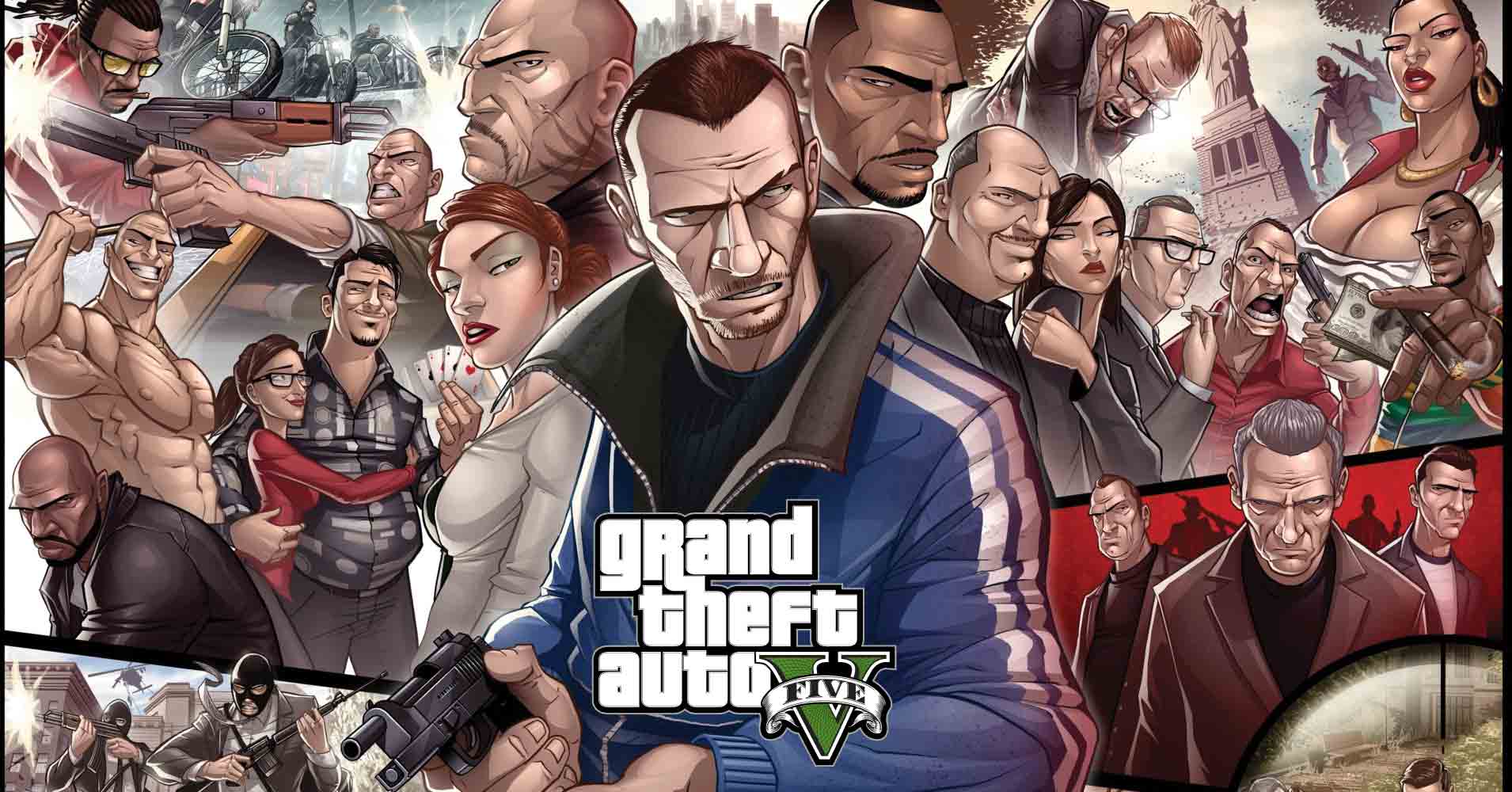
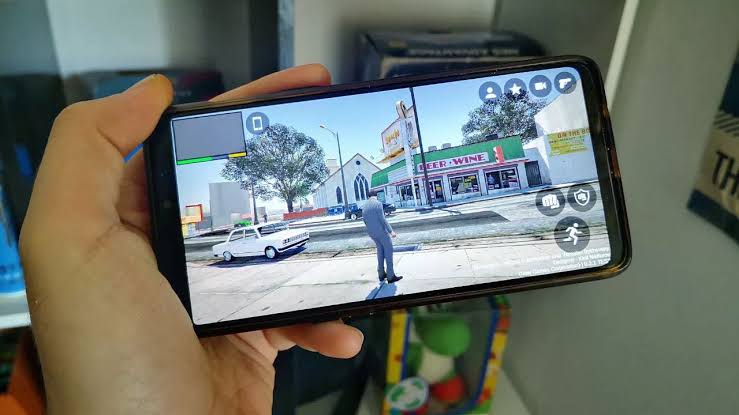
One of the most defining aspects of Grand Theft Auto V is its three-protagonist narrative. Michael, Franklin, and Trevor are not just characters—they are lenses through which the game explores different layers of American identity.
Michael represents disillusioned wealth and suburban decay, Franklin embodies ambition and systemic limitation, and Trevor is chaos without restraint. This structure allows Grand Theft Auto V to explore multiple tones simultaneously: satire, tragedy, comedy, and nihilism. Importantly, this is not done through cutscenes alone. Missions, side activities, and even ambient dialogue reinforce each character’s worldview.
From a design perspective, switching characters mid-mission was revolutionary at launch and remains impressive today. It creates pacing variety and reinforces the idea that this world does not revolve around a single hero.
2. Los Santos as a Systems Playground
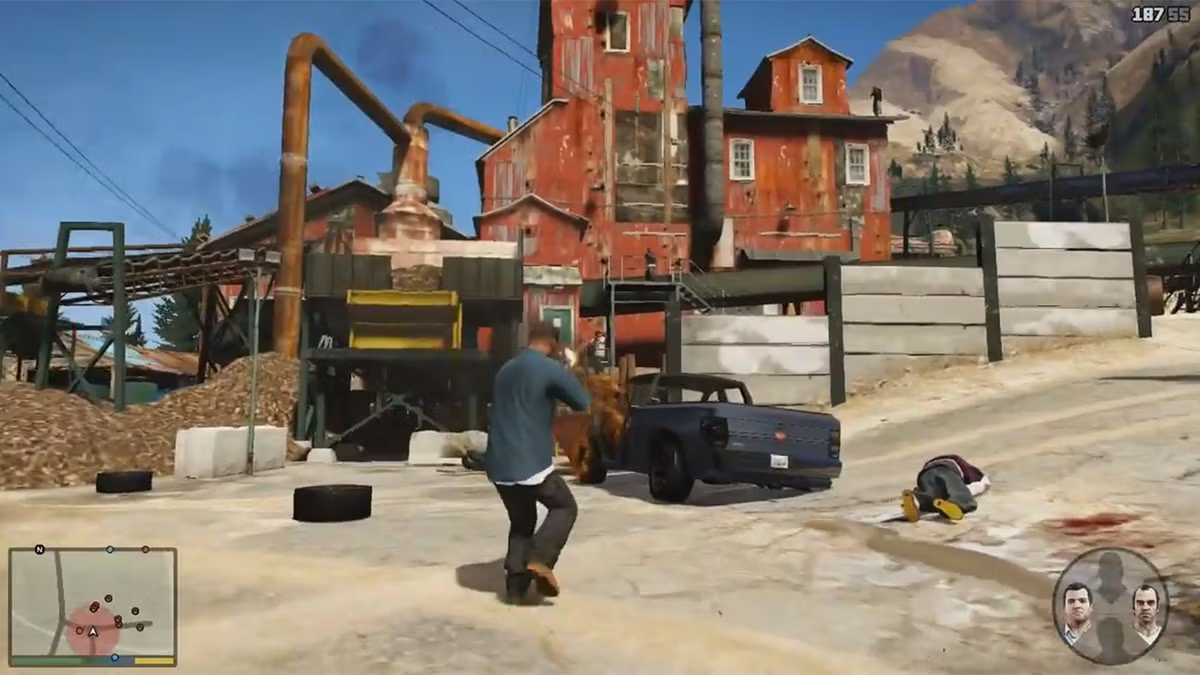
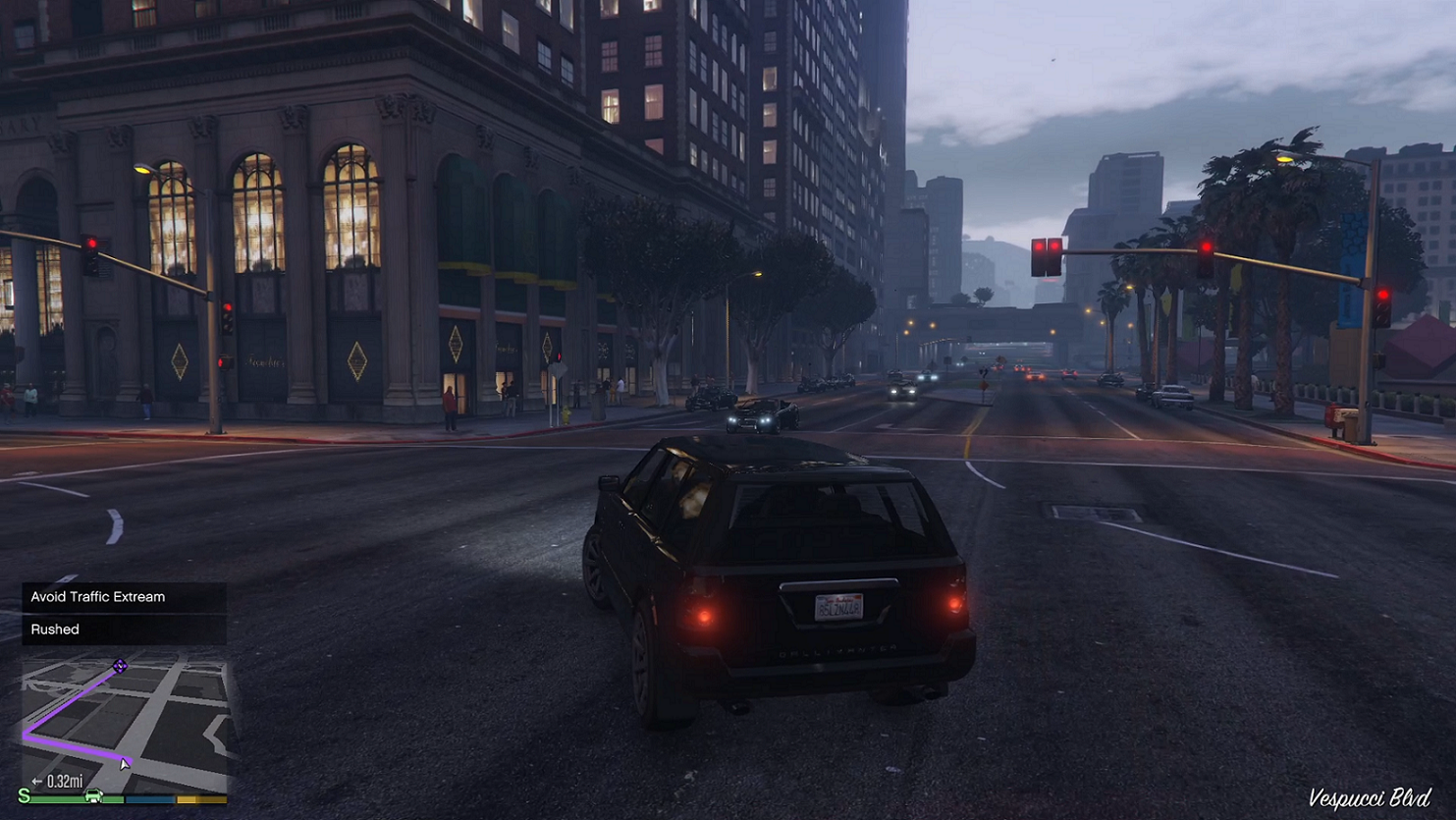
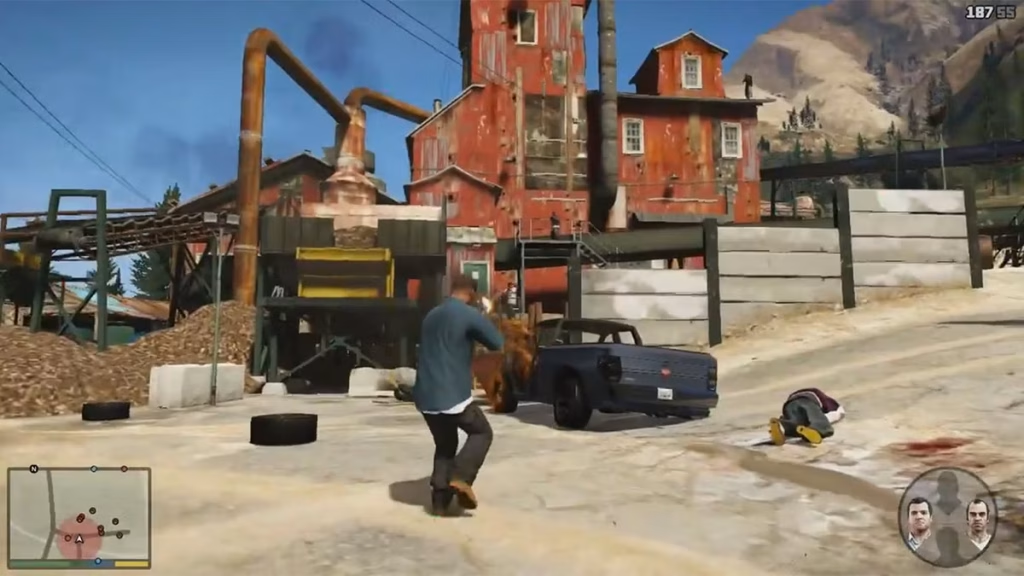
Los Santos is not merely a large map—it is a tightly interwoven system. Traffic density, pedestrian behavior, police response escalation, and economic loops all interact in ways that feel organic rather than scripted.
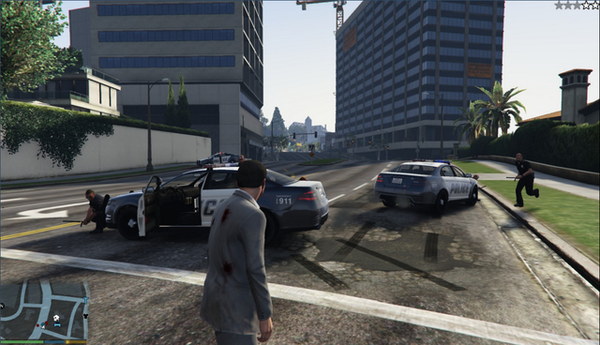
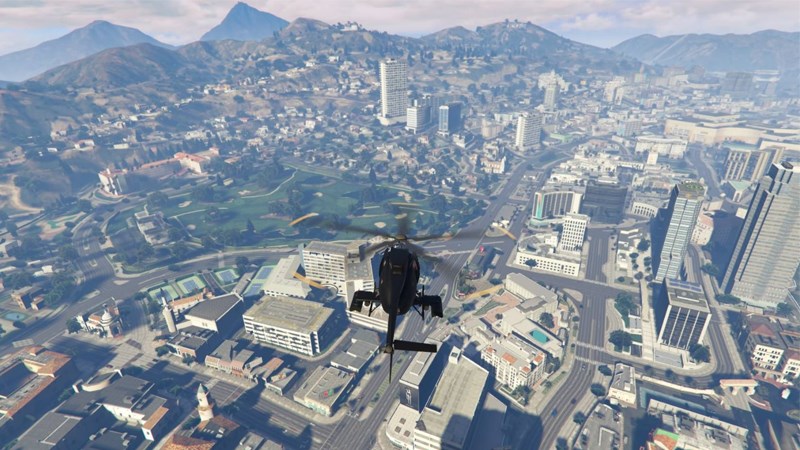
What makes Grand Theft Auto V special is that most of its fun emerges from unintended interactions. A minor traffic accident can escalate into a police chase, which then pulls in helicopters, SWAT units, and bystanders. None of this requires a mission marker.
The city feels alive because it reacts, not because it is detailed for its own sake. Rockstar prioritized behavioral density over raw scale, and that choice is one reason Grand Theft Auto V still feels relevant compared to newer but emptier open worlds.
3. Mission Design: Controlled Chaos
Critics often point out that Grand Theft Auto V missions can be restrictive, and that criticism is valid—but incomplete. Missions are linear by design because they function as set pieces that contrast with free-roaming chaos.
Heists, in particular, showcase Rockstar’s mastery of pacing. Planning phases, execution, character switching, and aftermath are all carefully choreographed. Yet within that structure, player agency still exists through crew selection, approach choices, and performance quality.
This tension between freedom and control is intentional. Grand Theft Auto V is not a sandbox everywhere—it is a sandbox between moments of cinematic precision.
4. Combat and Movement: Serviceable, Not the Star
Mechanically, gunplay and movement in Grand Theft Auto V are competent but not genre-leading. Cover shooting works, driving feels weighty, and melee combat exists largely for flavor.
However, this is a deliberate compromise. Rockstar does not want combat mastery to overshadow context. Combat serves narrative escalation, not competitive balance. The satisfaction comes from situational absurdity, not mechanical perfection.
This design choice explains why Grand Theft Auto V thrives despite never having the best shooting mechanics in its class.
5. Satire as Worldbuilding
Few games use satire as aggressively—or as consistently—as Grand Theft Auto V. Billboards, radio ads, social media parodies, and NPC dialogue collectively create a hyper-exaggerated mirror of modern culture.
What’s important is that satire is not confined to writing. Systems reinforce themes. Capitalism, surveillance, celebrity obsession, and institutional corruption are all embedded into gameplay loops.
The game does not tell you society is broken—it lets you operate within that broken system.
6. Audio Design and Radio as Narrative Tools
The radio stations in Grand Theft Auto V deserve special mention. They are not background noise—they are cultural commentary. Music choices define tone, while talk shows deepen satire and world consistency.
Driving while listening to the radio creates a uniquely immersive rhythm. It is one of the few games where downtime feels intentional and meaningful.
This audio layering is subtle but critical to why Grand Theft Auto V feels cohesive rather than overwhelming.

7. GTA Online: A Parallel Evolution
While single-player tells a complete story, Grand Theft Auto V’s longevity is largely fueled by GTA Online. Importantly, Online is not just an add-on—it is a reinterpretation of the same systems for player-driven narratives.
GTA Online shifts focus from satire to social experimentation. Griefing, cooperation, emergent economies, and absurd escalation all coexist. It is messy, often unbalanced, but undeniably fascinating.
From a design standpoint, it demonstrates how flexible the core framework of Grand Theft Auto V truly is.
8. Player Freedom vs Moral Distance
One of the most debated aspects of Grand Theft Auto V is its moral detachment. The game allows extreme behavior without consequence beyond mechanical response.
Rather than endorsing player actions, Grand Theft Auto V maintains emotional distance. Characters are flawed, outcomes are often hollow, and success rarely feels heroic.
This neutrality is uncomfortable for some players—but it is also what gives the game its sharp edge.
9. Technical Longevity and Re-Releases
Few games have survived three console generations without losing relevance. Grand Theft Auto V did so because its core design scales well with hardware improvements.
Higher resolutions, better loading times, and online updates have extended its lifespan without fundamentally changing its identity. That stability is rare.
It is a testament to how future-proof the original design was.
10. Cultural Impact and Legacy
Beyond sales numbers, Grand Theft Auto V influenced how developers think about open-world density, narrative integration, and systemic gameplay.
Many modern open-world games borrow its structure—but few replicate its confidence. Rockstar built a world that trusts players to create their own meaning within it.
That trust is the game’s greatest strength.
Pros
-
Exceptionally dense and reactive open world
-
Three-protagonist structure adds narrative depth
-
Strong satire embedded into systems, not just writing
-
Emergent gameplay remains unmatched
-
Still technically relevant after multiple generations
Cons
-
Mission structure can feel overly restrictive
-
Combat mechanics are functional but dated
-
GTA Online can be overwhelming for new players
-
Tone may feel cynical or emotionally distant to some
Conclusion: Why Grand Theft Auto V Still Matters
Grand Theft Auto V endures not because it constantly reinvents itself, but because it was designed with rare confidence and clarity. Its systems interlock, its satire has intent, and its world reacts rather than performs.
For players who value freedom, observation, and systemic depth over mechanical purity, Grand Theft Auto V remains one of the most important games ever made—not just to play, but to study.