
SOS OPS! – Bureaucratic Panic, Cooperative Failure, and the Comedy of Emergency Management
Introduction: When Helping Makes Everything Worse
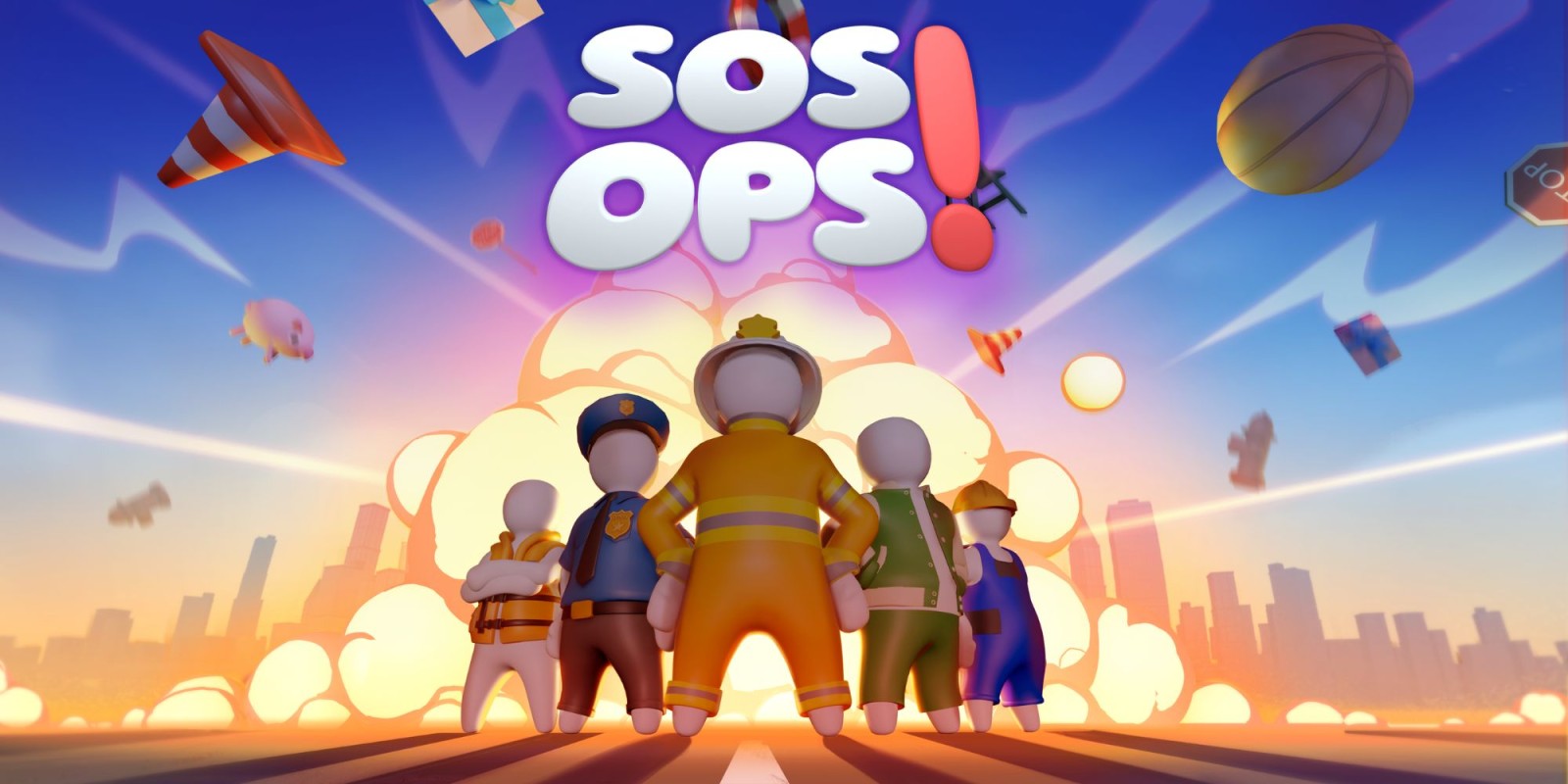
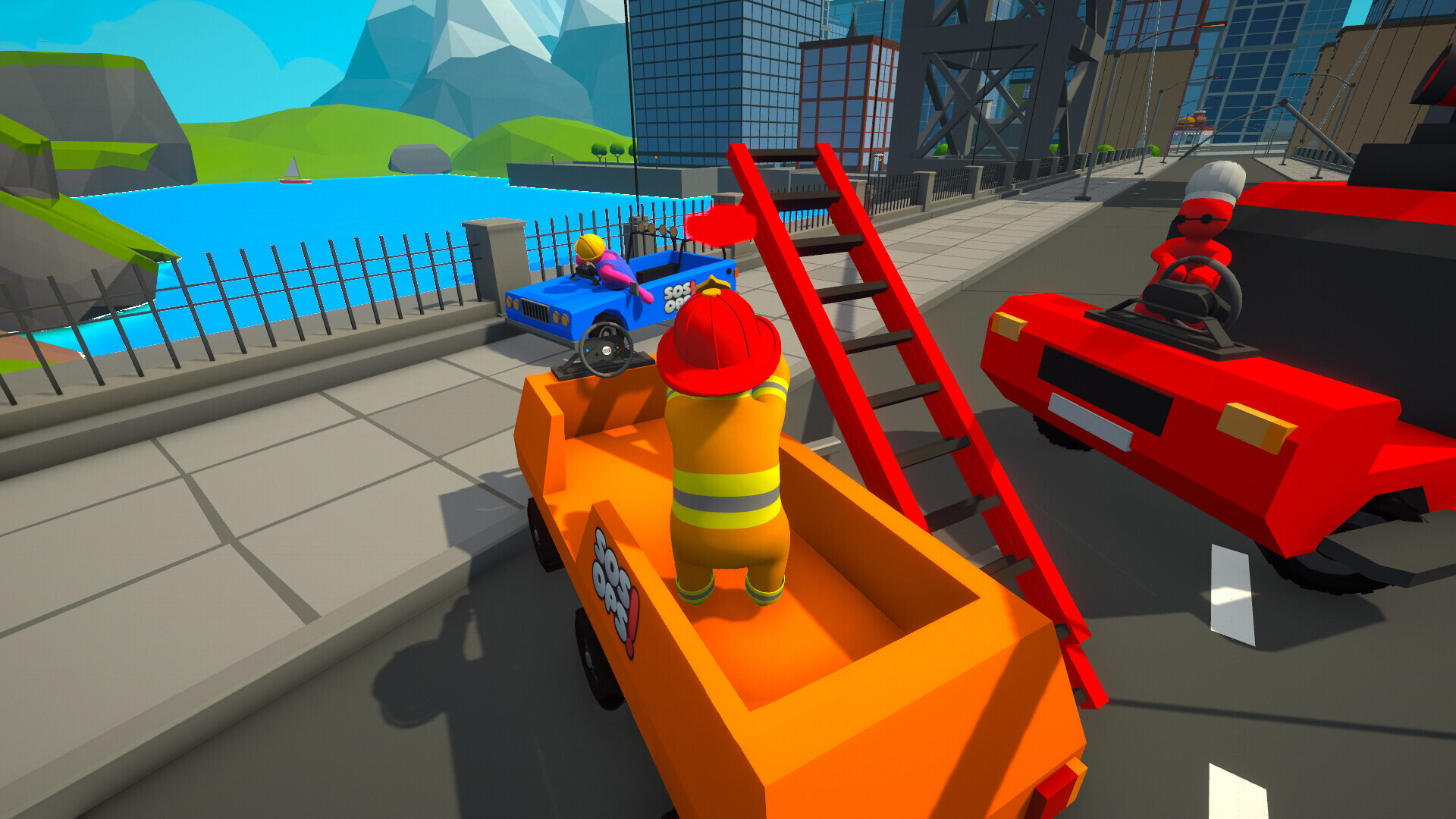
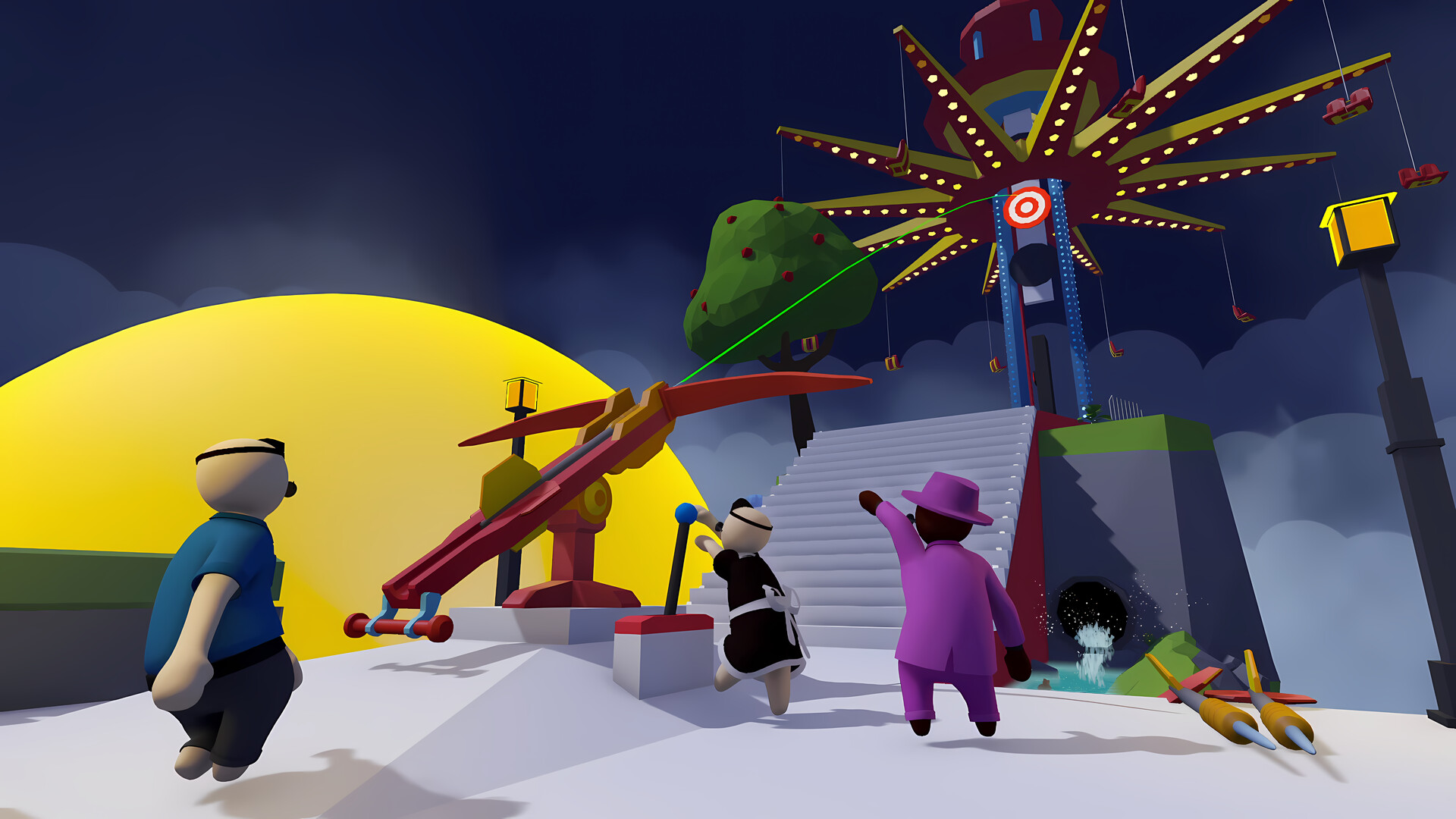
SOS OPS! does not present heroism as competence. It presents it as confusion under pressure. Rather than casting players as skilled responders calmly resolving crises, SOS OPS! frames emergency response as a fragile chain of communication, half-understood procedures, and human error. The result is not traditional challenge, but controlled collapse—where intentions are good, execution is messy, and outcomes are rarely clean.
At its surface, SOS OPS! looks like a lighthearted cooperative game about saving people. Underneath, it is a surprisingly sharp simulation of coordination failure. The game thrives on miscommunication, overlapping responsibilities, and the gap between knowing what to do and actually doing it together. This review examines SOS OPS! as a cooperative systems game, focusing on how it transforms stress, bureaucracy, and urgency into comedy, tension, and emergent storytelling.
Quick Info (Overview Box)
Release Year: 2024
Genre: Cooperative simulation / Party game
Platforms: PC
Game Modes: Online co-op, Local co-op
Target Audience: Players who enjoy cooperative chaos, communication-heavy games, party-style experiences, and humor driven by failure
1. Core Design Philosophy: Competence Is Optional
The defining philosophy of SOS OPS! is that success is never guaranteed by knowledge alone. Players may understand the procedures, the tools, and the objectives—but execution collapses under time pressure and social friction.
The game intentionally overloads players with tasks that must be coordinated. One player rarely has full control over a solution. Progress depends on synchronized action, correct sequencing, and shared awareness.
This philosophy rejects the fantasy of the perfect responder. Instead, it highlights how systems fail not because individuals are stupid, but because coordination is hard.
2. Emergency Scenarios as Systemic Stress Tests
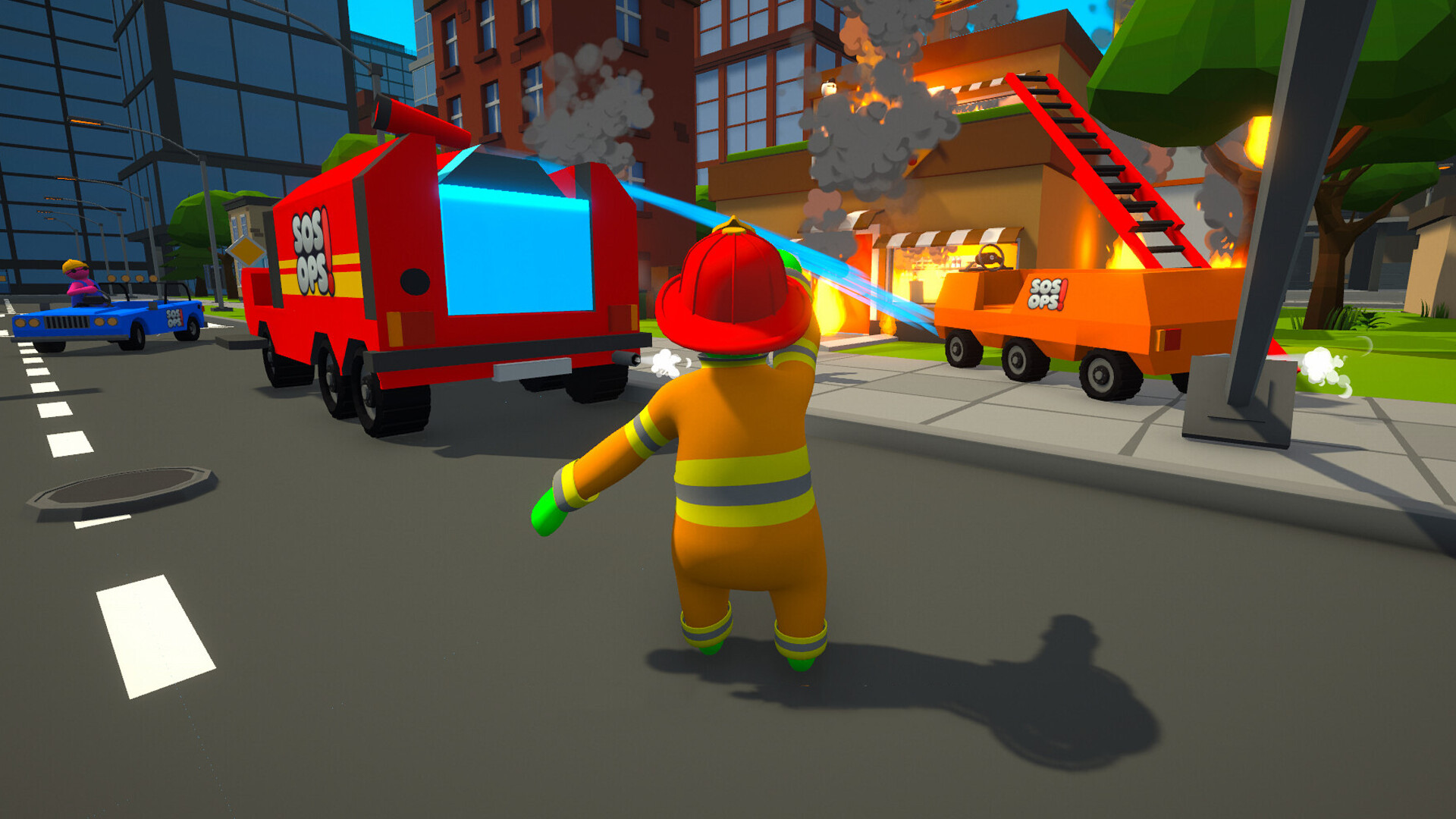
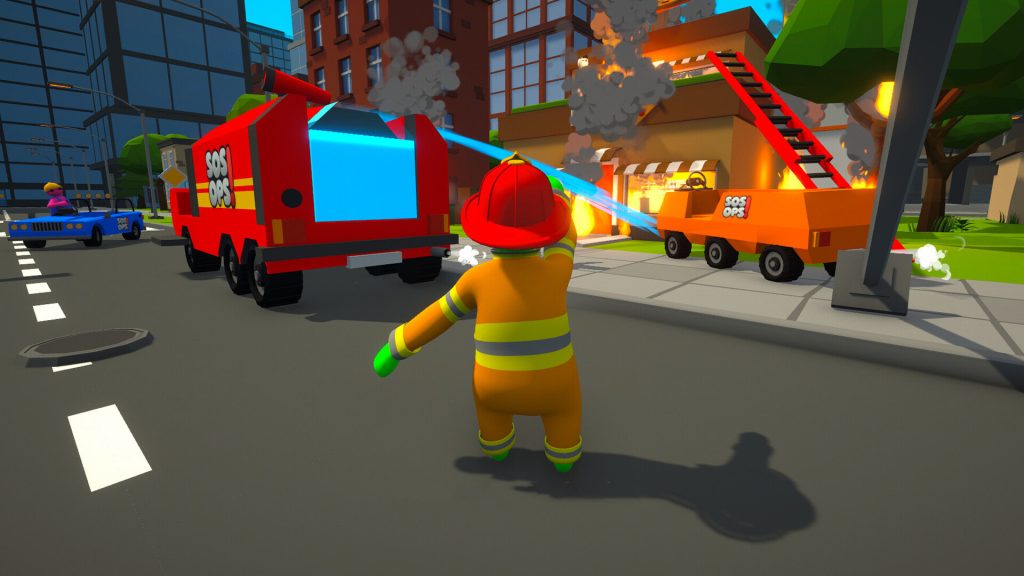
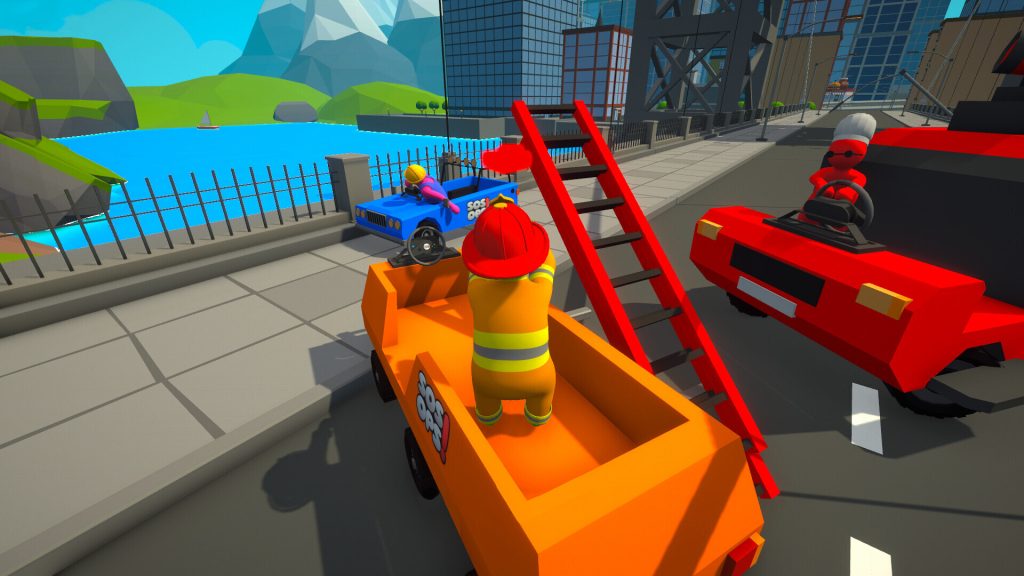
Each scenario in SOS OPS! functions as a stress test for group coordination. Fires spread, civilians panic, equipment malfunctions, and information arrives incomplete.
Importantly, the game does not escalate difficulty through enemy strength or mechanical complexity. It escalates through concurrency. Multiple things go wrong at once, and players must decide what to ignore.
This design forces prioritization. Saving everyone is often impossible. The group must choose which failure is acceptable, reinforcing the theme that emergency response is about damage control, not perfection.
3. Roles Without Rigid Authority
SOS OPS! avoids rigid class systems. Players may gravitate toward certain responsibilities—communication, tool handling, navigation—but these roles are informal and fluid.
This lack of hierarchy is intentional. Without a clear leader, decision-making becomes a negotiation. Conflicting instructions emerge. Redundancy wastes time. Silence causes inaction.
The absence of authority creates space for social dynamics to dominate. Groups that naturally self-organize perform better—not because the game enforces structure, but because chaos demands it.
4. Communication as the Primary Mechanic
More than movement or interaction, communication is the core mechanic of SOS OPS!. Voice chat is not optional—it is foundational.
Players must relay information quickly and accurately. Locations, statuses, and priorities must be communicated under pressure. Miscommunication has immediate consequences.
Crucially, the game does not penalize silence directly. It lets silence become dangerous organically. When no one speaks, tasks stall, mistakes multiply, and failure accelerates.
The game teaches communication not through tutorials, but through lived embarrassment.
5. Time Pressure Without Precision
Time pressure in SOS OPS! is constant but imprecise. There are timers, but they are not exacting instruments. Emergencies escalate unpredictably.
This uncertainty prevents optimization. Players cannot rely on memorized sequences or perfect execution. They must react to changing conditions.
The result is tension that feels human rather than mechanical. Stress comes not from counting seconds, but from realizing too late that attention was misplaced.
6. Tools, Interfaces, and Cognitive Load
Tools in SOS OPS! are intentionally awkward. Interfaces require attention. Actions take time. Mistakes are easy to make.
This design increases cognitive load. Players must think not just about what to do, but how to do it without interfering with teammates.
The game resists streamlining. It wants friction. That friction is where comedy and tension emerge.
By making simple actions slightly inconvenient, SOS OPS! ensures that cooperation remains essential rather than optional.
7. Failure as Entertainment
Failure in SOS OPS! is not a punishment—it is the primary source of entertainment. Scenarios rarely end cleanly. Something always goes wrong.
Importantly, failure is rarely total. The game measures degrees of success, allowing players to laugh at partial victories and catastrophic oversights.
This framing changes player psychology. Instead of chasing perfection, players embrace improvisation. The goal becomes survival with dignity—or at least with a good story.
8. Player Psychology: Panic, Blame, and Forgiveness
SOS OPS! excels at exposing social dynamics under stress. Panic causes players to shout. Blame emerges quickly. Apologies follow.
These moments are not scripted—they are emergent. The game creates conditions where human behavior becomes the content.
Interestingly, the game also encourages forgiveness. Because failure is expected, players recover emotionally quickly. Laughter replaces frustration.
This emotional resilience is critical. Without it, the game would be exhausting. With it, the chaos becomes bonding.
9. Pacing and Session Design
Sessions in SOS OPS! are short and intense. Scenarios escalate quickly and resolve decisively.
This brevity supports replayability. Groups can attempt multiple runs without fatigue. Each attempt feels distinct due to human variation rather than system changes.
The pacing also suits mixed-skill groups. New players learn through observation and participation rather than instruction.
10. Humor Through Systems, Not Jokes
SOS OPS! does not rely on scripted jokes or exaggerated characters. Its humor emerges from systems colliding.
Two players reaching for the same tool. Instructions given too late. A solution implemented perfectly—one step too early.
These moments feel authentic because they mirror real-world coordination failures. The humor is situational, not authored.
This gives the game longevity. Jokes do not wear out when they are generated by people rather than scripts.
11. Cooperative Design Without Toxicity
Unlike competitive games, SOS OPS! minimizes toxicity by aligning players against the system rather than each other.
There is no leaderboard glorifying individual performance. Success is shared. Failure is collective.
This reduces ego pressure. Players are less defensive about mistakes. Blame dissipates quickly because the system itself is the antagonist.
The result is a cooperative environment that feels welcoming rather than judgmental.
12. Limitations and Design Trade-Offs
SOS OPS!’s reliance on communication makes it unsuitable for solo play or silent groups. Without active participation, the experience collapses.
Mechanical depth is intentionally limited. Players seeking mastery through optimization may find the game shallow.
Scenario variety, while effective, may feel repetitive over long sessions. The game relies heavily on social variation to stay fresh.
These trade-offs are deliberate. SOS OPS! is designed as a social experience first, a game second.
Pros
Strong emphasis on communication and cooperation
Emergent humor driven by player behavior
Forgiving failure structure encourages experimentation
Short, intense sessions with high replayability
Accessible mechanics suitable for mixed-skill groups
Cons
Requires active communication to function
Limited mechanical depth
Less engaging for solo players
Scenario variety depends on group dynamics
Can feel overwhelming for very quiet players
Conclusion: Chaos With Good Intentions
SOS OPS! succeeds because it understands something fundamental about cooperation: people fail together before they succeed together. It does not ask players to be perfect responders. It asks them to try, panic, adapt, and laugh.
For groups seeking a cooperative experience built on communication, improvisation, and shared failure, SOS OPS! offers a uniquely human kind of fun. It transforms emergencies into comedy and mistakes into memories.
You are not heroes here.
You are people doing your best
with too little time,
too much responsibility,
and just enough trust to try again.