
Crossout – Engineering Chaos, Player Identity, and the Art of Building Your Own Destruction
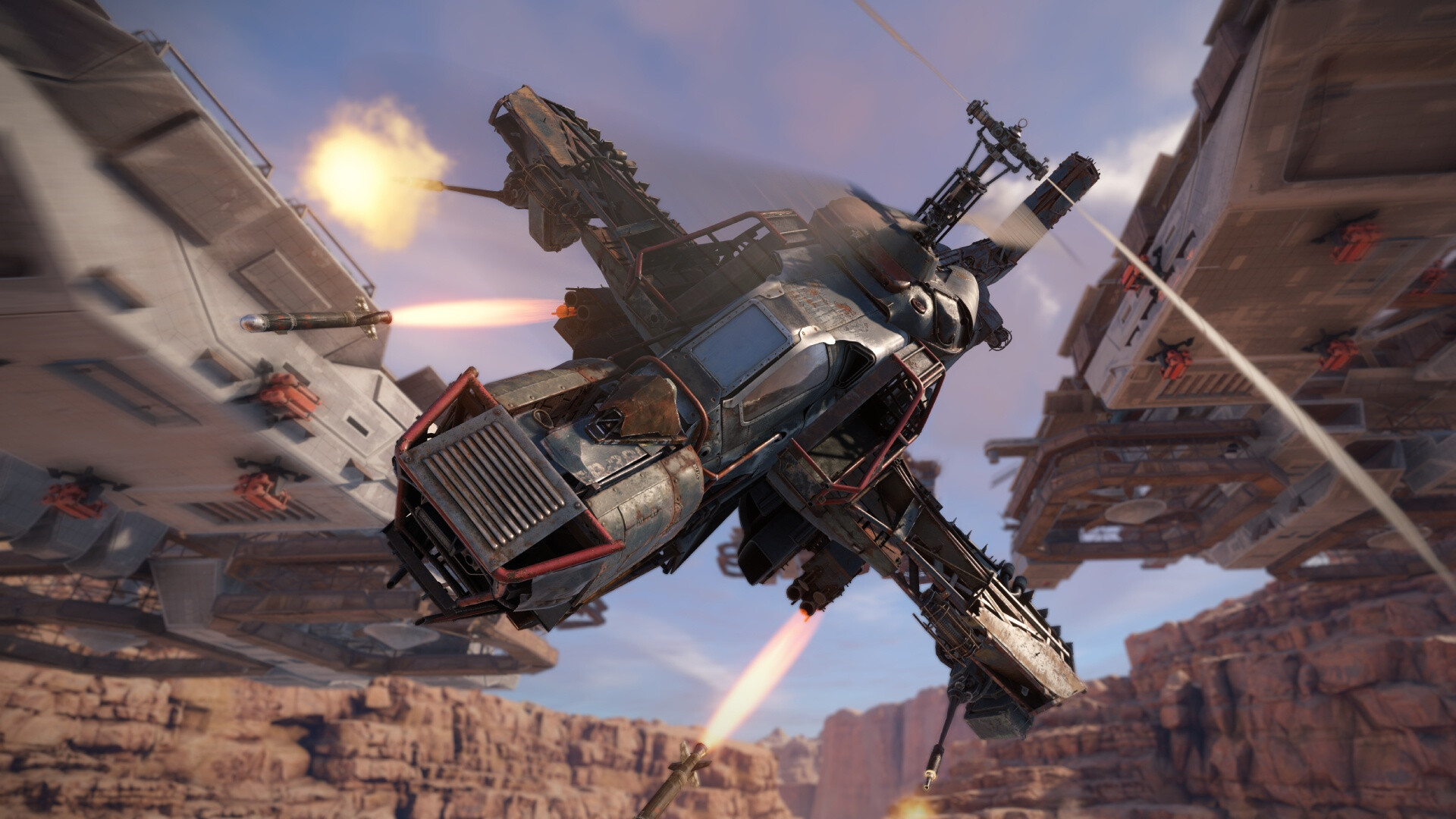
Introduction: When Design Is the Weapon
Crossout does not begin with a character creator, a class selection, or a predefined combat role. It begins with a frame. From the very first minutes, Crossout makes a bold statement: who you are in this world is defined not by a loadout menu, but by what you build. Your vehicle is not a skin or a stat bundle—it is your identity, your strategy, and your liability all at once.
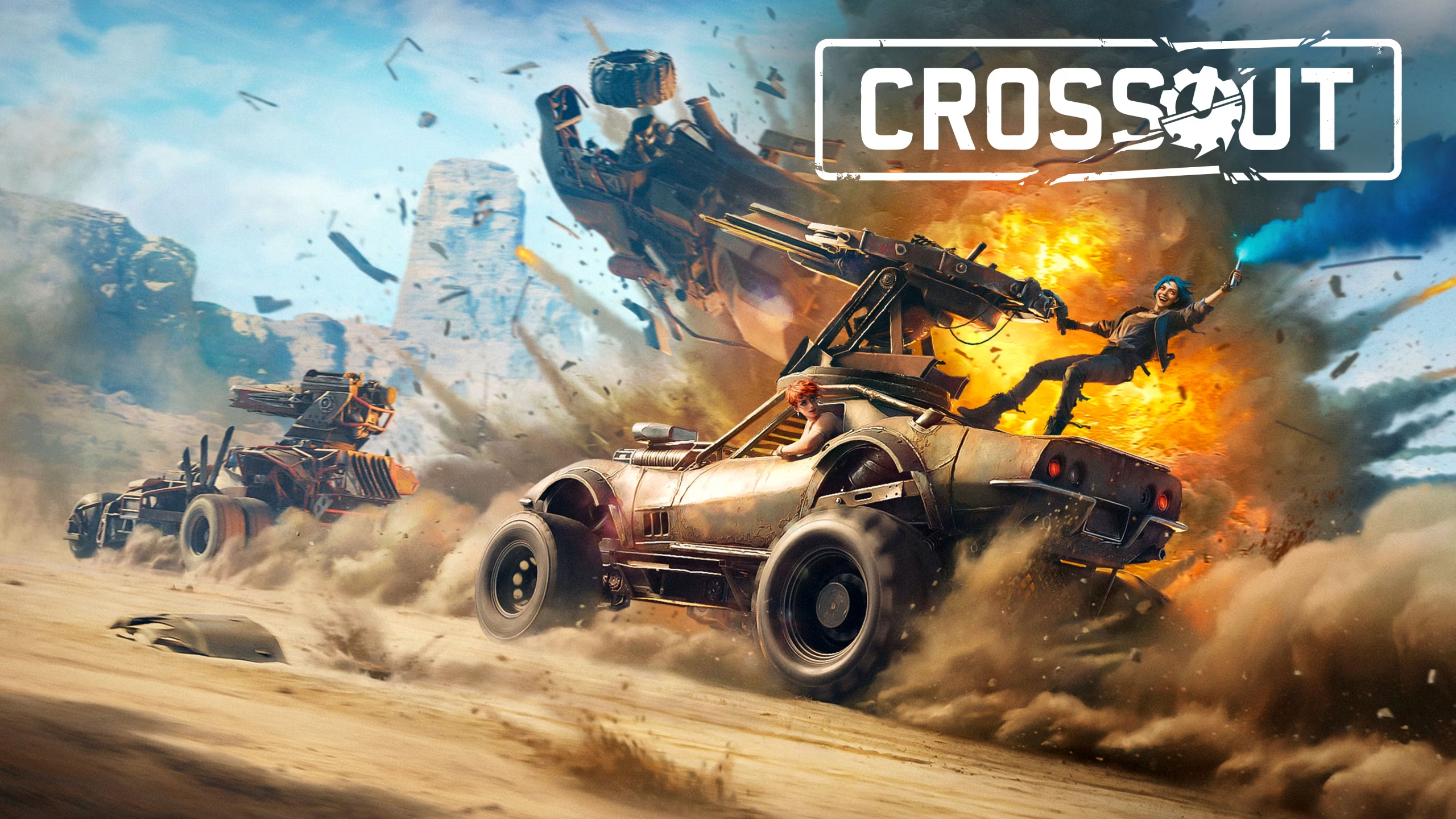
Set in a post-apocalyptic wasteland where survival is measured in scrap and firepower, Crossout blends vehicular combat with deep construction systems. But beneath the explosions and metal collisions lies a more interesting core: a game about expression through engineering, where creativity is as dangerous as it is rewarding. This review examines Crossout as a systems-driven multiplayer experience, focusing on player agency, emergent design, balance through destruction, and the psychological appeal of building something that might not survive its first battle.
Quick Info (Overview Box)
Release Year: 2017
Genre: Vehicular combat / Sandbox / Online multiplayer
Platforms: PC, PlayStation, Xbox
Game Modes: Online PvP, PvE raids, Clan wars, Custom battles
Target Audience: Players who enjoy vehicle combat, deep customization, sandbox systems, and experimentation-driven multiplayer
1. Core Design Philosophy: Build First, Fight Second
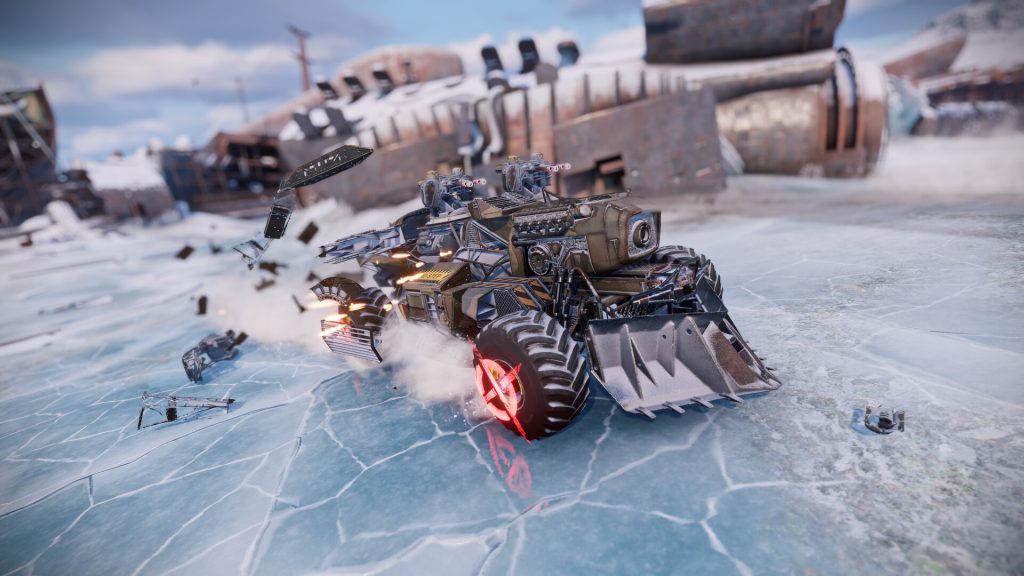
The foundational philosophy of Crossout is that combat is downstream from construction. Before you ever fire a shot, you must answer more fundamental questions: What kind of vehicle am I building? What trade-offs am I accepting? What am I willing to lose?
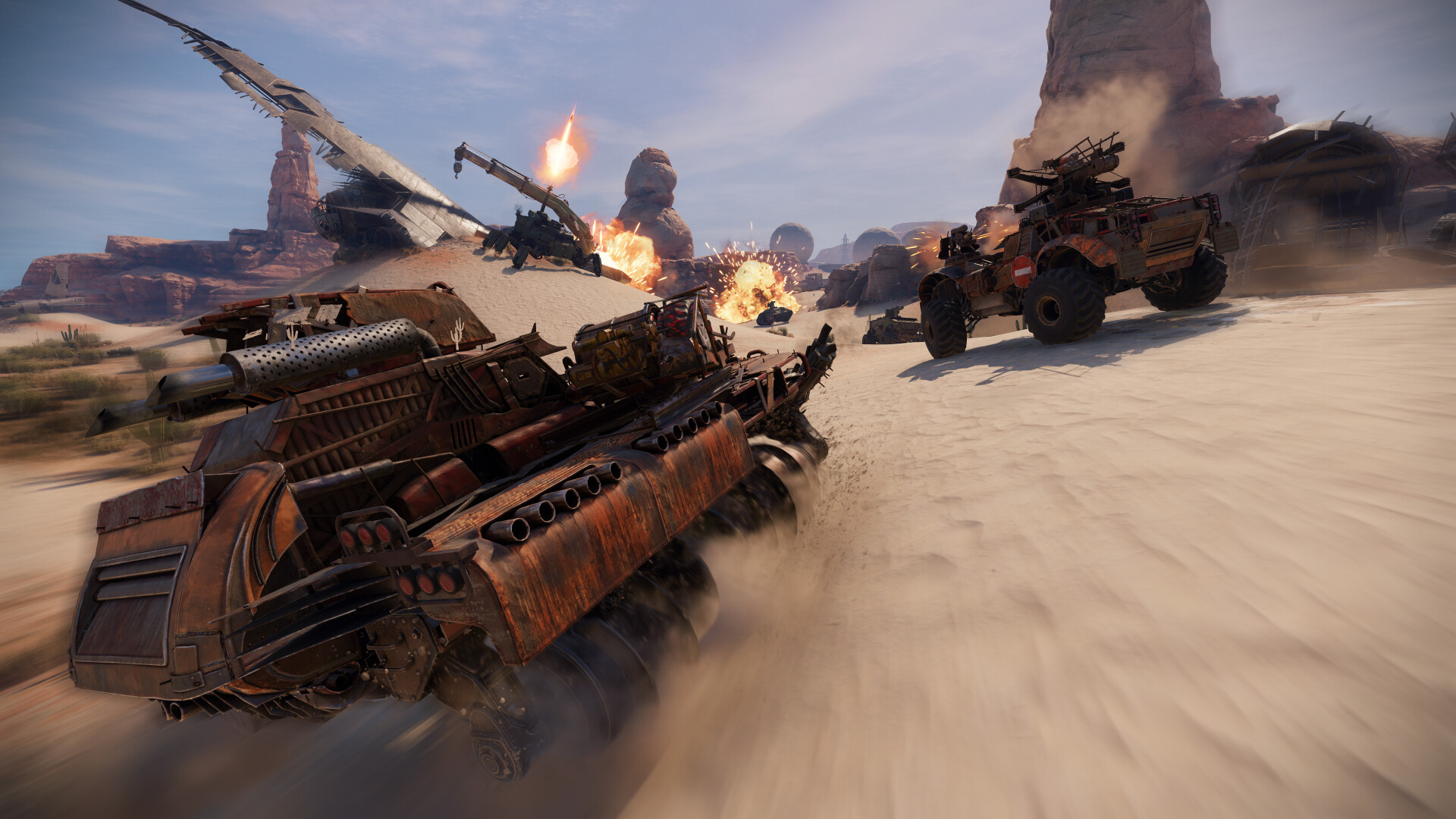
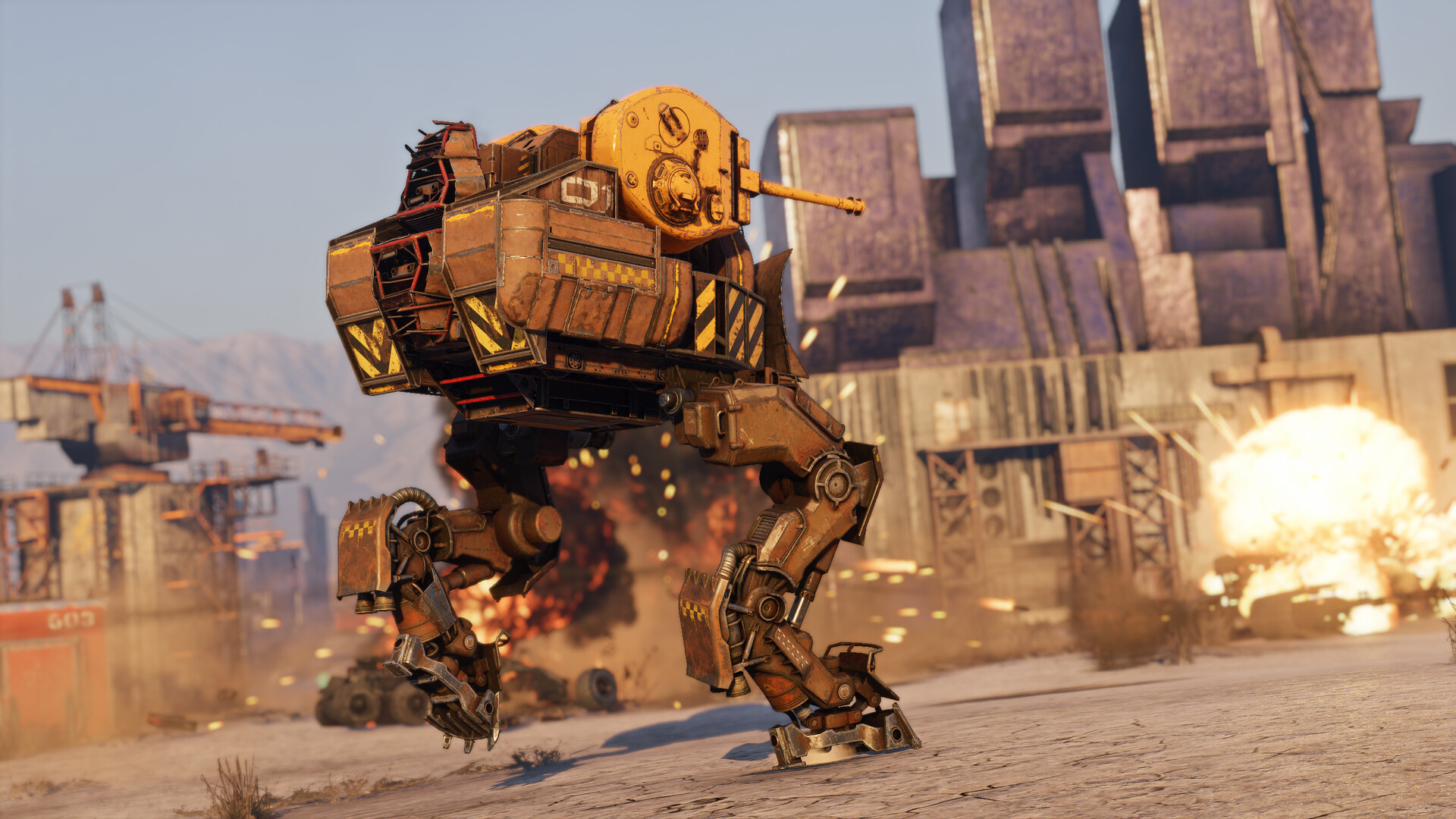
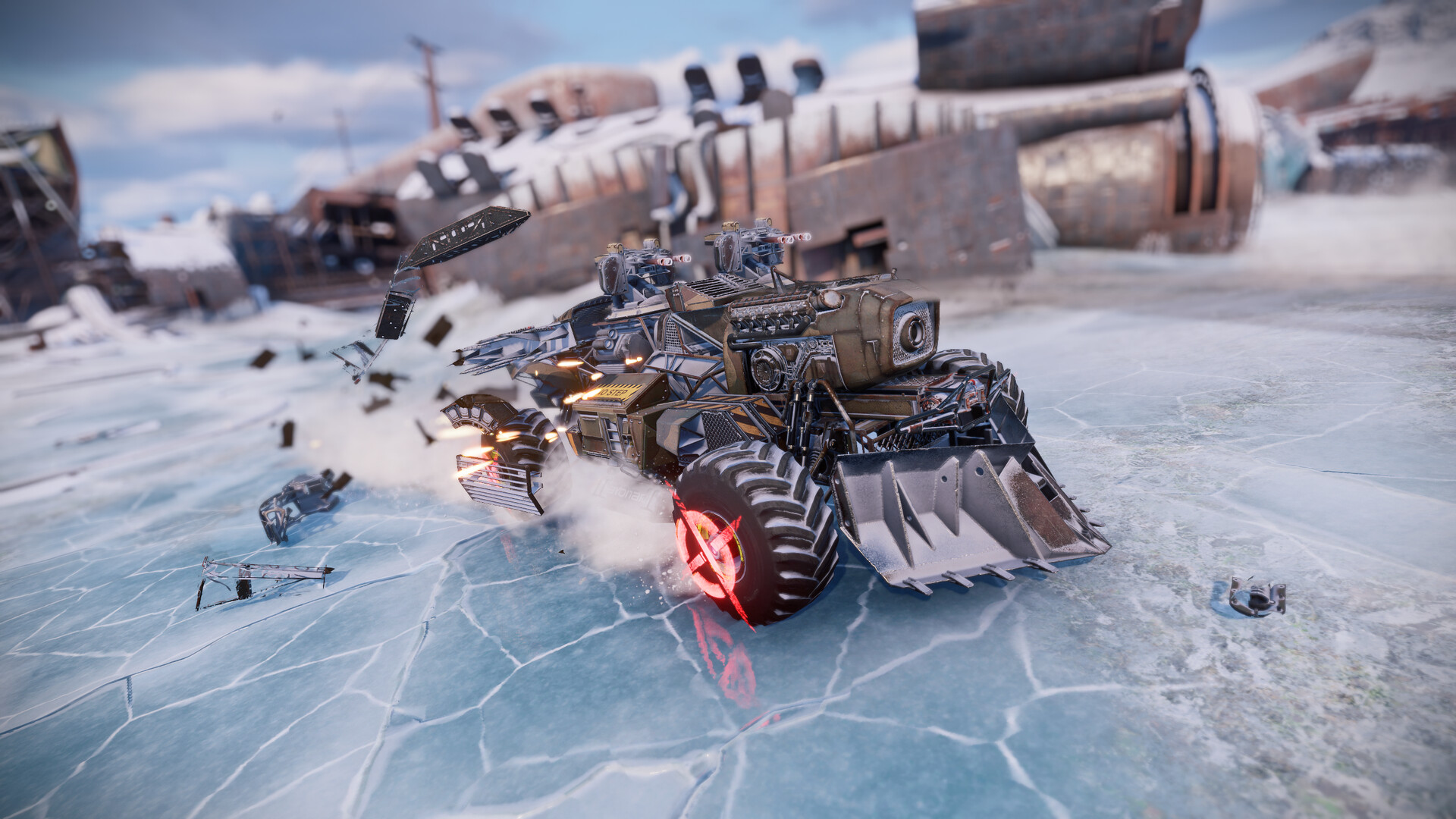
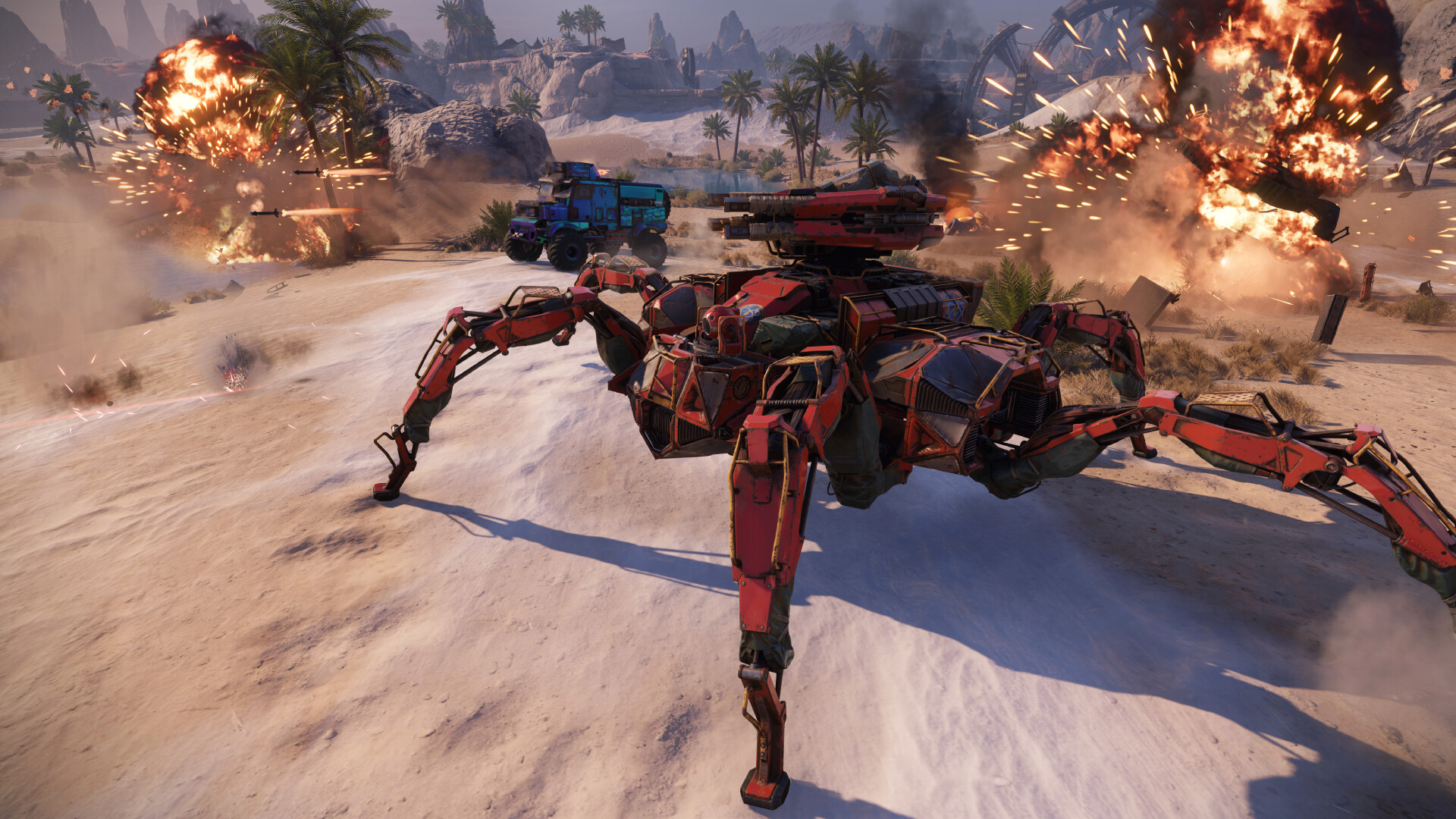
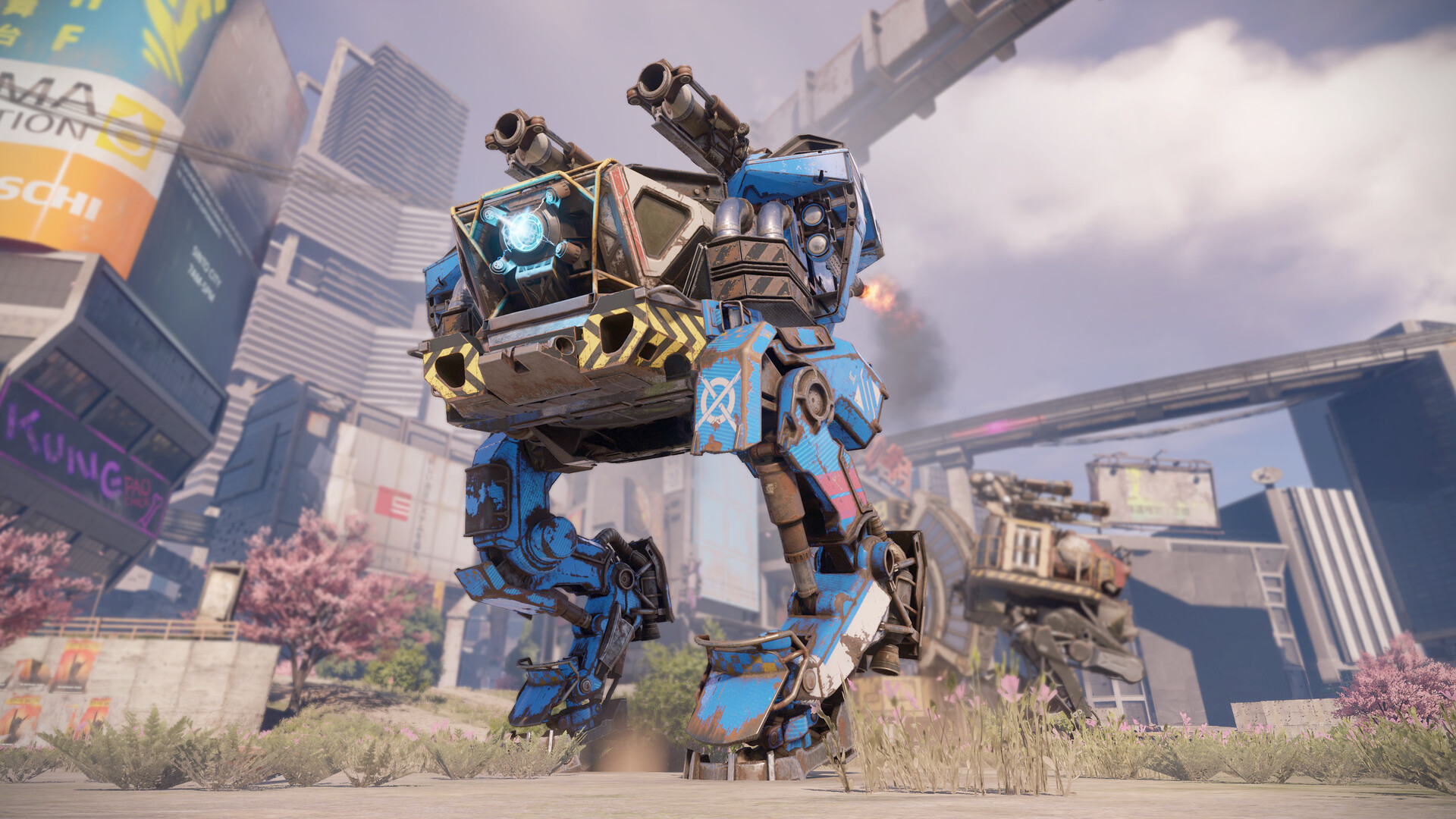
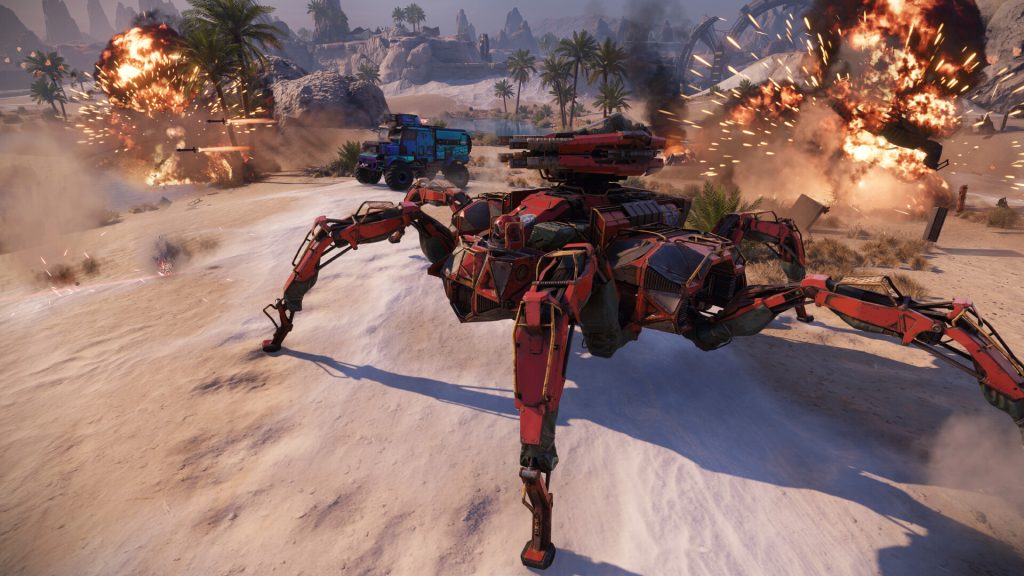
Unlike traditional vehicle combat games with fixed chassis and weapon slots, Crossout allows near-total freedom. Frames, wheels, armor plates, engines, weapons, and utility modules are assembled piece by piece. Every placement matters. Weight distribution affects handling. Exposed components invite destruction.
This design places agency firmly in the player’s hands. Victory or failure rarely feels arbitrary—it feels designed, even when the design turns out to be flawed.
2. Vehicle Construction as Strategic Expression
Building in Crossout is not cosmetic—it is strategic expression. Two players can enter a match with the same power score and wildly different philosophies.
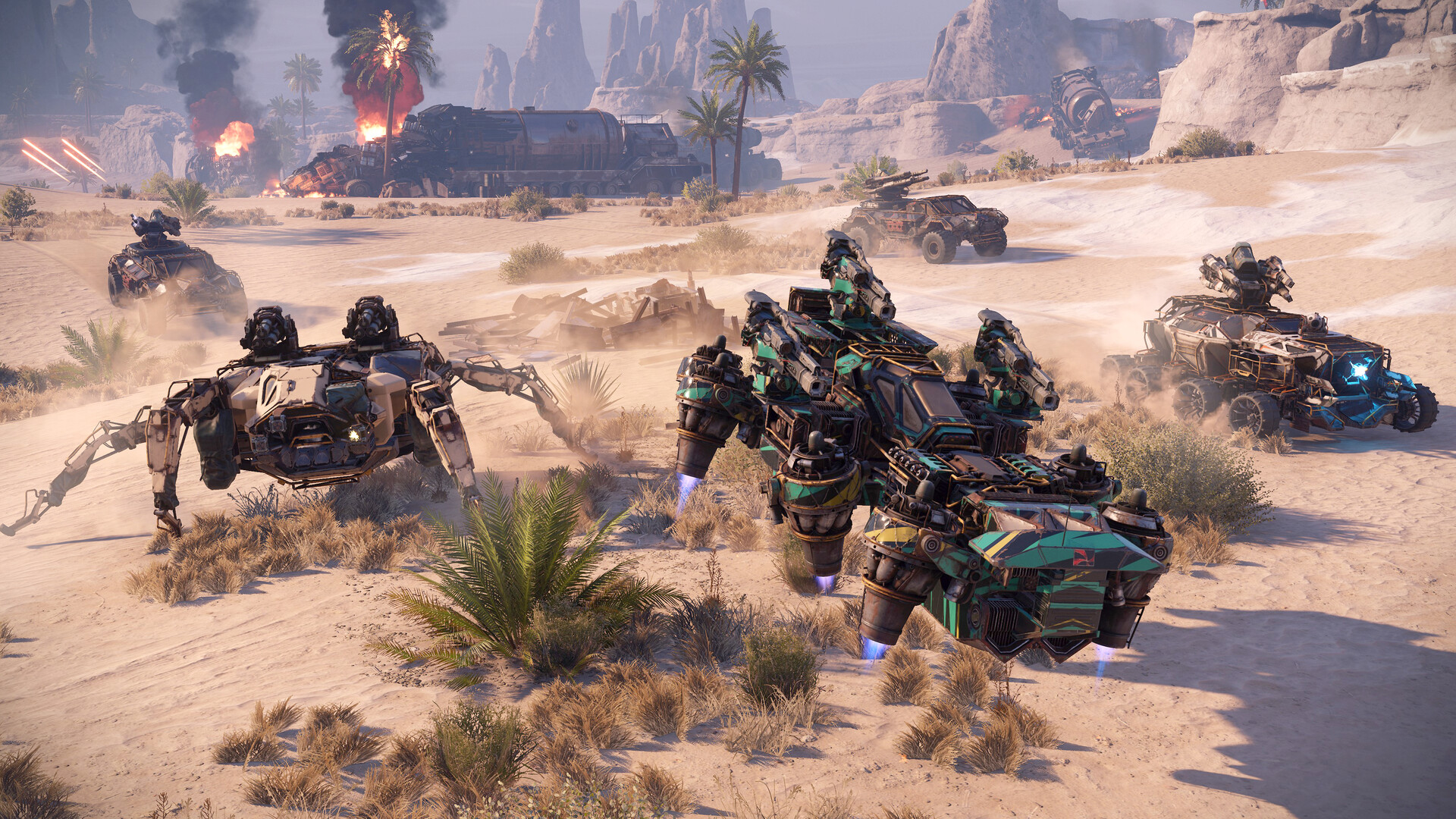
Some builds favor speed and hit-and-run tactics. Others emphasize armor and frontal assault. Some sacrifice durability for overwhelming burst damage. Others rely on drones, mines, or indirect pressure.
There is no universally optimal design. The meta shifts constantly, but even within it, unconventional builds can succeed. Creativity is not just allowed—it is encouraged, because unpredictability is a weapon.
This makes the garage as important as the battlefield. Time spent building is time spent learning the game.
3. Destruction as a Balancing Mechanism
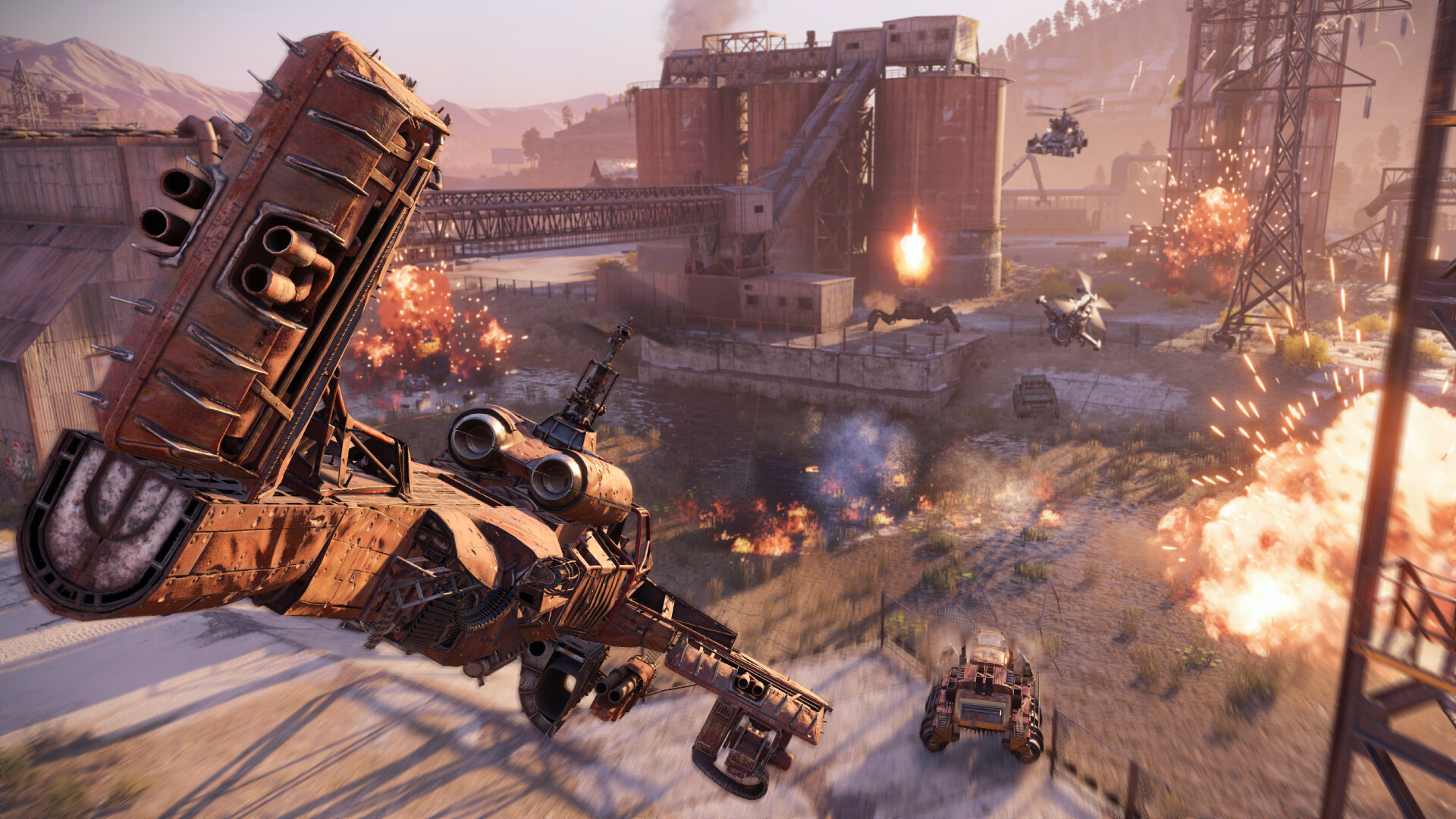
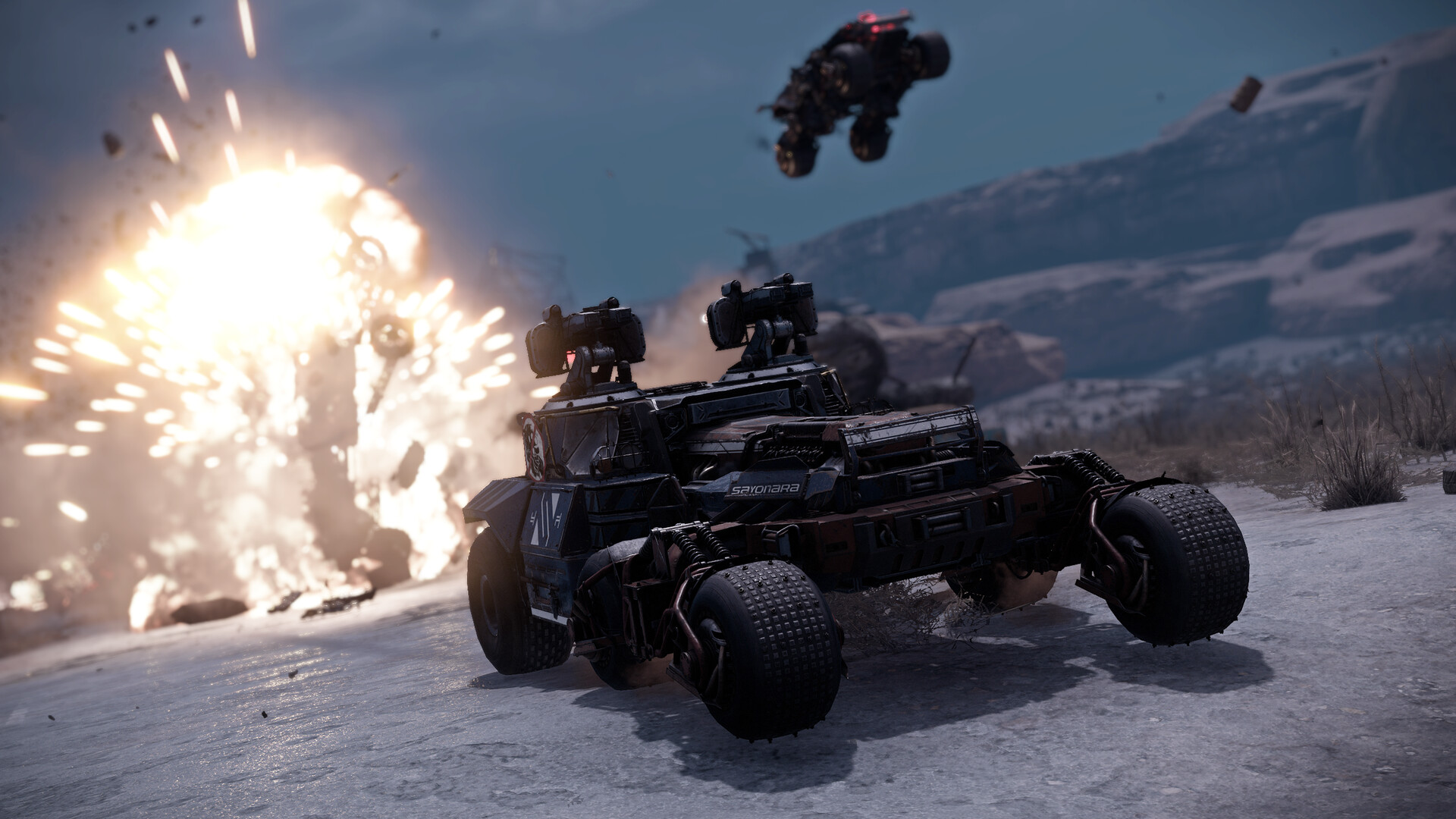
One of Crossout’s most elegant systems is how it handles balance: through destruction. Vehicles do not explode instantly when health reaches zero. They disintegrate piece by piece.
Weapons can be shot off. Wheels can be destroyed. Engines can be crippled. A player may survive—but be rendered ineffective.
This granular destruction does two important things. First, it rewards precision and targeting. Second, it ensures that even heavily armored builds have exploitable weaknesses.
Balance emerges dynamically. Overpowered designs often rely on fragile components. Durable builds sacrifice mobility or firepower. The battlefield itself enforces fairness through physics and damage modeling.
4. Combat Loop: Controlled Chaos
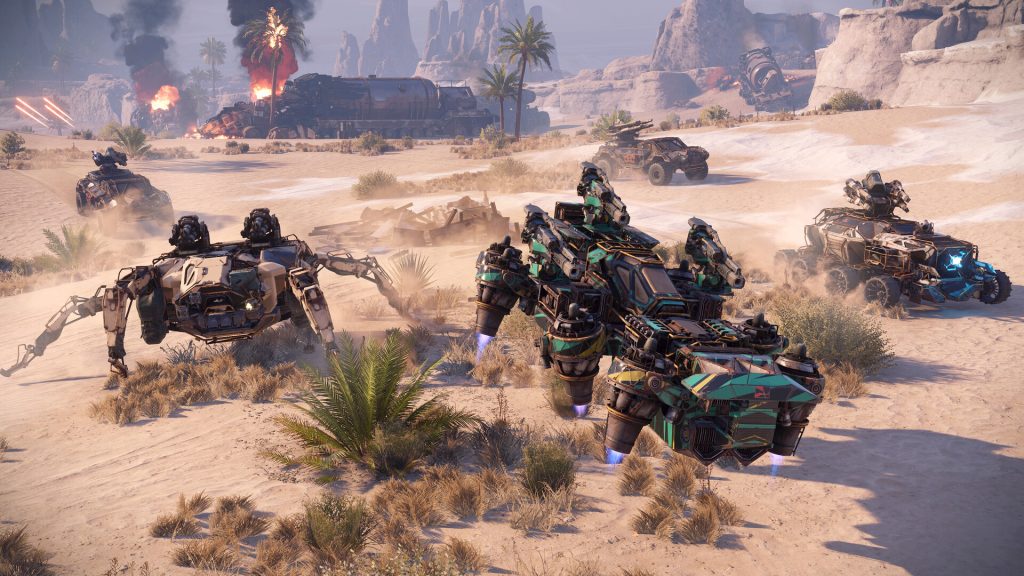
Combat in Crossout is chaotic, but not random. Matches are fast-paced, often brutal, and rarely forgiving—but they are governed by readable systems.
Positioning matters. Line of sight matters. Terrain matters. A well-built vehicle can still fail if piloted poorly, and a flawed build can succeed in the right hands.
Unlike twitch shooters, Crossout rewards situational awareness over reflexes alone. Knowing when to disengage, when to flank, and when to sacrifice parts for positioning often determines outcomes.
Combat feels less like dueling and more like mechanical negotiation under fire.
5. Power Score and Matchmaking Psychology
Crossout uses a Power Score system to group vehicles of similar theoretical strength. On paper, this ensures fairness. In practice, it creates an interesting psychological space.
Players learn to “optimize” power score—maximizing effectiveness while minimizing numerical value. This leads to meta strategies, power score brackets, and specialized builds designed to dominate specific ranges.
The system encourages experimentation but also breeds anxiety. A single added component can push a build into a more dangerous matchmaking tier.
This tension reinforces Crossout’s identity as a game about trade-offs. Power is never free.
6. Factions, Progression, and Identity
Progression in Crossout is tied to factions, each offering unique parts, weapons, and aesthetics. Choosing a faction shapes not only what you can build, but how you think about design.
Some factions emphasize speed and light frames. Others favor heavy armor and brute force. Progression feels like apprenticeship—learning a design philosophy rather than unlocking generic upgrades.
Importantly, progression expands options rather than invalidating earlier content. Early-game parts remain viable when used intelligently.
This preserves player identity over time. Your build evolves, but your design instincts matter more than raw progression.
7. PvE, PvP, and Mode Diversity
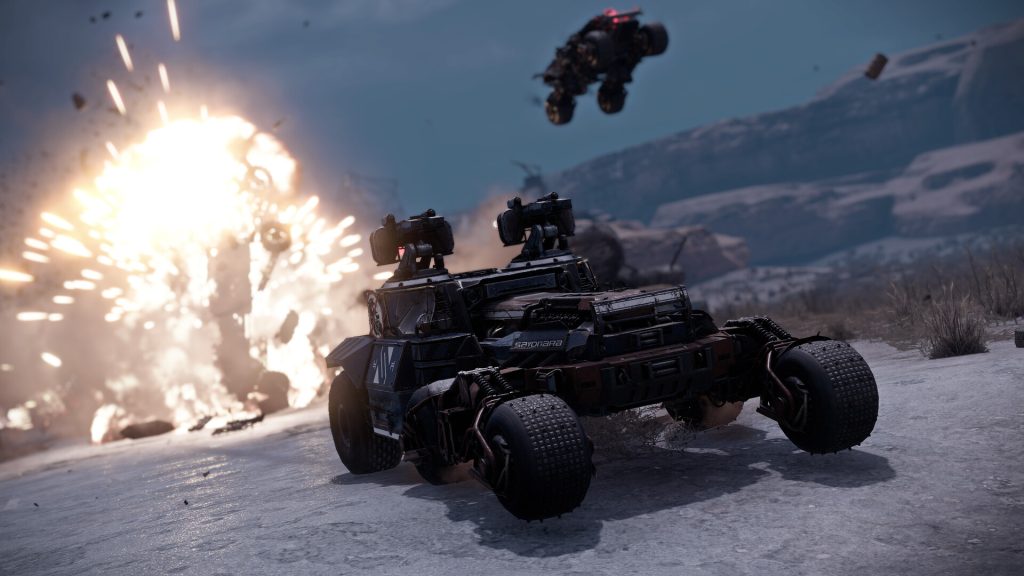
Crossout offers multiple modes to accommodate different player motivations. PvP is the core experience—competitive, unpredictable, and meta-driven.
PvE raids provide structured challenges, emphasizing cooperation and sustained damage output. These modes allow players to test builds without the volatility of PvP.
Clan wars and endgame modes introduce coordination, long-term planning, and political dynamics. Success here depends as much on teamwork and resource management as on individual design skill.
This diversity prevents burnout. Players can shift focus without abandoning the core loop.
8. Player Psychology: Ownership and Loss
Few multiplayer games generate the same sense of ownership as Crossout. Your vehicle is not a preset—it is yours. Every part was chosen deliberately.
When a build fails, the loss feels personal. Not because of punishment, but because of investment. Time, thought, and creativity were embedded in that design.
This emotional attachment enhances satisfaction when things work—and sharpens frustration when they do not. Crossout leverages this psychology intentionally. Risk feels real because effort is real.
9. Monetization, Economy, and Friction
As a free-to-play game, Crossout includes monetization systems tied to progression speed and part acquisition. This introduces friction.
While skill and design matter greatly, time investment influences access to certain components. The in-game economy rewards trading knowledge and patience, but can feel opaque to new players.
This creates a barrier to entry. Players willing to invest time and learn systems are rewarded. Those seeking immediate parity may feel disadvantaged.
The game walks a delicate line between depth and grind—one that not all players will tolerate.
10. Technical Feel and Presentation
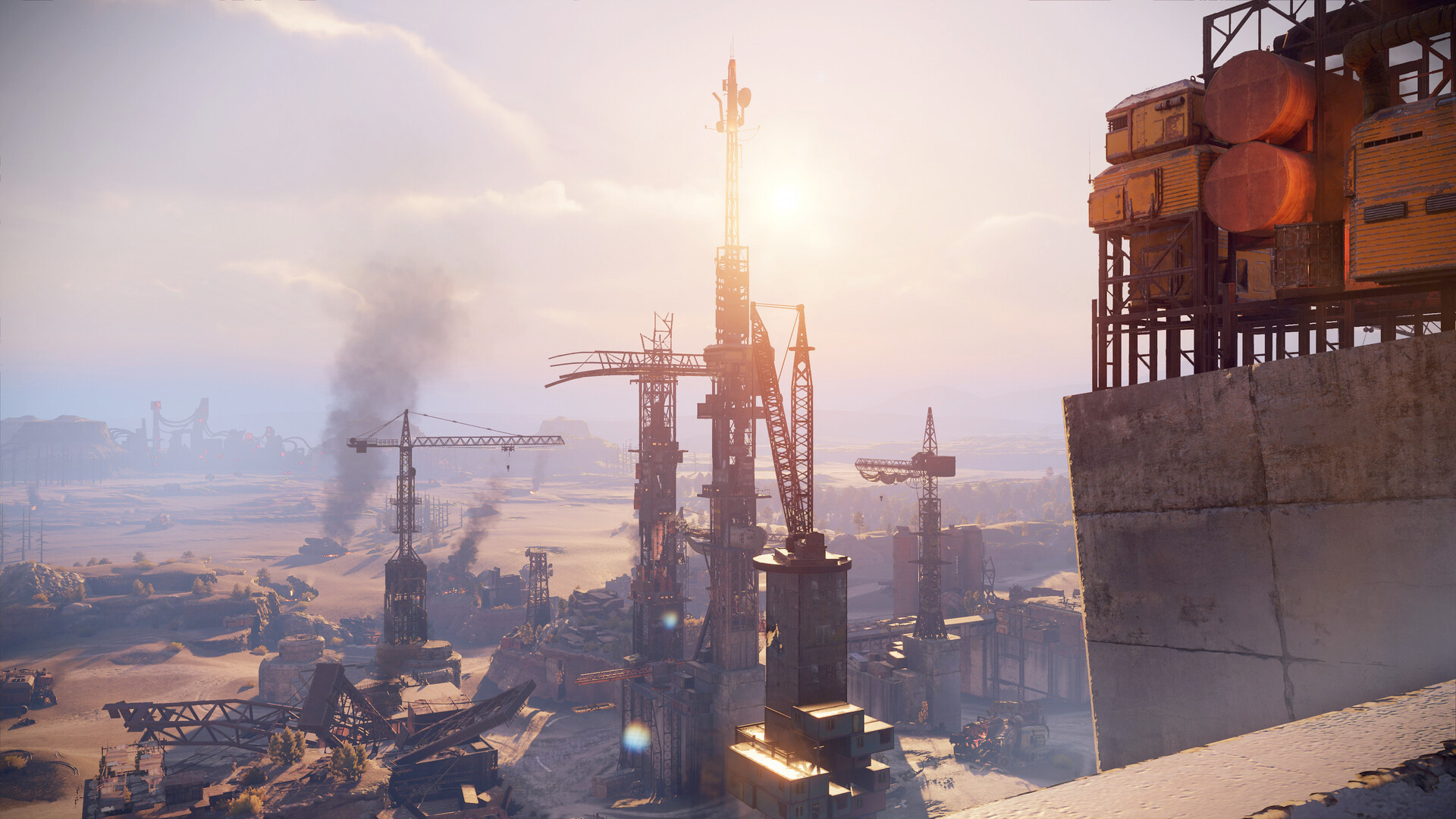
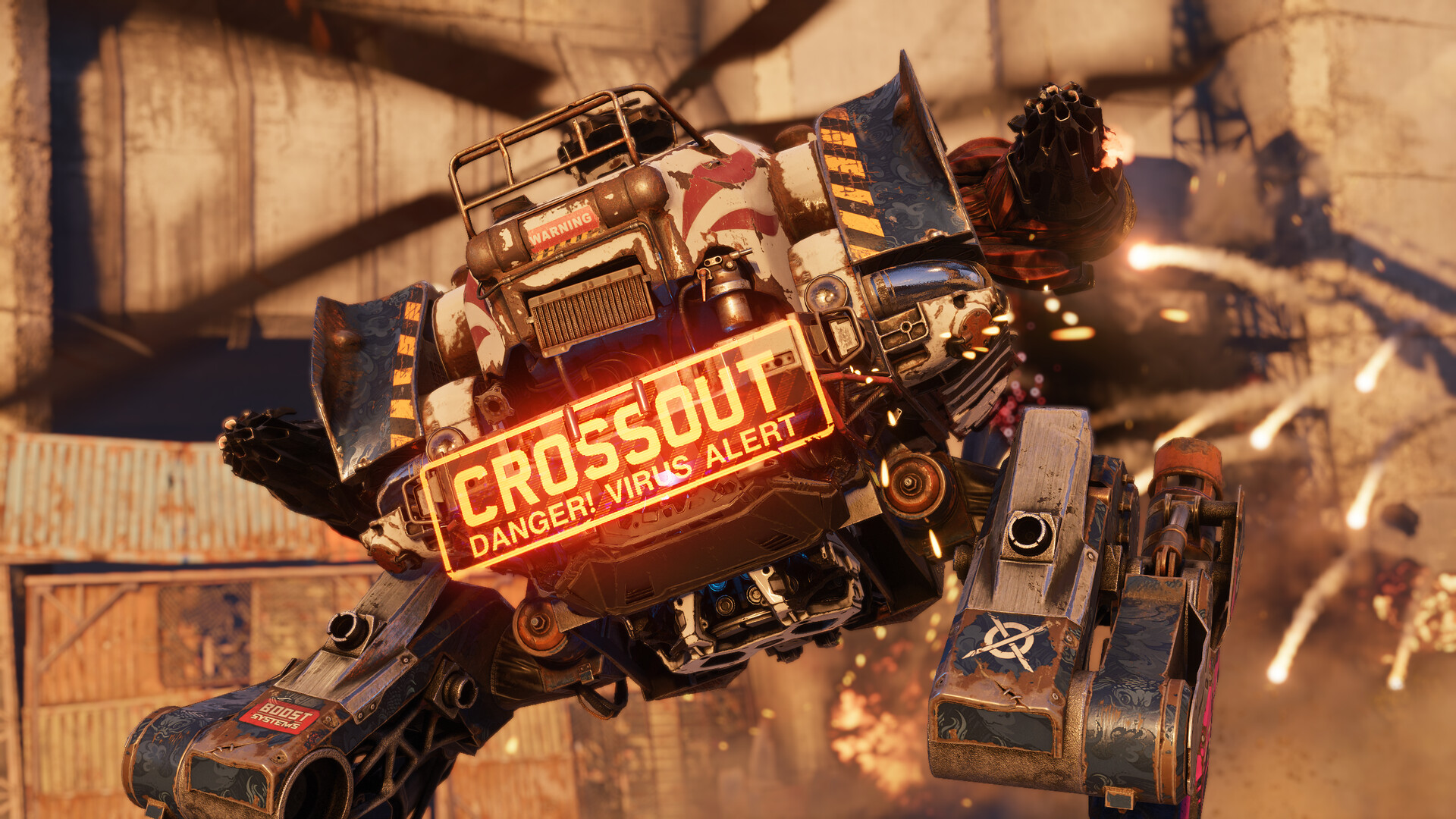
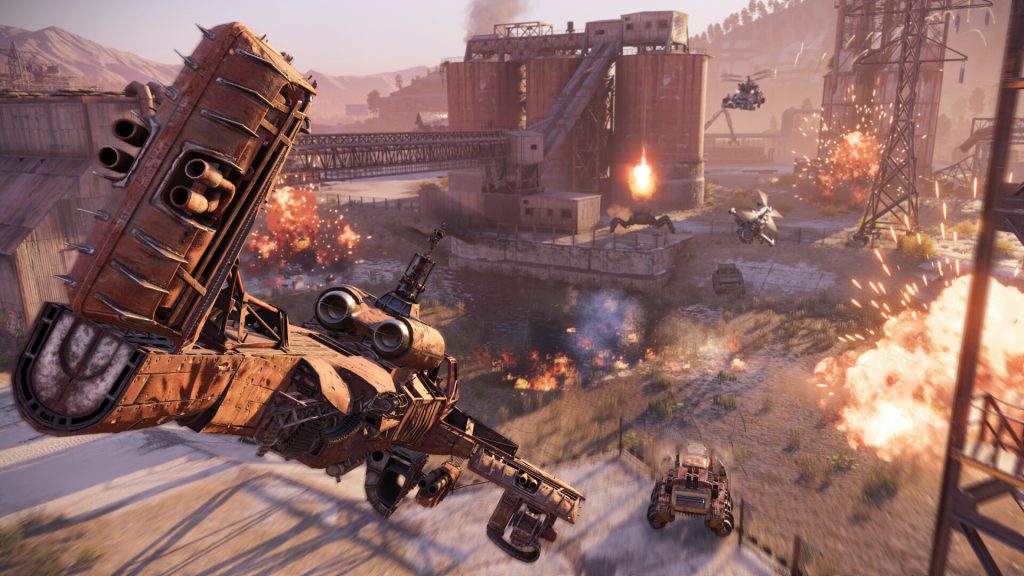
Visually, Crossout is functional rather than flashy. Vehicles look improvised and brutal, reinforcing the post-apocalyptic tone.
Sound design emphasizes impact: metal tearing, engines roaring, weapons clanking under stress. Feedback is immediate and physical.
Performance is generally stable, though large battles can become visually noisy. Readability sometimes suffers amid explosions and debris—but this chaos aligns with the game’s identity.
Crossout prioritizes feel over polish.
11. Balance, Meta, and Evolution
Crossout’s meta is in constant flux. New parts, balance patches, and player innovation reshape optimal strategies regularly.
This evolution keeps the game alive—but can frustrate players attached to specific builds. Adaptation is not optional.
The healthiest players are those who treat builds as prototypes rather than final products. The game rewards flexibility over perfection.
12. Limitations and Design Trade-Offs
Crossout’s freedom introduces complexity. New players face steep learning curves in both building and combat.
The lack of guided onboarding can feel overwhelming. Poor early builds lead to punishing experiences.
Additionally, individual matches can feel unbalanced due to team composition or specialized builds. The game embraces asymmetry—but not everyone enjoys its consequences.
These trade-offs define Crossout. It is not designed for universal appeal.
Pros
Deep, expressive vehicle construction system
Destruction-based balance encourages creativity
High player agency and build diversity
Multiple modes support varied playstyles
Strong sense of ownership and identity
Cons
Steep learning curve for new players
Monetization and grind can frustrate
Matchmaking balance varies by build and tier
Visual chaos can reduce readability
Requires constant adaptation to meta shifts
Conclusion: Engineering as Self-Expression
Crossout succeeds because it trusts players with complexity. It does not tell you how to fight—it asks you how you want to exist on the battlefield.
For players who enjoy building, testing, failing, and iterating, Crossout offers one of the most expressive multiplayer systems available. Victory feels earned not just through skill, but through design thinking.
It is not a game about perfect balance.
It is a game about imperfect machines,
colliding ideas,
and learning which parts matter
when everything starts falling apart.