
Escape from Duckov – High-Stakes Extraction, Psychological Pressure, and the Cost of Every Decision
Introduction: When Survival Is Measured in What You Carry Out
Escape from Duckov positions itself firmly in the extraction-survival subgenre, but its strength lies not in imitation—it lies in compression. Instead of sprawling realism or military fetishism, Escape from Duckov distills the extraction loop into a tense, readable, and psychologically demanding experience where every run is short, brutal, and meaningful.
This is a game less about gunplay mastery and more about risk literacy. What do you bring in? What do you dare to take? When do you leave? Escape from Duckov constantly asks these questions and punishes hesitation just as harshly as greed. This review approaches the game from multiple angles—systems design, player psychology, pacing, and replayability—rather than following a rigid template.
Quick Info (Overview Box)
Release Year: 2024
Genre: Extraction shooter / survival action
Platforms: PC
Game Modes: Single-player, Online multiplayer
Estimated Story Length: No traditional story (session-based runs, ~20–40 minutes each)
Target Audience: Players who enjoy high-risk gameplay, extraction mechanics, and tense decision-making

1. Duckov’s Core Identity: Extraction Without Excess
At its core, Escape from Duckov is about compression. Maps are smaller, encounters are faster, and consequences arrive immediately. Unlike extraction games that lean into simulation sprawl, Escape from Duckov strips the experience down to essentials: loot, threat, exit.
This design choice makes the game feel sharper and more focused. There is little downtime, no unnecessary traversal, and minimal filler. Every room exists for a reason, and every sound you make matters. The result is a game that feels constantly “on,” even during quiet moments.
This also lowers the cognitive barrier for new players while preserving tension for veterans.
2. Risk as the Primary Currency
In Escape from Duckov, progress is not linear—it is conditional. You do not level up simply by playing longer; you progress by surviving with value. Loot only matters if you extract. Gear only matters if you don’t lose it.
This transforms every decision into a micro-calculation:
Do you push one more room?
Do you engage or avoid?
Do you extract early with modest gains or risk everything for more?
The brilliance of Escape from Duckov is that it makes leaving early feel smart rather than cowardly.
3. Combat Design: Lethal, Fast, Unforgiving
Combat in Escape from Duckov is intentionally lethal. Time-to-kill is short, positioning matters more than raw aim, and surprise often determines the outcome.
Weapons feel functional rather than flashy. There is no sense of power fantasy here—only efficiency. Because of this, combat never becomes routine. Even late into progression, fights remain stressful.
Importantly, Escape from Duckov discourages unnecessary combat. Winning a fight may still be a net loss if it costs ammo, health, or time. Survival is the real victory condition.
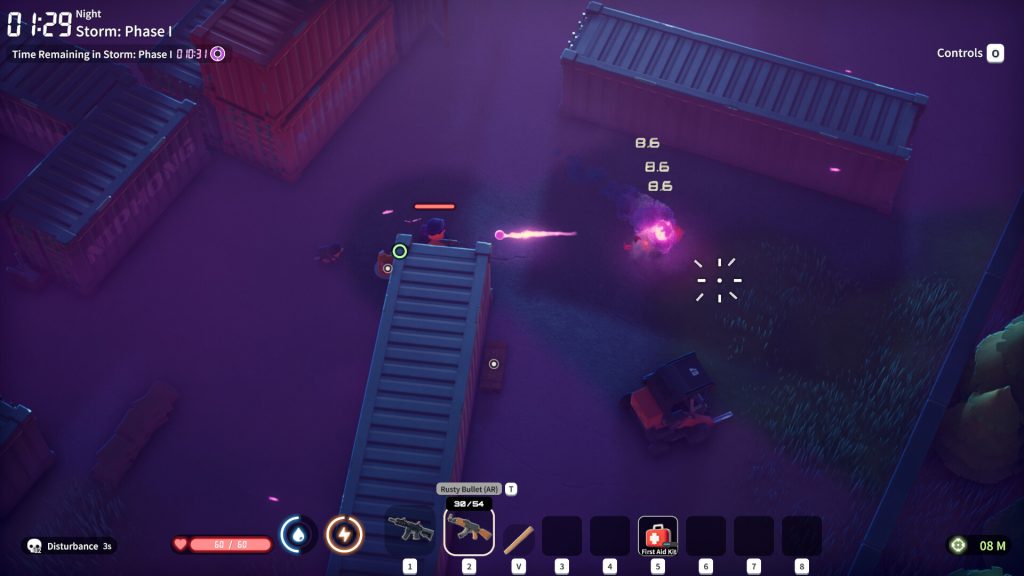
4. Map Design: Pressure Cookers, Not Playgrounds
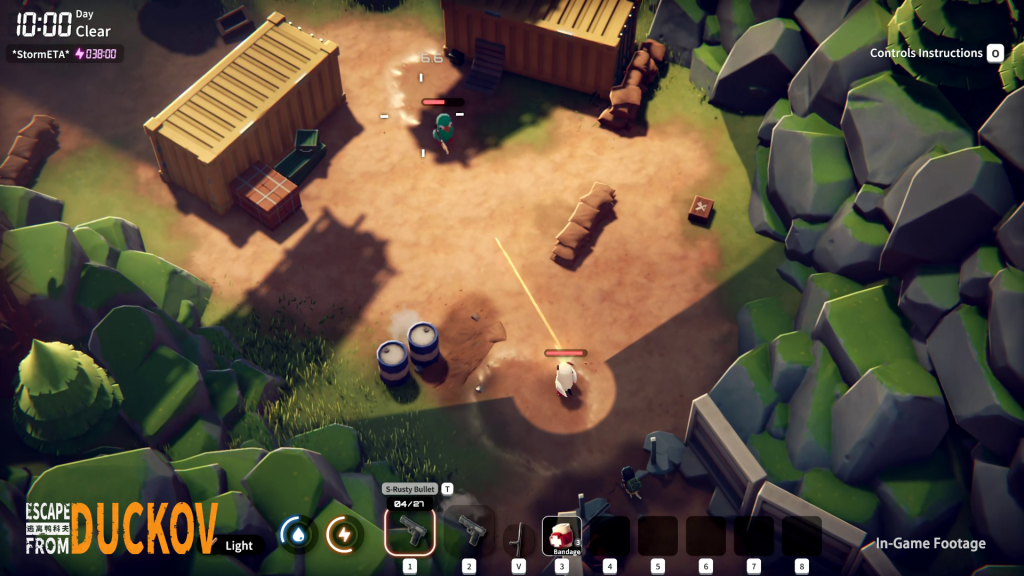
Maps in Escape from Duckov are compact but layered. Verticality, tight corridors, and limited sightlines ensure constant tension. You are rarely safe, and you are almost never certain.
Unlike open maps that encourage roaming, Duckov’s environments push players toward conflict or confrontation with their own fear. Extraction points are known, but reaching them is rarely straightforward.
The result is a consistent psychological arc per run: confidence → doubt → tension → decision.
5. Audio as a Weapon
Sound design is one of Escape from Duckov’s strongest tools. Footsteps, reloads, doors, and environmental noise all carry weight. Silence is not comforting—it is suspicious.
Because maps are small, audio information becomes critical. Players learn quickly that sound equals exposure. This creates a natural stealth meta without explicit stealth mechanics.
The game trains players to listen before acting, reinforcing its methodical pacing.
6. Progression Without Comfort
Progression systems in Escape from Duckov exist, but they are restrained. Unlocks provide options, not dominance. Better gear improves survivability marginally, not absolutely.
This ensures that tension never disappears. Even experienced players can lose everything in seconds. There is no “safe build,” only informed risk.
This philosophy keeps the game honest and prevents power creep from undermining its core loop.
7. Multiplayer Psychology: Fear of Other Humans
In multiplayer, Escape from Duckov becomes as much a psychological game as a mechanical one. Other players are unpredictable, opportunistic, and often more dangerous than AI threats.
Encounters with players generate unique stress because they represent intention. Unlike AI, human opponents may ambush, retreat, or bait.
This uncertainty is what makes multiplayer runs in Escape from Duckov genuinely memorable.
8. Session Length and Mental Load
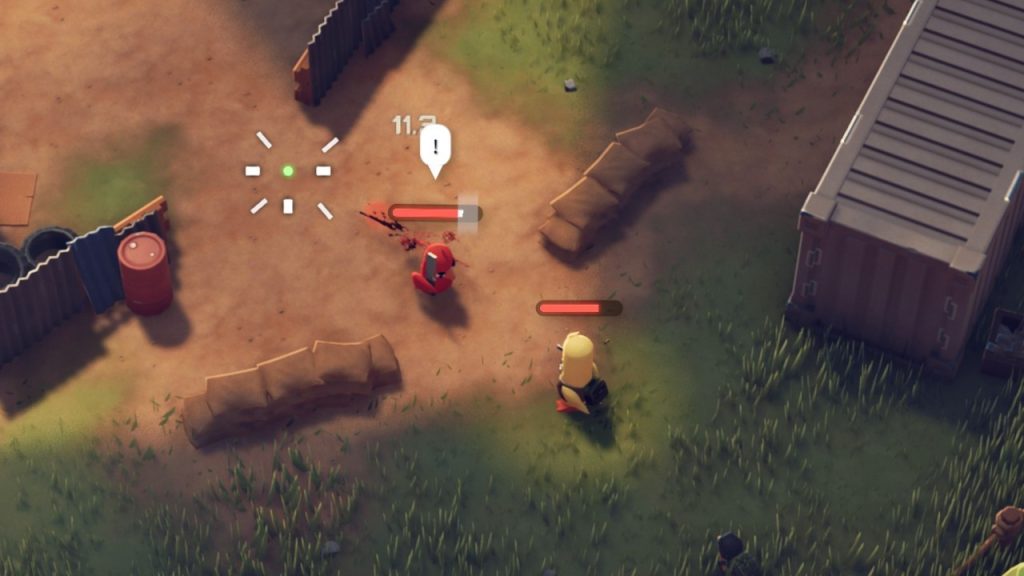
One of Duckov’s smartest decisions is its session length. Runs are short enough to encourage “one more try,” but intense enough to exhaust mentally.
This balance prevents burnout while maintaining addiction potential. You rarely feel bored—but you often feel relieved when a run ends.
It is a game that respects player time without reducing stakes.
9. Accessibility vs Depth
While Escape from Duckov is easier to parse than hardcore extraction sims, it does not lack depth. Systems are simple on the surface but interact in complex ways.
New players can survive early runs; skilled players optimize routes, timing, and behavior. The learning curve exists, but it is not hostile.
This makes Duckov one of the more approachable yet still serious games in the genre.
10. Where Duckov Fits in the Genre
Escape from Duckov does not try to replace larger extraction games—it complements them. It offers a distilled experience focused on tension, decision-making, and consequence.
It is ideal for players who want the feeling of extraction without the burden of extreme realism or long sessions.
In that niche, Duckov is remarkably confident.
Pros
Tight, focused extraction loop
Short sessions with consistently high tension
Strong sound design and psychological pressure
Accessible without being shallow
Meaningful risk-reward decisions every run
Cons
Limited content variety compared to larger extraction games
Minimal narrative or lore-driven motivation
Can feel punishing for players who dislike gear loss
Smaller maps may feel repetitive over very long playtime
Conclusion: A Game About Knowing When to Leave
Escape from Duckov succeeds because it understands its core emotion: fear of loss. Everything—from map size to audio design—serves that goal. It does not waste player attention, nor does it soften consequences.
For players who enjoy extraction mechanics but want a sharper, more digestible experience, Escape from Duckov delivers intensity without excess. It is not about being the strongest—it is about being smart enough to walk away alive.