

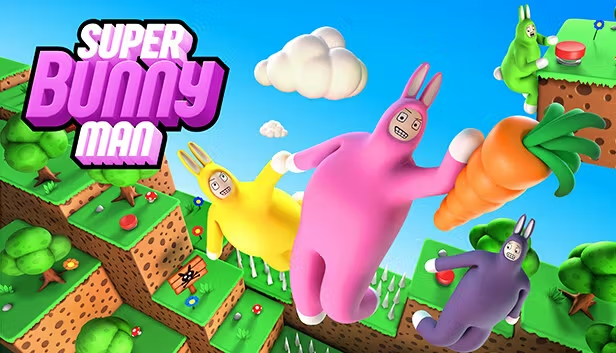
Super Bunny Man – Chaos as Comedy, Physics as Language, and the Joy of Failing Together
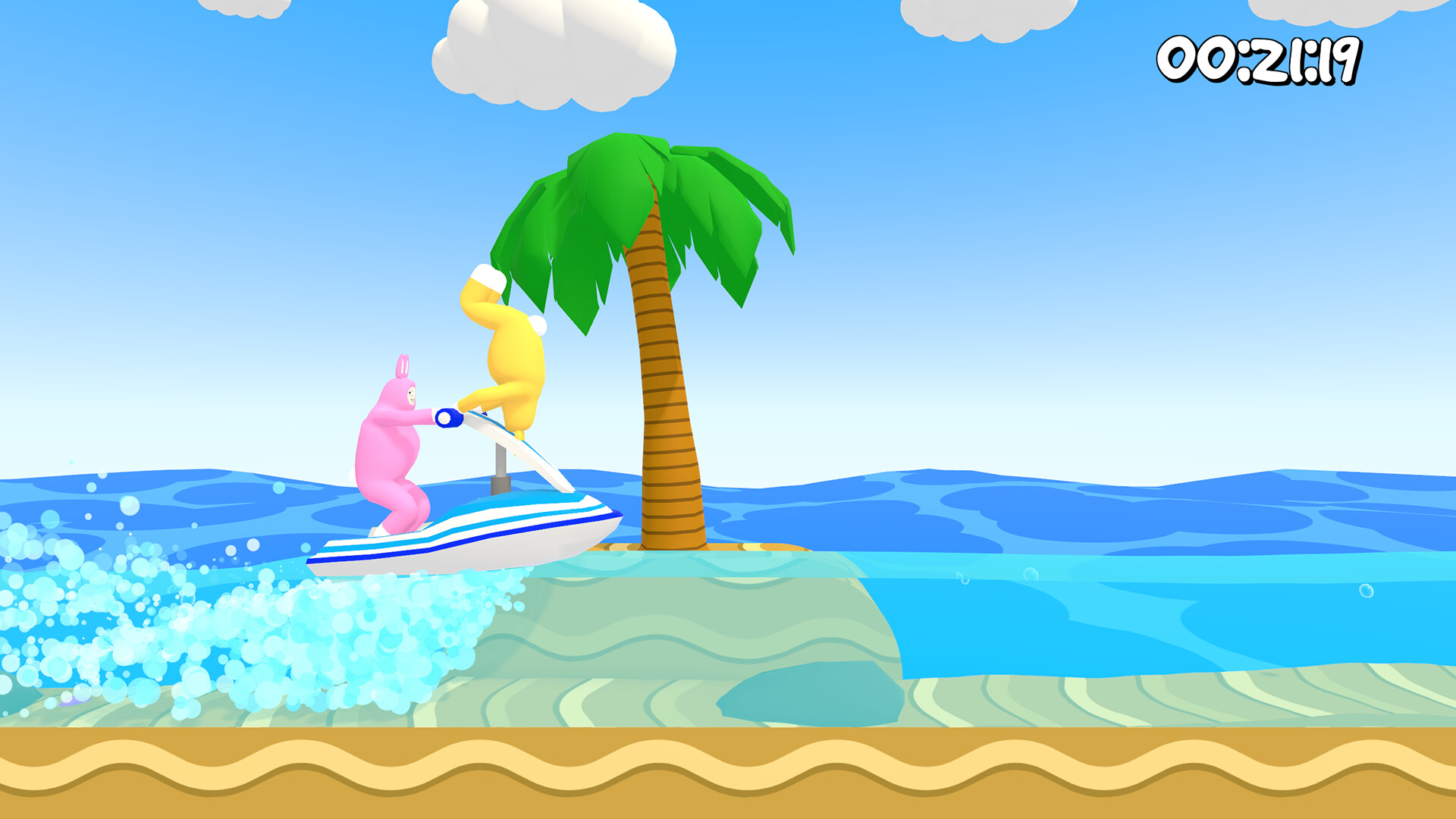
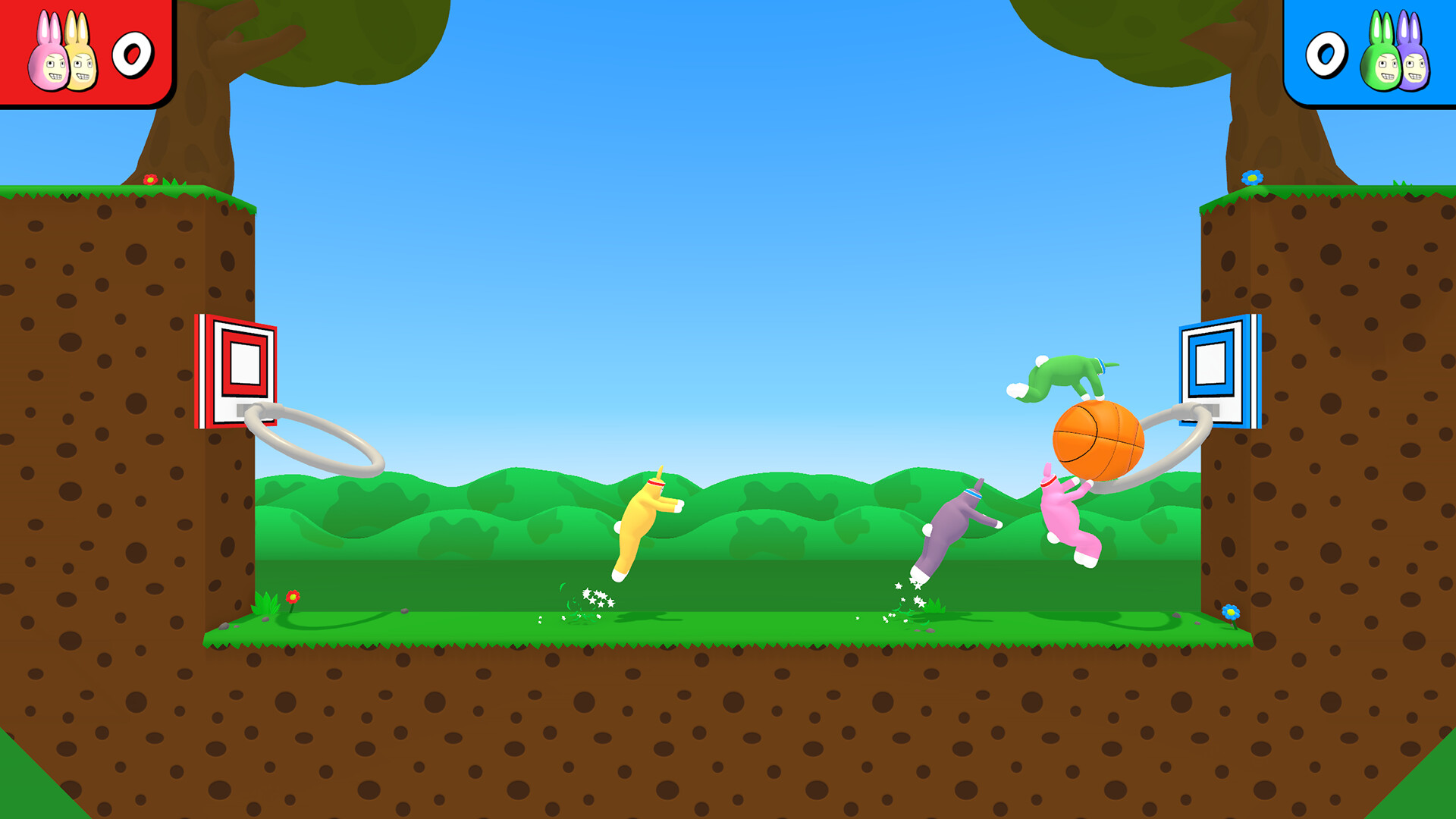

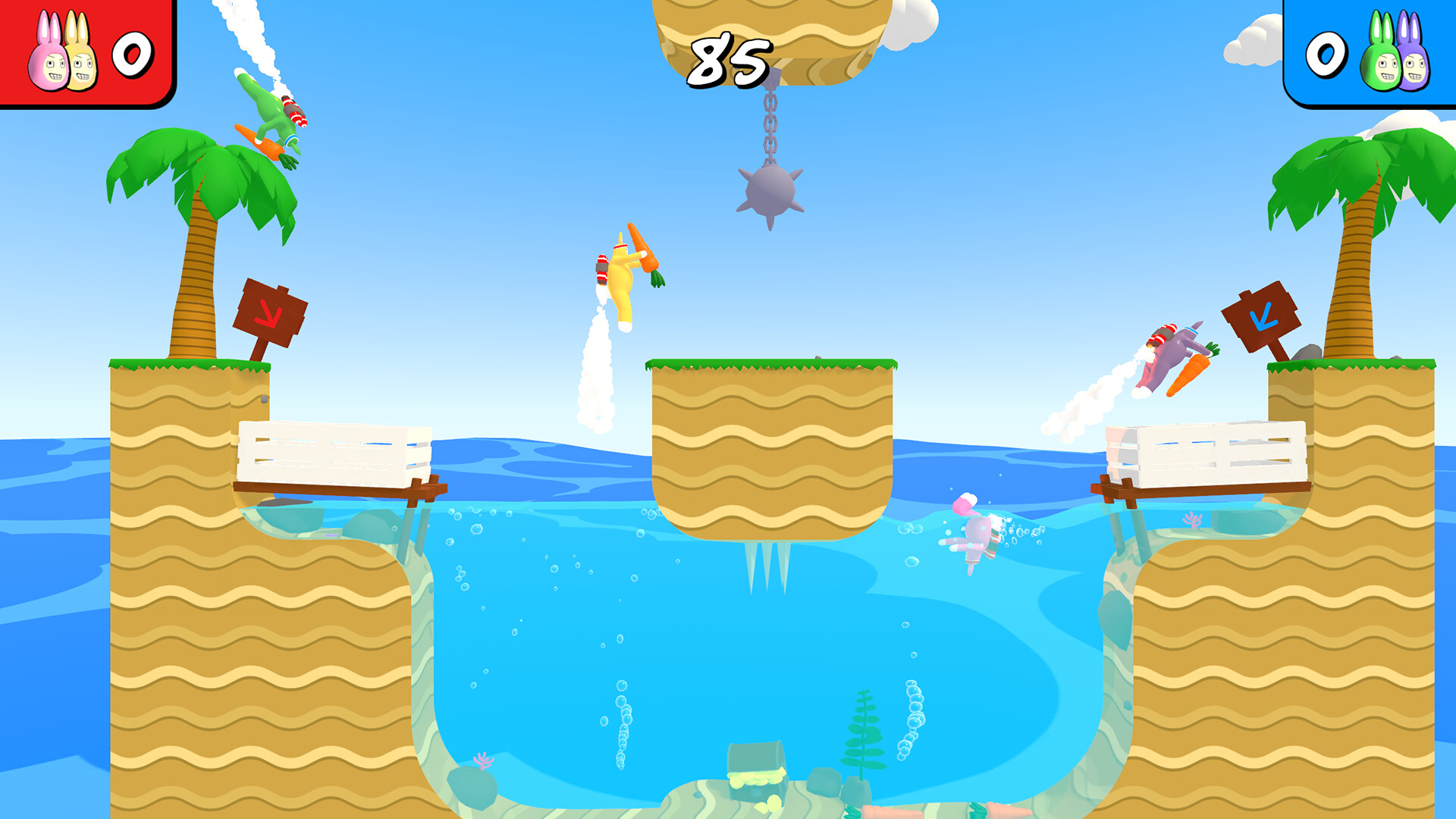
Introduction: Control Is Optional, Laughter Is Not
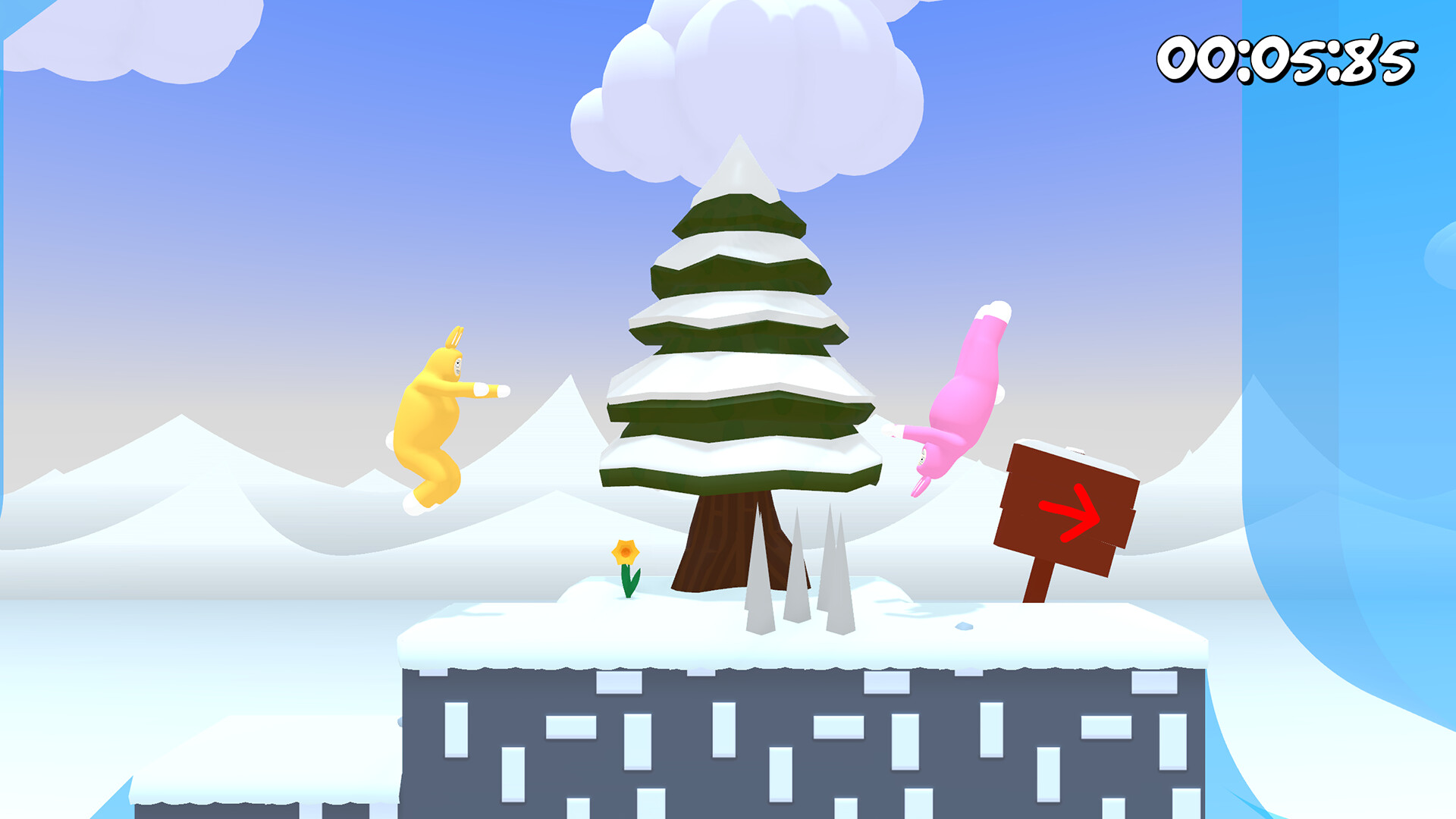
Super Bunny Man looks, at first glance, like a joke stretched into a full game. Two grown men in bunny suits flop, roll, and scream their way through brightly colored levels that seem actively hostile to basic motor skills. Movement is awkward, objectives are simple, and failure is constant. And yet, Super Bunny Man is not careless design—it is extremely intentional design.
This is a game that understands something fundamental about multiplayer fun: precision is not always the goal. Sometimes, joy emerges when control is incomplete, when coordination is fragile, and when success is constantly threatened by your own limbs. Super Bunny Man transforms incompetence into comedy and cooperation into chaos. This review explores the game as a study in physics-driven humor, shared failure, and why losing control can be more entertaining than mastering it.
Quick Info (Overview Box)
Release Year: 2018
Genre: Physics-based platformer / Party game
Platforms: PC, PlayStation, Xbox, Nintendo Switch
Game Modes: Single-player, Local co-op, Online co-op, PvP modes
Target Audience: Players who enjoy cooperative chaos, party games, couch co-op, and humor-driven physics gameplay
1. Core Design Philosophy: Comedy Through Instability
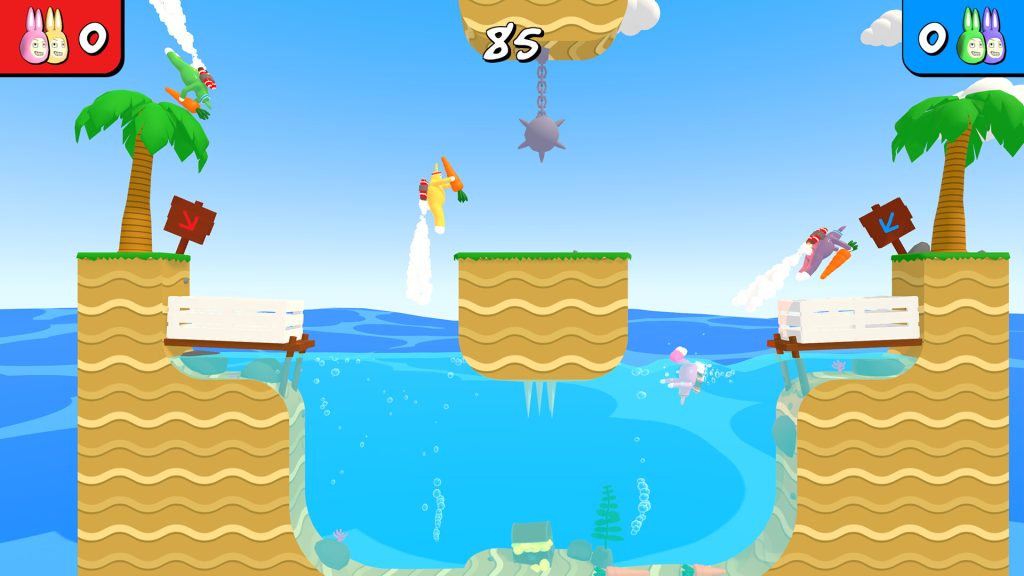
The foundation of Super Bunny Man is intentional instability. Characters are difficult to control. Jumping is unreliable. Momentum is unpredictable. Physics often overrides intention.
This is not a failure of polish—it is the design. The game deliberately removes precision to create space for humor. When players cannot rely on clean execution, they must adapt emotionally rather than mechanically.
Success feels accidental. Failure feels inevitable. And that imbalance is exactly what makes the game funny.
2. Movement as a Puzzle, Not a Skill Check
Movement in Super Bunny Man is less about reflexes and more about interpretation. Buttons do not map cleanly to outcomes. Jumping involves timing, angle, and hope.
This transforms traversal into a shared problem-solving exercise. Players experiment: rolling instead of jumping, dragging each other, abusing slopes, or exploiting ragdoll behavior.
Rather than mastering a moveset, players learn what kind of nonsense works. The game rewards creativity born from desperation.
3. Physics as the Main Character
In most platformers, physics supports gameplay. In Super Bunny Man, physics is the gameplay.
Collisions are exaggerated. Momentum transfers wildly. Bodies bend, stretch, and collapse under force. Gravity feels both heavy and unreliable.
This physicality creates emergent situations. A minor bump becomes a catastrophic fall. A failed jump launches both players into oblivion. These moments are unscripted—and endlessly repeatable.
4. Level Design: Simple Goals, Hostile Geometry
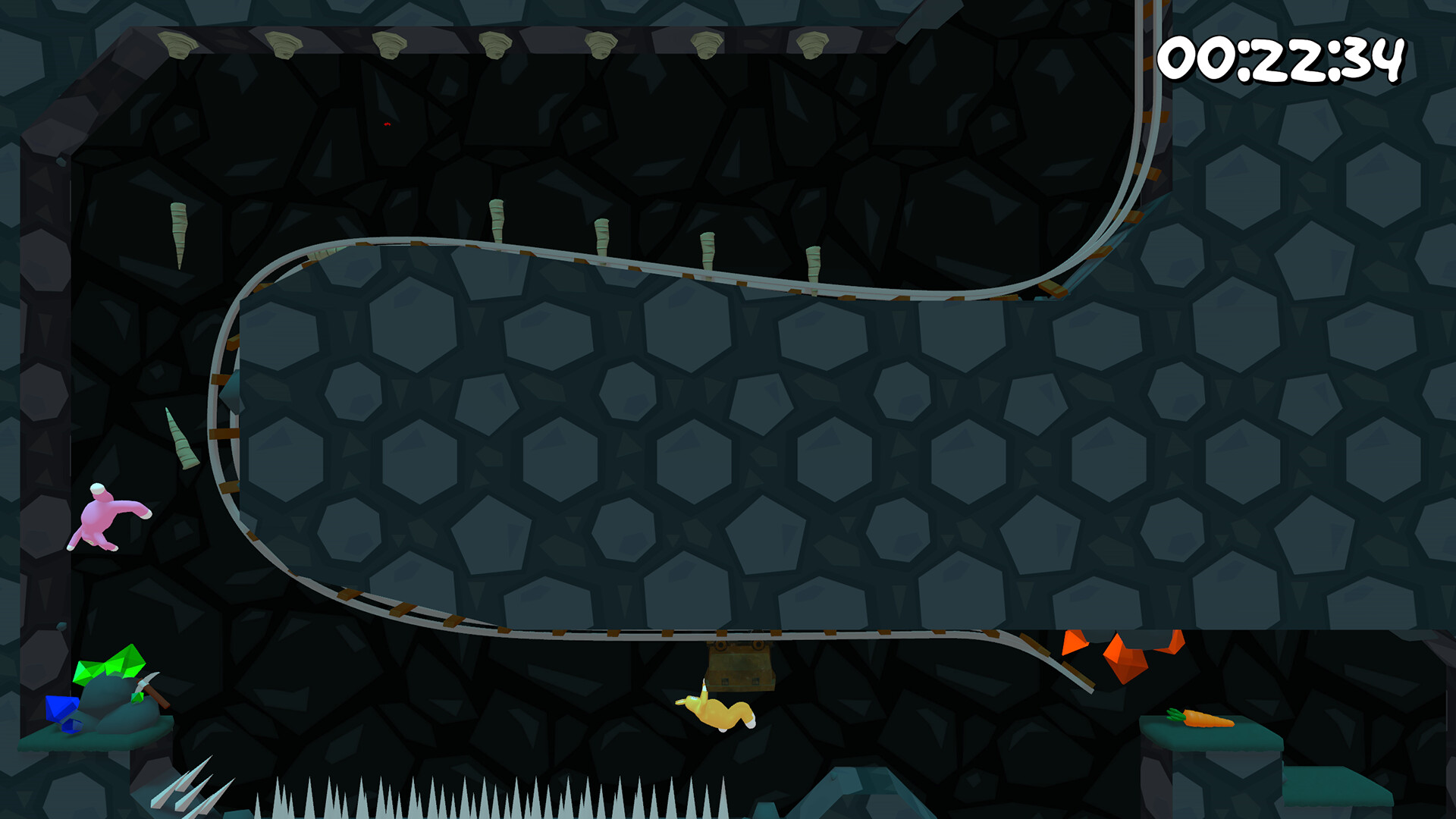
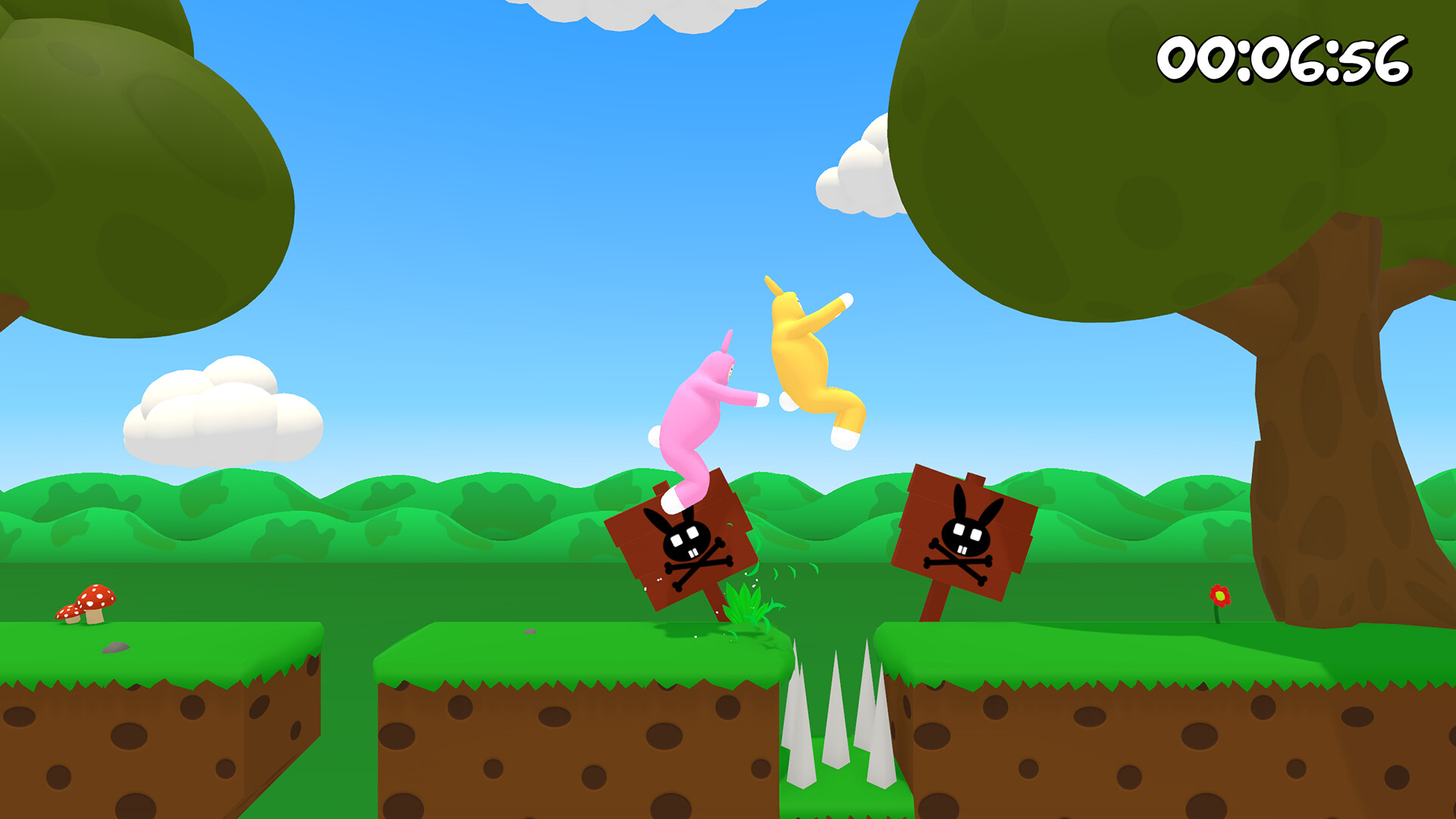
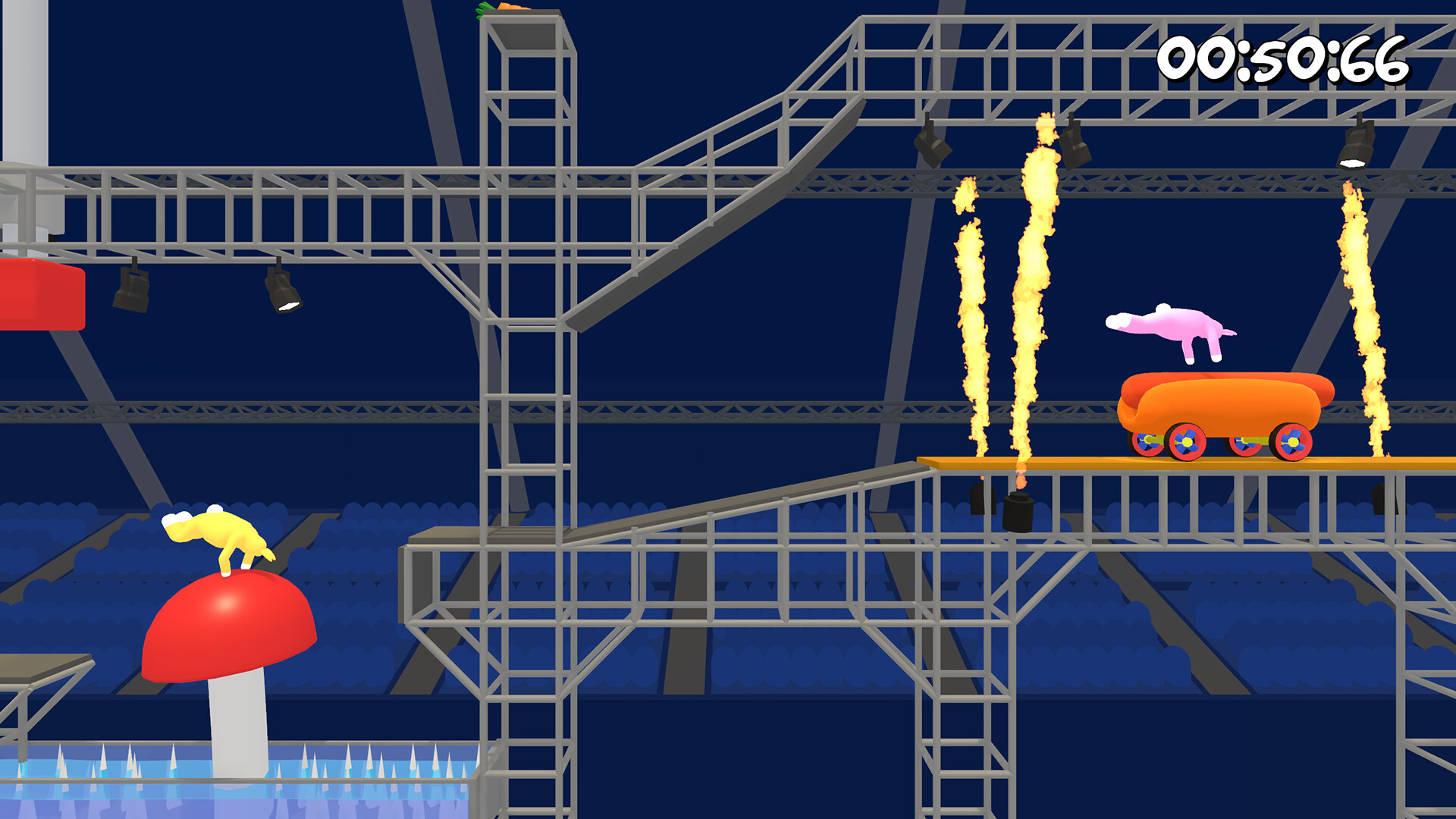
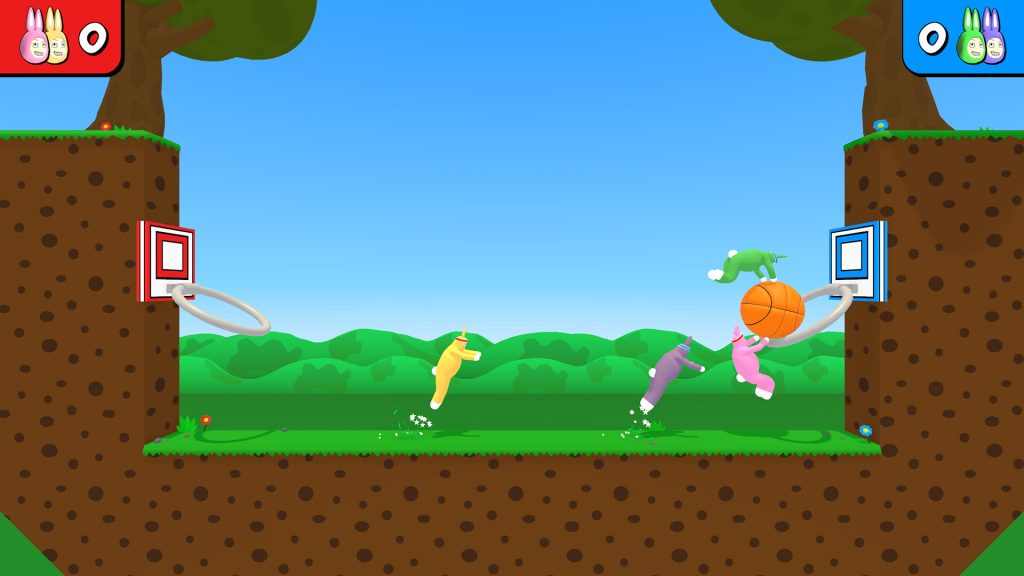
Levels in Super Bunny Man are visually simple: platforms, slopes, spikes, and pits. Objectives are usually straightforward—reach the end, collect carrots, survive.
But geometry is designed to amplify chaos. Slopes encourage sliding. Narrow ledges punish hesitation. Hazards are placed where physics is least predictable.
The simplicity of goals contrasts sharply with the difficulty of execution. Players always know what to do—just not how to do it without disaster.
5. Cooperative Play: Shared Failure as Bonding
Super Bunny Man’s greatest strength emerges in co-op. Two players are often required to solve puzzles—but also responsible for each other’s downfall.
You must lift, throw, push, and drag your partner. Cooperation is mandatory, but trust is dangerous. One wrong move can undo minutes of progress.
This shared vulnerability creates laughter. Failure feels communal rather than individual. The game becomes less about winning and more about surviving each other.
6. Communication: Screaming Is a Strategy
Clear communication rarely leads to clean execution in Super Bunny Man—and that is the point.
Players shout instructions that are immediately invalidated by physics. “Jump now!” becomes “Why did you do that?” followed by laughter.
Verbal chaos mirrors mechanical chaos. Plans fall apart instantly. Improvisation replaces strategy. The game thrives on this breakdown.
Communication becomes expressive rather than efficient—another source of comedy.
7. Difficulty That Escalates Emotionally, Not Mechanically
Super Bunny Man becomes harder not by adding complexity, but by increasing pressure. Levels become longer. Checkpoints become rarer. Stakes rise.
However, mechanics remain consistent. The game does not introduce new systems—it deepens reliance on unstable ones.
This creates emotional escalation. Players become more invested, more frustrated, and more prone to mistakes. The game weaponizes impatience.
8. PvP Modes: Absurd Competition
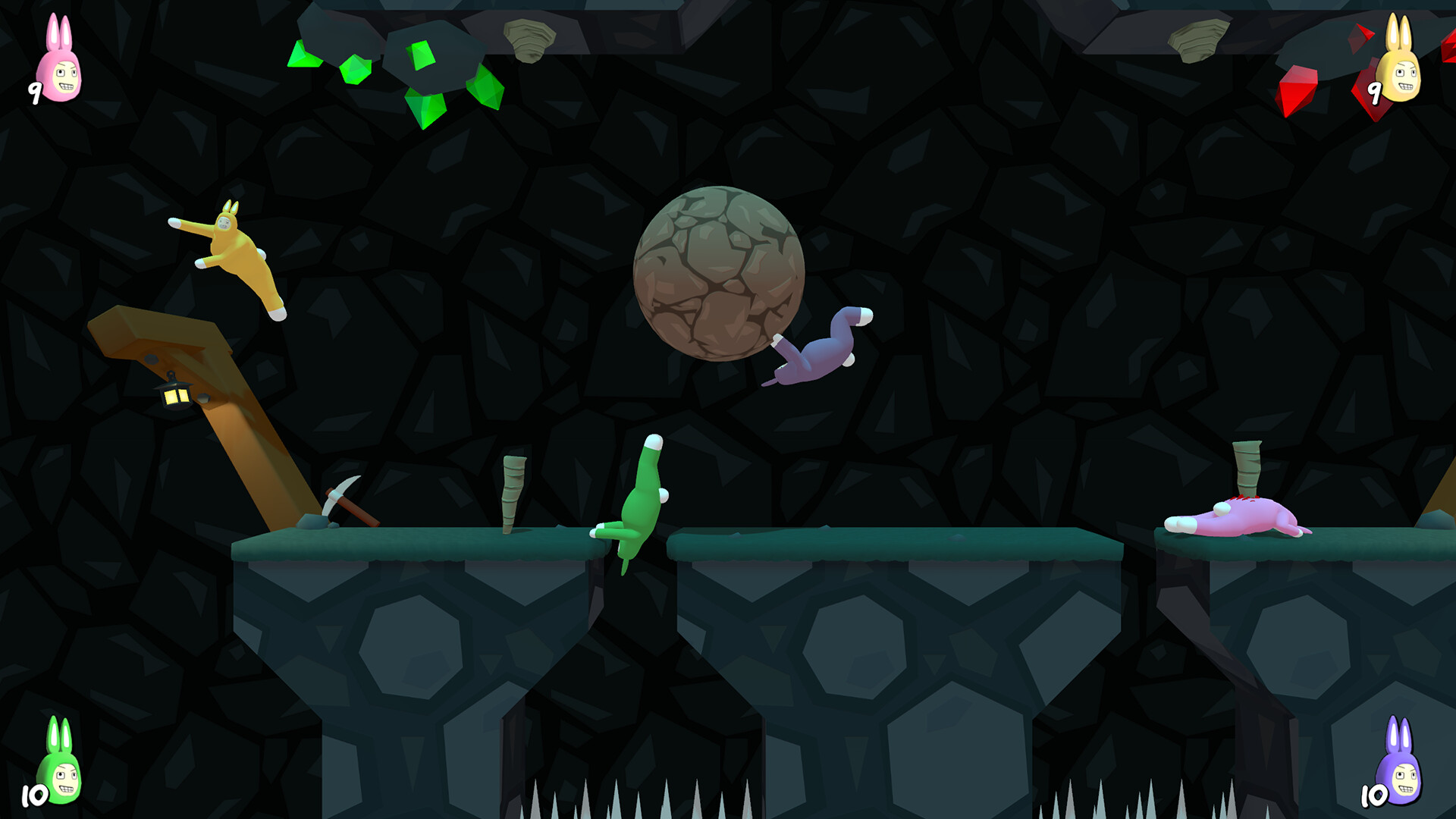
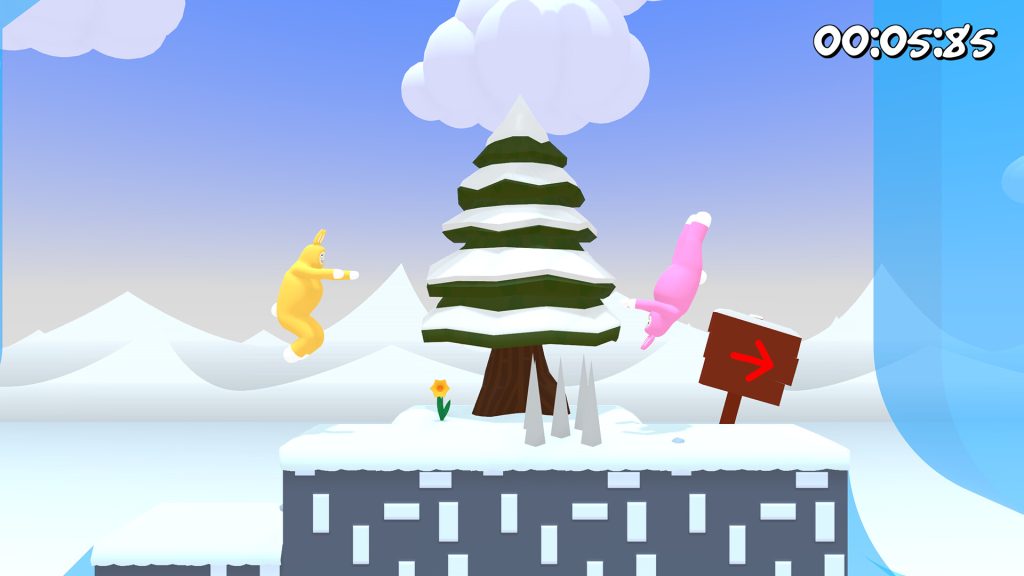
Beyond co-op, Super Bunny Man includes PvP modes that embrace absurdity. Players push, kick, and sabotage each other in physics-driven arenas.
Winning often feels arbitrary. Skill matters—but luck and timing matter more. Matches are short, chaotic, and loud.
These modes reinforce the game’s philosophy: competition is less about dominance and more about spectacle.
9. Player Psychology: Permission to Be Bad
One of Super Bunny Man’s most underrated achievements is how it gives players permission to fail.
There is no shame in incompetence. The game does not reward perfection or punish mistakes harshly. Instead, it celebrates error.
This lowers emotional barriers. Players who normally avoid platformers feel welcome. The game becomes inclusive through imperfection.
10. Longevity and the Limits of Chaos
Super Bunny Man’s appeal is intense—but not infinite. The core joke is strong, but repetition can reduce novelty over time.
The experience depends heavily on who you play with. With the right partner, it is endlessly funny. Alone, it loses much of its charm.
This is not a game designed for solitary mastery or endless replay. It is designed for moments—loud, chaotic, shared moments.

Pros
Exceptionally funny physics-based gameplay
Strong cooperative focus and shared failure
Simple goals with emergent solutions
Accessible to players of all skill levels
Excellent couch co-op and party game energy
Cons
Limited appeal for solo play
Controls may feel frustrating by design
Repetition reduces long-term novelty
Progress can feel slow due to frequent failure
Not suited for players seeking precision or mastery
Conclusion: A Game That Wins by Letting Go
Super Bunny Man is not about control—it is about losing it together. It understands that laughter often comes from collapse, not success. By embracing unstable physics and shared failure, it creates a space where frustration becomes fun and incompetence becomes bonding.
For players looking for a cooperative experience that prioritizes humor, chaos, and human interaction over skill expression, Super Bunny Man offers something rare. It is not polished in the traditional sense.
It is joyful in the human sense – messy, loud, and unforgettable.