

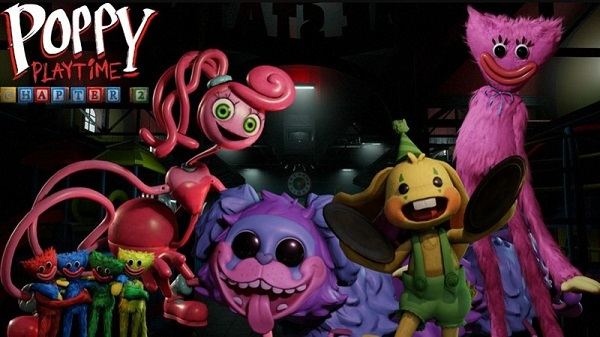
Poppy Playtime – Industrial Horror, Player Curiosity, and the Weaponization of Innocence
Introduction: Fear Built From Familiar Shapes
Poppy Playtime is often labeled as a mascot horror game, but that description only explains what it looks like, not what it does. At its core, Poppy Playtime is an experiment in psychological contrast: childhood imagery repurposed as threat, playful colors reframed as warning signs, and curiosity transformed into vulnerability. The game does not rely on constant danger. Instead, it invites the player to approach fear willingly.
Rather than overwhelming players with combat or survival systems, Poppy Playtime leverages pacing, environmental storytelling, and spatial tension to create discomfort. It understands that the most effective horror is not about what attacks you—but about what might be waiting once you decide to move forward. This review examines Poppy Playtime as a design-driven horror experience, focusing on how it manipulates expectation, space, and player psychology.
Quick Info (Overview Box)
Release Year: 2021
Genre: Horror / Puzzle / Exploration
Platforms: PC, PlayStation, Xbox
Game Modes: Single-player episodic experience
Target Audience: Players who enjoy atmospheric horror, environmental storytelling, and tension driven by anticipation rather than action
1. Core Design Philosophy: Curiosity as the Trigger
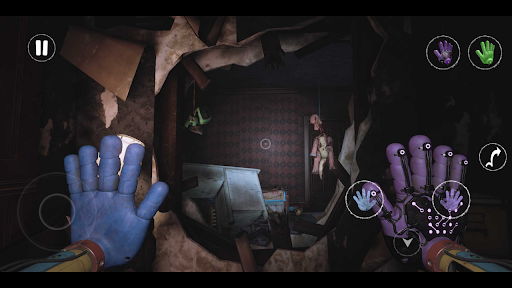
The most important mechanic in Poppy Playtime is not the GrabPack, puzzles, or enemies—it is curiosity. The game rarely forces players forward. Doors are unlocked slowly. Spaces are visible before they are accessible. Audio logs tease information without resolving it.
This creates a subtle psychological contract: nothing happens unless you choose to continue. Fear is not imposed—it is invited. Players step into danger because they want answers.
This design is powerful because it shifts responsibility. When something goes wrong, it feels like a consequence of choice, not punishment.
2. The Factory as a Character
The abandoned Playtime Co. factory is not just a setting—it is an active participant in the horror. Its scale dwarfs the player. Conveyor belts, vents, and production halls suggest purpose long after function has decayed.
Environmental storytelling does the heavy lifting. Notes, tapes, and set dressing imply unethical experimentation, neglect, and corporate decay without explicit exposition. The factory does not explain itself—it leaks information.
This approach rewards observation and reinforces immersion. Players are not told what happened. They piece it together, which makes the horror personal rather than scripted.
3. Visual Language: Innocence Reframed
One of Poppy Playtime’s most effective tools is visual dissonance. Bright colors, toy mascots, and playful designs clash violently with silence, decay, and threat.
This contrast destabilizes comfort. The brain expects safety from familiar shapes, but the environment denies it. The result is cognitive tension – players feel uneasy without knowing why.
Importantly, the game does not immediately corrupt its mascots. Early exposure is neutral, even charming. Horror escalates only once attachment or familiarity is established.
4. The GrabPack: Interaction Over Power
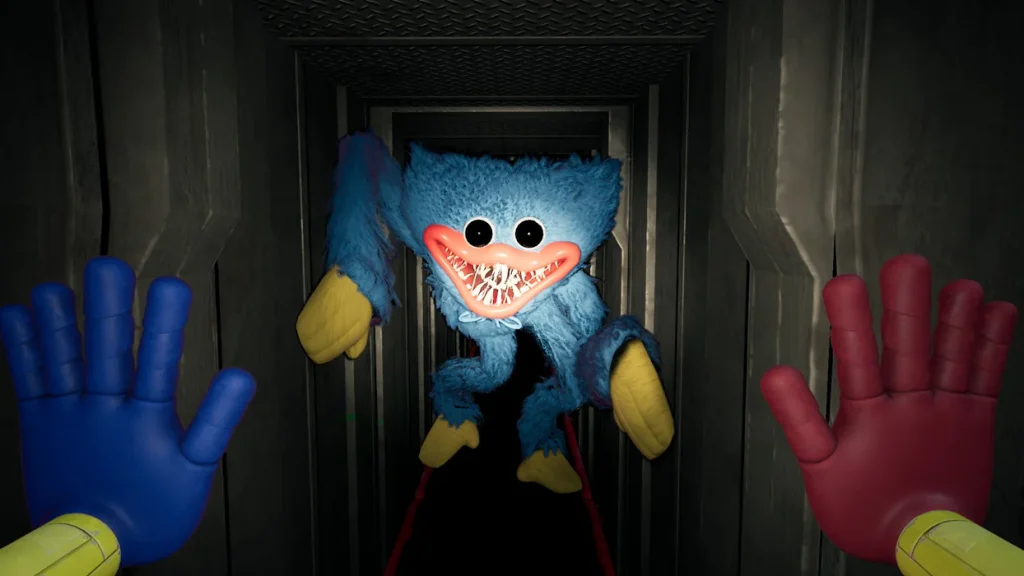
The GrabPack is the player’s primary tool, but it is not a weapon. It extends reach, solves puzzles, and manipulates space—but it does not provide safety.
This reinforces vulnerability. The player can interact with the world but cannot dominate it. When danger appears, the GrabPack becomes a liability rather than a defense.
By prioritizing interaction over combat, Poppy Playtime keeps tension intact. You are capable, but never in control.
5. Puzzle Design Under Psychological Pressure
Puzzles in Poppy Playtime are mechanically simple but emotionally loaded. They require attention, positioning, and patience—often in environments where players expect danger.
The act of solving puzzles becomes stressful not because of difficulty, but because of exposure. Standing still feels unsafe. Focusing on logic feels risky.
This is intentional. The game uses puzzles to slow players down, creating space for fear to grow organically.
6. Enemy Design: Absence Before Presence
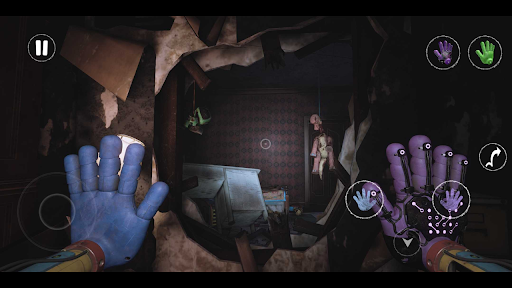
When enemies appear in Poppy Playtime, they are memorable—but their true power lies in how long they do not appear. The game builds threat through suggestion: sounds, shadows, environmental hints.
By delaying confrontation, the game allows imagination to work against the player. Fear peaks before the encounter, not during it.
When enemies finally reveal themselves, it feels earned—and often overwhelming—because anticipation has already done most of the work.
7. Sound Design as Psychological Manipulation
Audio in Poppy Playtime is restrained and deliberate. Long stretches of near-silence amplify minor sounds. Mechanical hums, distant echoes, and sudden cues break calm abruptly.
Music rarely comforts. When it appears, it often signals escalation rather than relief. Silence becomes suspicious rather than soothing.
This careful sound design trains players to listen obsessively, reinforcing paranoia and tension without constant stimulation.

8. Episodic Structure and Escalation
The episodic format of Poppy Playtime allows the developers to escalate stakes gradually. Each chapter introduces new mechanics, environments, and threats while building on established themes.
This structure supports sustained engagement. Players return not just for answers, but to experience how the game evolves its horror language.
However, episodic delivery also fragments pacing. Tension resets between chapters, which can weaken emotional continuity for some players.
9. Player Agency and Powerlessness
Poppy Playtime walks a careful line between agency and helplessness. Players make choices, explore freely, and solve problems—but when danger strikes, options narrow quickly.
This balance prevents frustration while preserving fear. Players feel responsible for progression but not empowered to eliminate threats.
The game respects player intelligence without granting dominance. Fear remains intact because power is always conditional.
10. Cultural Impact and Genre Positioning
Within the mascot horror genre, Poppy Playtime occupies a central position. It helped solidify a formula centered on:
Childlike aesthetics
Corporate horror themes
Puzzle-driven exploration
Viral character design
Its influence is visible across indie horror projects, for better or worse. While imitators often copy surface elements, few replicate the careful pacing and restraint that make Poppy Playtime effective.
Pros
Strong use of environmental and psychological horror
Effective visual contrast between innocence and threat
Memorable setting with cohesive atmosphere
Puzzle design that reinforces tension
Restraint in enemy usage enhances impact
Cons
Episodic structure can disrupt pacing
Limited mechanical depth outside core loop
Horror impact relies heavily on atmosphere, which may not appeal to all
Short individual chapters may feel incomplete
Not designed for replayability
Conclusion: Horror Through Invitation, Not Force
Poppy Playtime succeeds because it understands that fear works best when players choose to approach it. It does not chase the player relentlessly. It waits. It watches. It lets curiosity do the work.
For players who enjoy slow-burn horror, environmental storytelling, and tension built through anticipation rather than combat, Poppy Playtime offers a focused and unsettling experience. It is not loud. It is not constant. It is patient.
And patience, in horror, is often the most dangerous thing of all.