
Free Fire – Accessibility, Player Identity, and the Reinvention of Battle Royale for the Masses



Introduction: A Game Built for Everyone, Not Everything
Free Fire is often underestimated by players who approach it through the lens of traditional PC or console shooters. Visually simple, mechanically forgiving, and aggressively mobile-focused, it can look shallow at a glance. Yet this perception misses the point. Free Fire is not trying to compete with high-fidelity battle royales on their own terms—it is redefining what the genre means when accessibility, device constraints, and player diversity become the primary design goals.
Free Fire is less about realism and mechanical purity, and more about reach. It is a battle royale designed to function reliably on low-end hardware, short play sessions, unstable networks, and wildly different player skill levels. This review examines Free Fire as a design solution rather than a spectacle—focusing on player psychology, systemic simplification, and why its choices resonate with hundreds of millions of players worldwide.
Quick Info (Overview Box)
Release Year: 2017
Genre: Battle royale / Mobile action shooter
Platforms: Mobile (Android, iOS)
Game Modes: Battle Royale, Clash Squad, Ranked, Custom Rooms
Target Audience: Mobile-first players, casual and semi-competitive audiences, players with limited hardware access

1. Core Design Philosophy: Constraints as a Feature
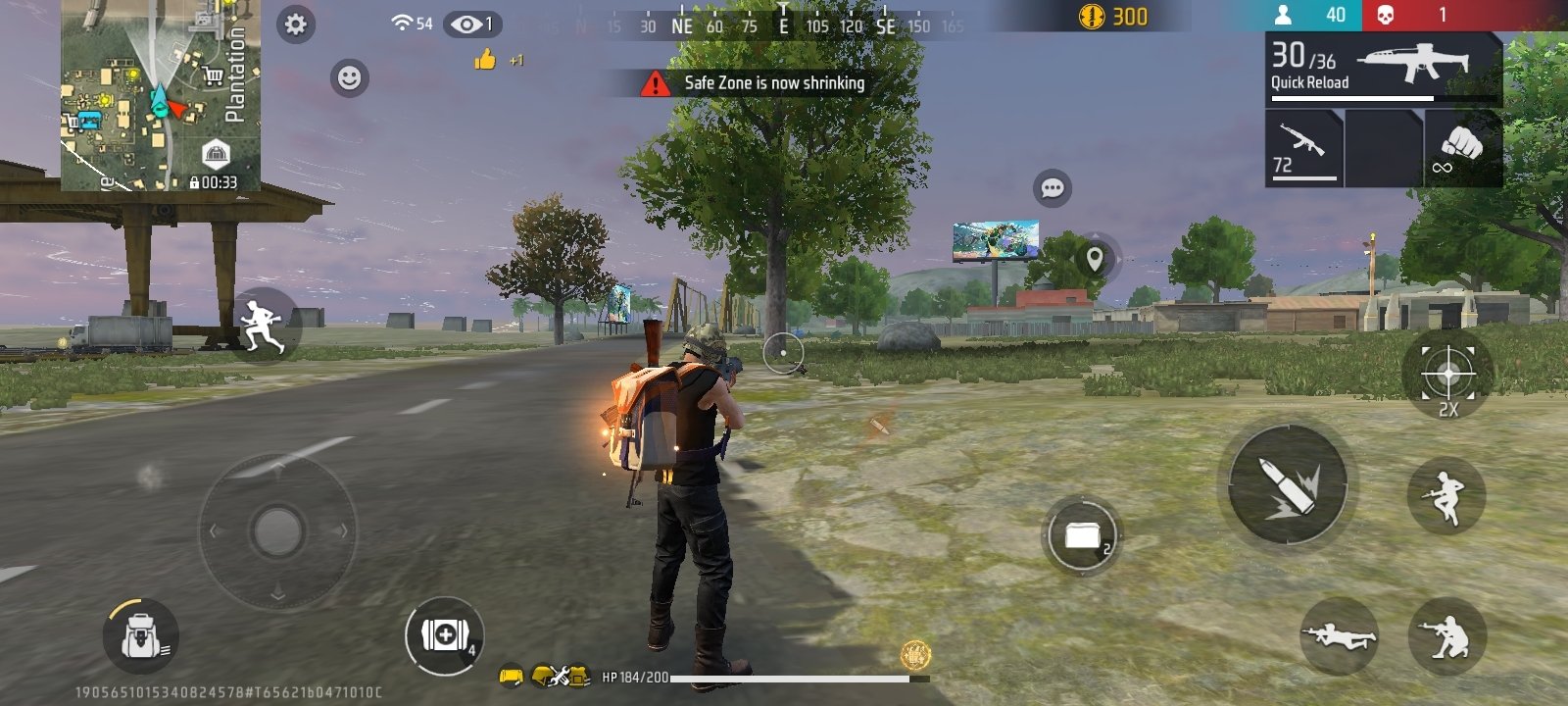
Free Fire begins with a set of hard constraints: limited processing power, small screens, touch controls, and unstable network conditions. Instead of fighting these limitations, the game embraces them.
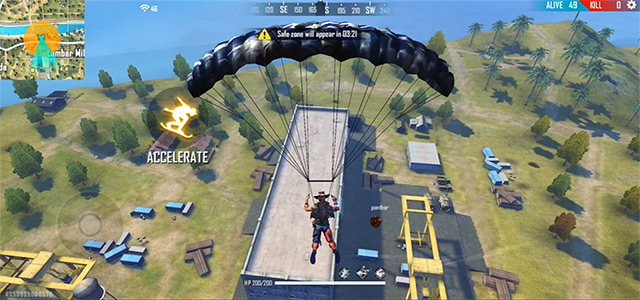
Matches are shorter. Player counts are lower. Maps are smaller. Visual clarity is prioritized over detail. These decisions are not compromises—they are optimizations. The game is designed to deliver a complete battle royale experience in under ten minutes, without exhausting the player cognitively or technically.
This philosophy defines everything that follows. Free Fire is not about immersion through realism; it is about immediacy.
2. Match Length and Psychological Pacing
One of Free Fire’s most important design choices is match duration. Shorter matches reduce commitment anxiety. Players are more willing to queue because failure does not cost much time.
This has a profound psychological effect. Risk-taking increases. Aggression feels safer. Players experiment more freely. The emotional weight of loss is reduced, which keeps frustration low and engagement high.
Free Fire understands a key truth of mobile gaming: players are often multitasking, distracted, or playing in bursts. The game adapts to life, rather than demanding life adapt to it.
3. Gunplay: Forgiveness Over Precision
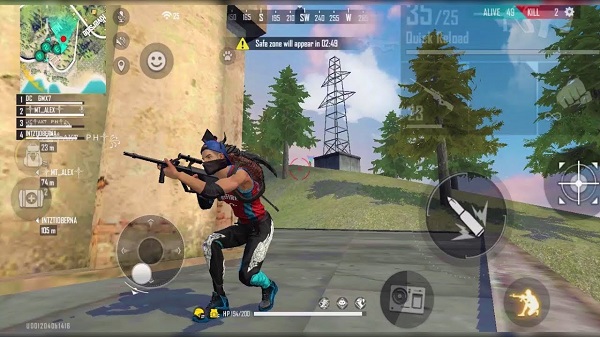
Gunplay in Free Fire is intentionally forgiving. Recoil is manageable. Hitboxes are generous. Aim assist smooths out inaccuracies.
This design is not meant to reward mechanical perfection. It is meant to reduce frustration on touchscreens, where fine motor control is inherently limited. The result is combat that feels responsive even when input precision is low.
While this limits high-level aim expression compared to PC shooters, it democratizes competence. More players feel capable, which sustains the game’s massive audience.
4. Character System: Identity as Gameplay
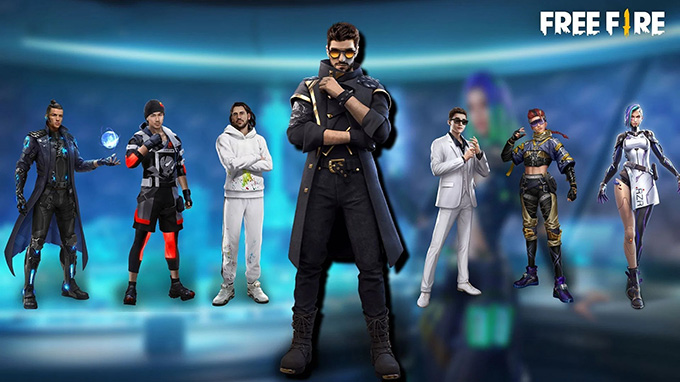
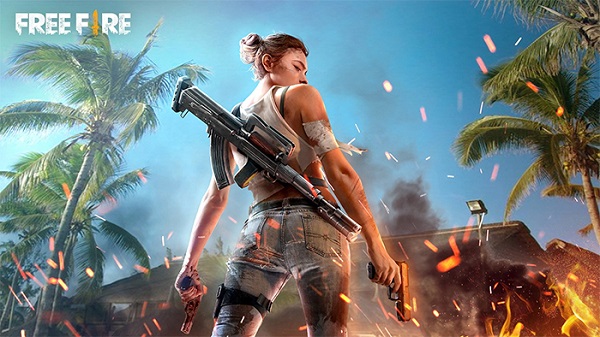
One of Free Fire’s most distinctive systems is its character-based abilities. Unlike hero shooters where abilities dominate combat, Free Fire uses characters to nudge playstyle.
Abilities offer small advantages—movement boosts, healing bonuses, information perks—but rarely decide fights outright. Instead, they give players a sense of identity and progression without overwhelming balance.
This system serves two purposes:
It adds strategic flavor without mechanical overload
It strengthens player attachment through personalization
Players are not just avatars—they are choices.
5. Accessibility and Global Reach
Free Fire’s true achievement lies in its global accessibility. The game runs on devices that cannot handle most modern titles. It performs reliably in regions with limited internet stability.
This makes Free Fire not just a game, but a gateway. For many players, it is their first competitive multiplayer experience. Their first battle royale. Their first exposure to online teamwork or rivalry.
The game’s popularity in regions often overlooked by AAA developers is not accidental—it is intentional.
6. Clash Squad: Focused Competition
While Battle Royale defines the game’s identity, Clash Squad represents its competitive core. Small teams, short rounds, and rapid feedback loops create a controlled environment for skill expression.
This mode reduces randomness and emphasizes positioning, economy management, and coordination. It also lowers cognitive load, making it easier to learn fundamentals.
For many players, Clash Squad becomes the long-term engagement hook—a place to test growth without the chaos of full battle royale matches.
7. Monetization and Player Motivation
Free Fire’s monetization is aggressive, but it is also psychologically savvy. Cosmetics, characters, and progression systems are layered to encourage long-term engagement.
Importantly, power is rarely locked entirely behind spending. Paid advantages exist, but they are incremental rather than absolute. Skill still matters, especially in competitive modes.
The game balances monetization pressure with perceived fairness—an essential equilibrium for sustaining a massive free-to-play audience.
8. Social Play and Community Identity
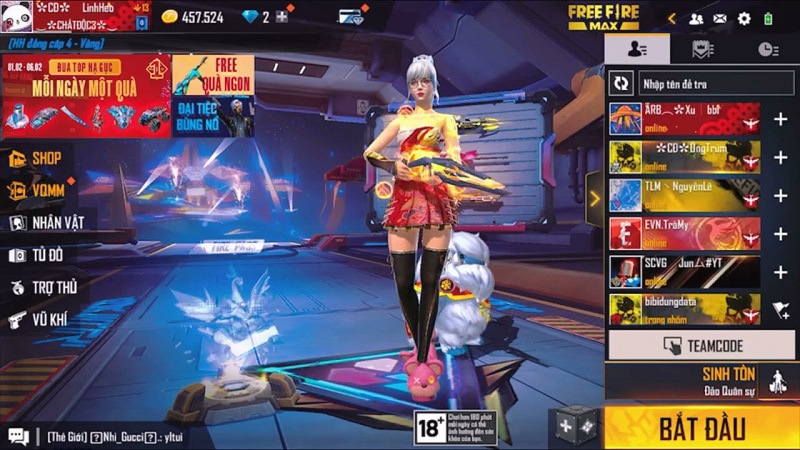
Free Fire thrives as a social game. Guilds, squads, voice chat, and regional identity all play central roles.
Players do not just play matches—they build reputations, rivalries, and friendships. Emotes, skins, and characters become social signals rather than pure cosmetics.
This community-driven engagement helps explain the game’s longevity. Players return not just for gameplay, but for belonging.
9. Skill Ceiling and Player Growth
Despite its accessibility, Free Fire does have a skill ceiling—just a different one. Mastery emerges through positioning, awareness, timing, and decision-making rather than raw aim.
High-level players read zones better, rotate smarter, and manage resources efficiently. The gap between casual and competitive players exists—but it is not defined solely by reflexes.
This allows a wider range of players to feel improvement without hitting an early wall.
10. Cultural Impact and Design Legacy
Free Fire’s influence extends beyond its mechanics. It demonstrated that battle royale does not require realism, large maps, or long sessions to succeed.
It reshaped expectations for mobile competitive games and proved that scale comes from inclusion, not exclusivity. Many mobile shooters that followed borrowed its pacing, clarity, and monetization structure.
Free Fire is not a technological marvel—but it is a design statement.
Pros
Extremely accessible on low-end devices
Short matches fit mobile lifestyles
Character system adds identity and strategy
Large, active global community
Reduced frustration for new players
Cons
Limited mechanical depth for hardcore FPS players
Visual simplicity may feel dated
Monetization pressure can be overwhelming
Competitive balance can feel inconsistent
Less satisfying for precision-focused players
Conclusion: A Battle Royale Designed for Reality
Free Fire succeeds because it understands its audience better than most games understand theirs. It does not chase technical perfection or esports purity. It chases availability.
For players with limited hardware, limited time, or limited access to traditional gaming ecosystems, Free Fire offers something invaluable: participation. It lowers the gate without removing the challenge entirely.
Free Fire is not trying to be the best battle royale ever made.
It is trying to be the most played.
And by that measure, it has already won.