

Stumble Guys – Controlled Chaos, Social Comedy, and the Design of Accessible Competition
Introduction: Failure as Entertainment
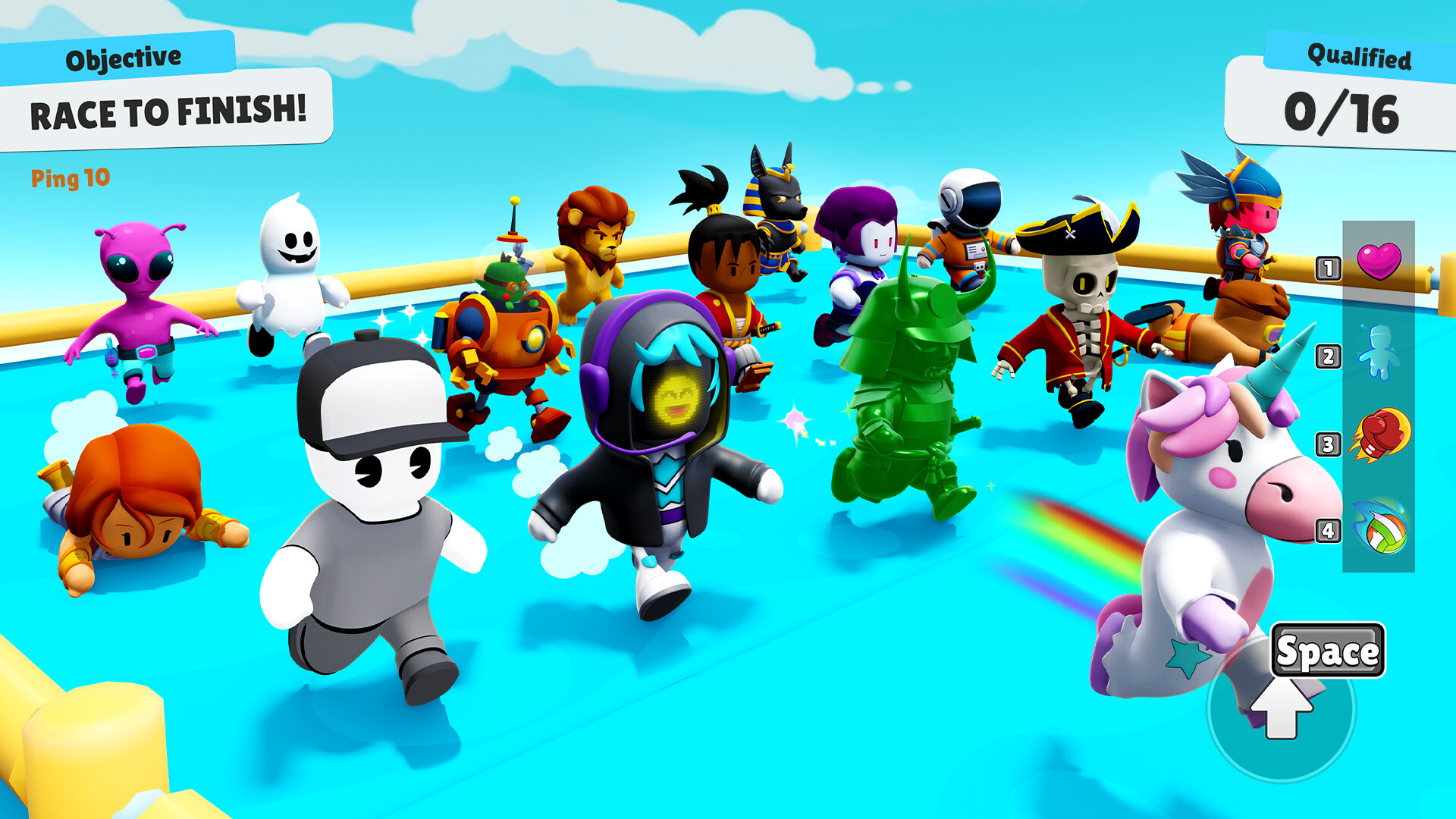
Stumble Guys presents itself as a lighthearted party game, but beneath its colorful visuals and clumsy avatars lies a carefully engineered system designed to transform failure into fun. Where many competitive games rely on mastery, precision, and optimization, Stumble Guys thrives on imbalance, uncertainty, and spectatorship. It is a game that understands a simple truth: most players do not want to feel powerful all the time—they want to laugh, especially at themselves.
Rather than asking players to improve mechanically, Stumble Guys asks them to participate socially. Winning is satisfying, but losing is often more entertaining. This review explores Stumble Guys as a study in accessible competition, player psychology, and why deliberately unreliable control can be a feature rather than a flaw.
Quick Info (Overview Box)
Release Year: 2020
Genre: Party platformer / Multiplayer obstacle race
Platforms: Mobile (Android, iOS), PC, Consoles
Game Modes: Free-for-all races, elimination rounds, custom lobbies
Target Audience: Casual players, social gamers, party-focused audiences, short-session players
1. Core Design Philosophy: Embrace the Stumble
At the heart of Stumble Guys is a rejection of mechanical precision. Characters slide, bounce, trip, and collide in ways that feel exaggerated and often unfair. This lack of control is intentional.
By removing tight responsiveness, the game ensures that outcomes are never fully predictable. Skill matters, but it is never absolute. Even experienced players can be undone by a mistimed jump or an unexpected collision.
This design flattens the skill curve and keeps matches emotionally light. When everyone stumbles, no one feels humiliated for long.
2. Movement as Comedy, Not Control
Movement in Stumble Guys is intentionally floaty and unstable. Characters feel like they are perpetually on the verge of losing balance.
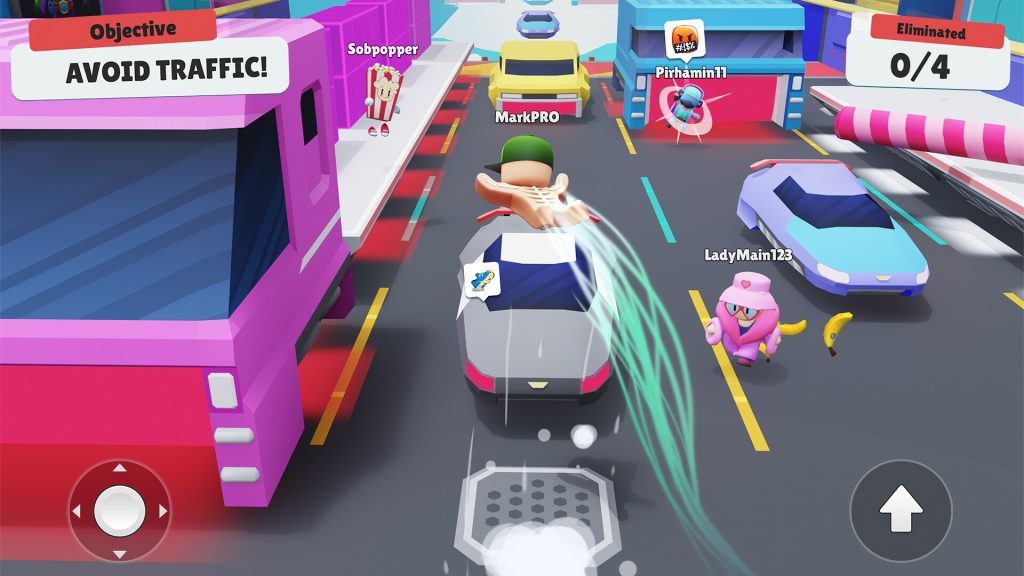
This transforms traversal into a spectacle. Jumping is risky. Landing is uncertain. Bumping into other players creates chain reactions of chaos. Every race becomes a physical comedy routine.
Importantly, this design ensures that watching others play is as entertaining as playing yourself. The game is built for spectatorship as much as participation.
3. Course Design: Simple Obstacles, Complex Outcomes
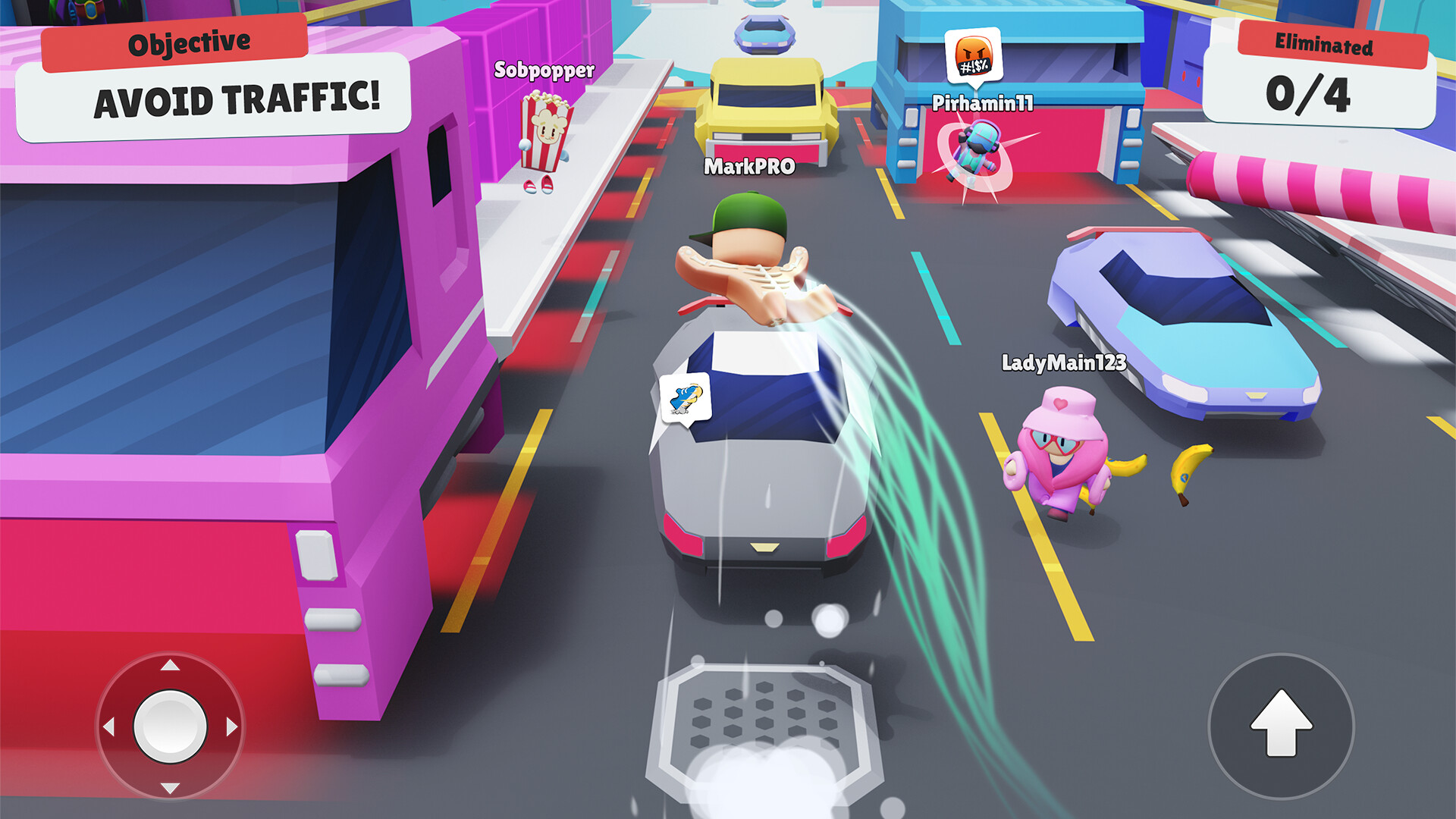
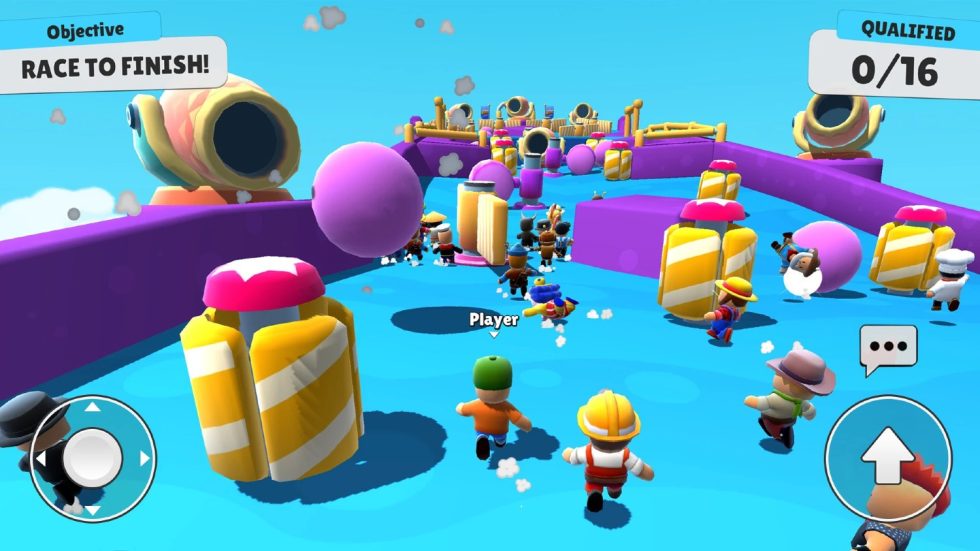
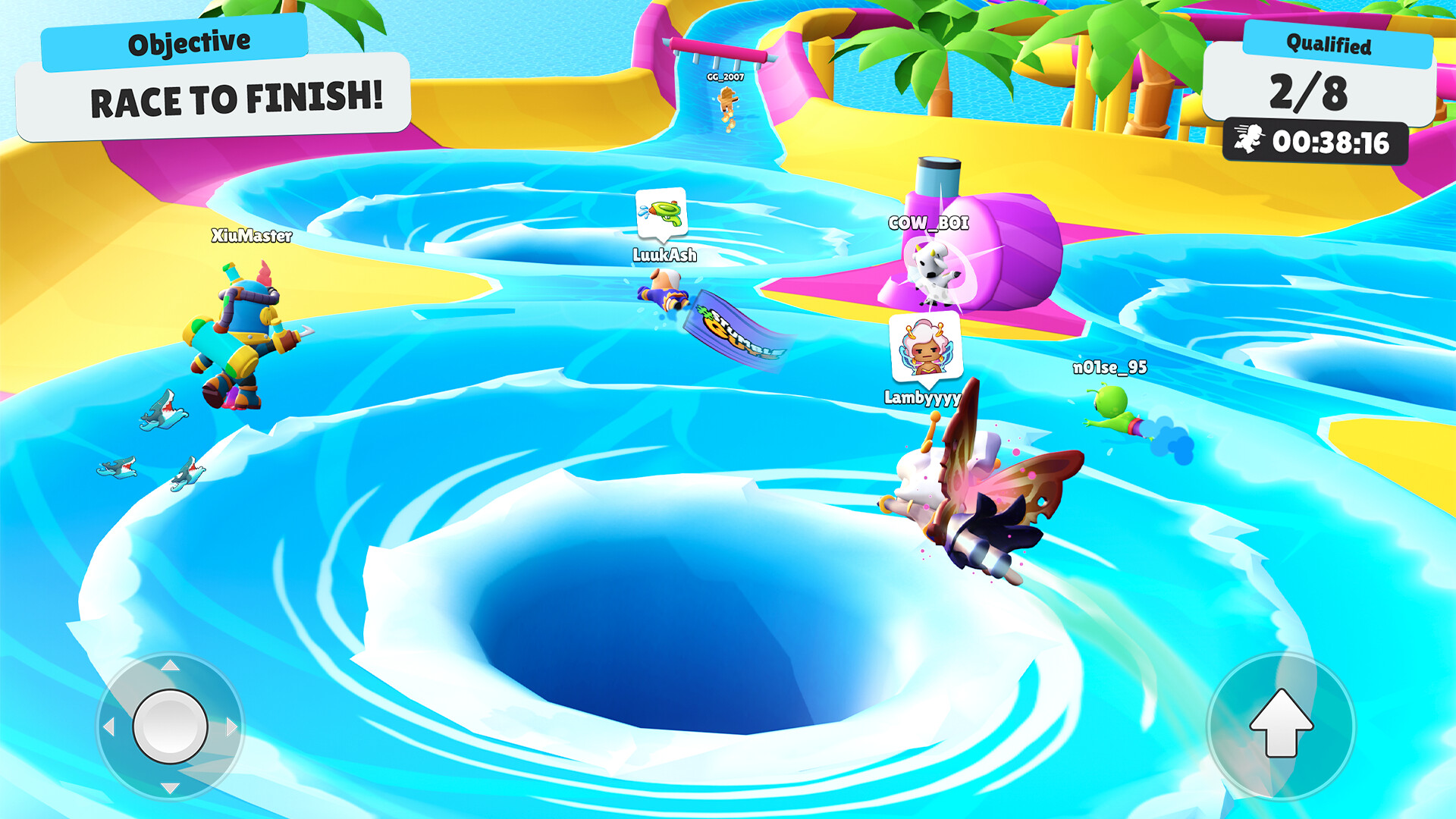
The obstacle courses in Stumble Guys are mechanically simple. Platforms move. Hammers swing. Floors disappear. Nothing requires advanced inputs.
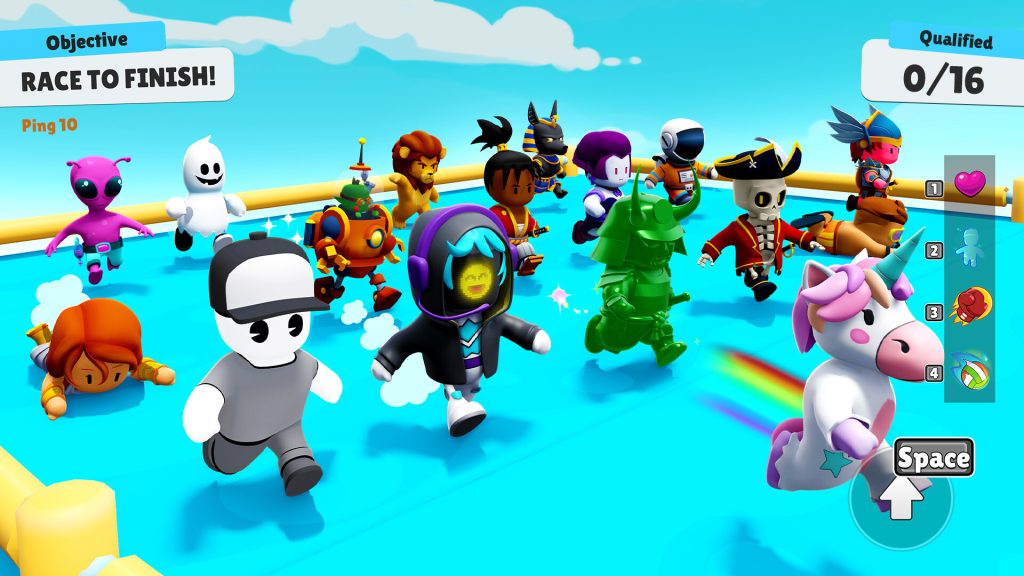
Yet outcomes are wildly variable because of player density and physics interaction. A safe jump becomes dangerous when twenty players attempt it simultaneously. A clear path collapses under crowd pressure.
This emergent complexity ensures replayability. The same course feels different every time—not because it changes, but because players do.
4. Randomness and Perceived Fairness
Randomness plays a significant role in Stumble Guys, but it is carefully bounded. Obstacles follow predictable patterns, even if player interactions do not.
This creates a perception of fairness despite frequent failure. Players understand why they fell, even if they could not prevent it. The game feels chaotic but not malicious.
By making randomness visible and shared, Stumble Guys avoids frustration. Losing feels funny, not unfair.
5. Elimination as Social Pressure
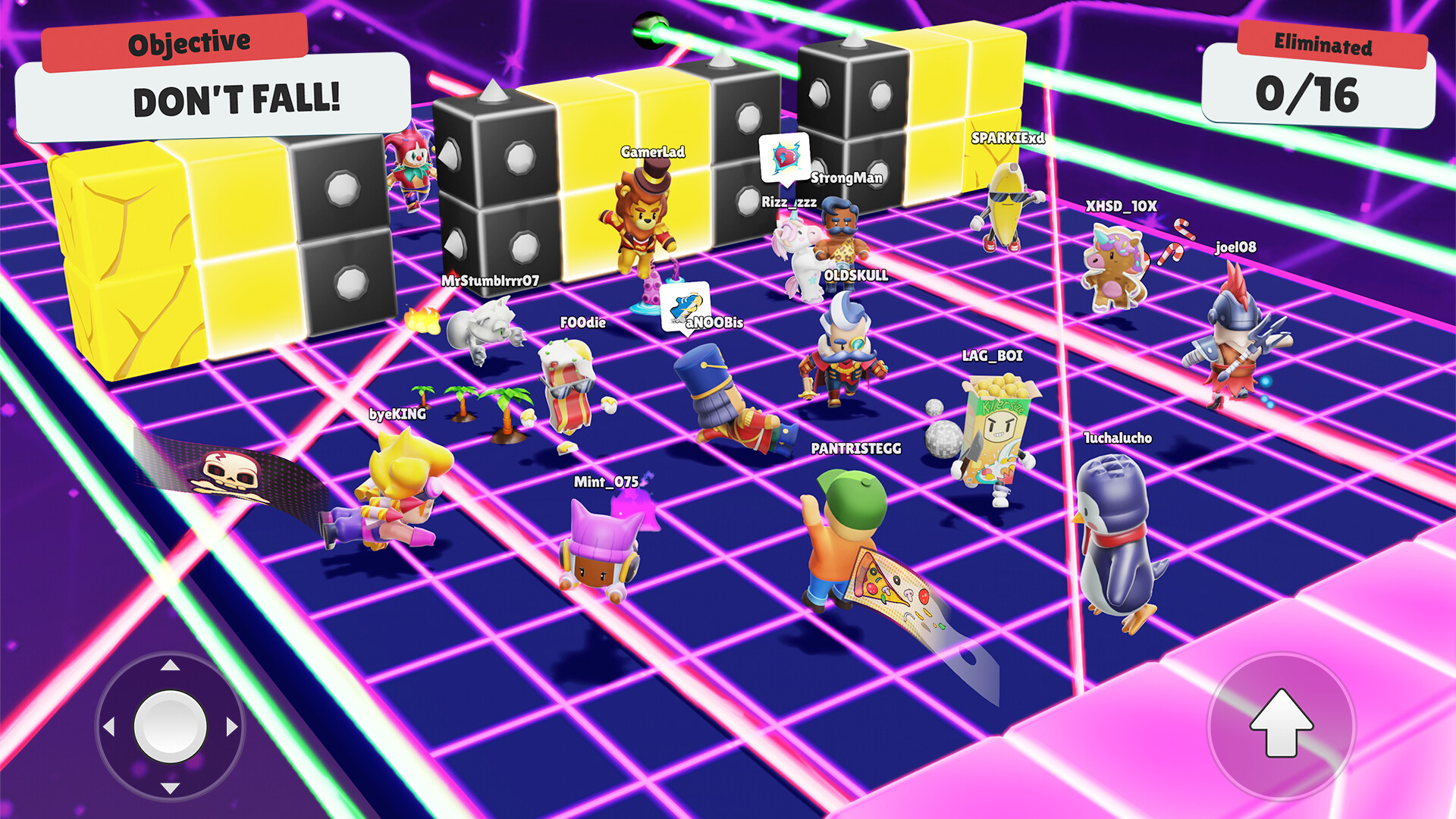
Each round in Stumble Guys eliminates a portion of players. This creates tension—but not dread. Elimination happens quickly and without ceremony.
Because matches are short and entry is immediate, elimination feels temporary. Players are more willing to take risks, experiment, and laugh at mistakes.
This low-stakes elimination loop encourages participation over perfection. The fear of failure is replaced with curiosity about what happens next.
6. Player Psychology: Spectacle Over Ego
One of the most important psychological achievements of Stumble Guys is how it redirects player ego. Success is visible, but not dominant. Failure is common, but rarely shameful.
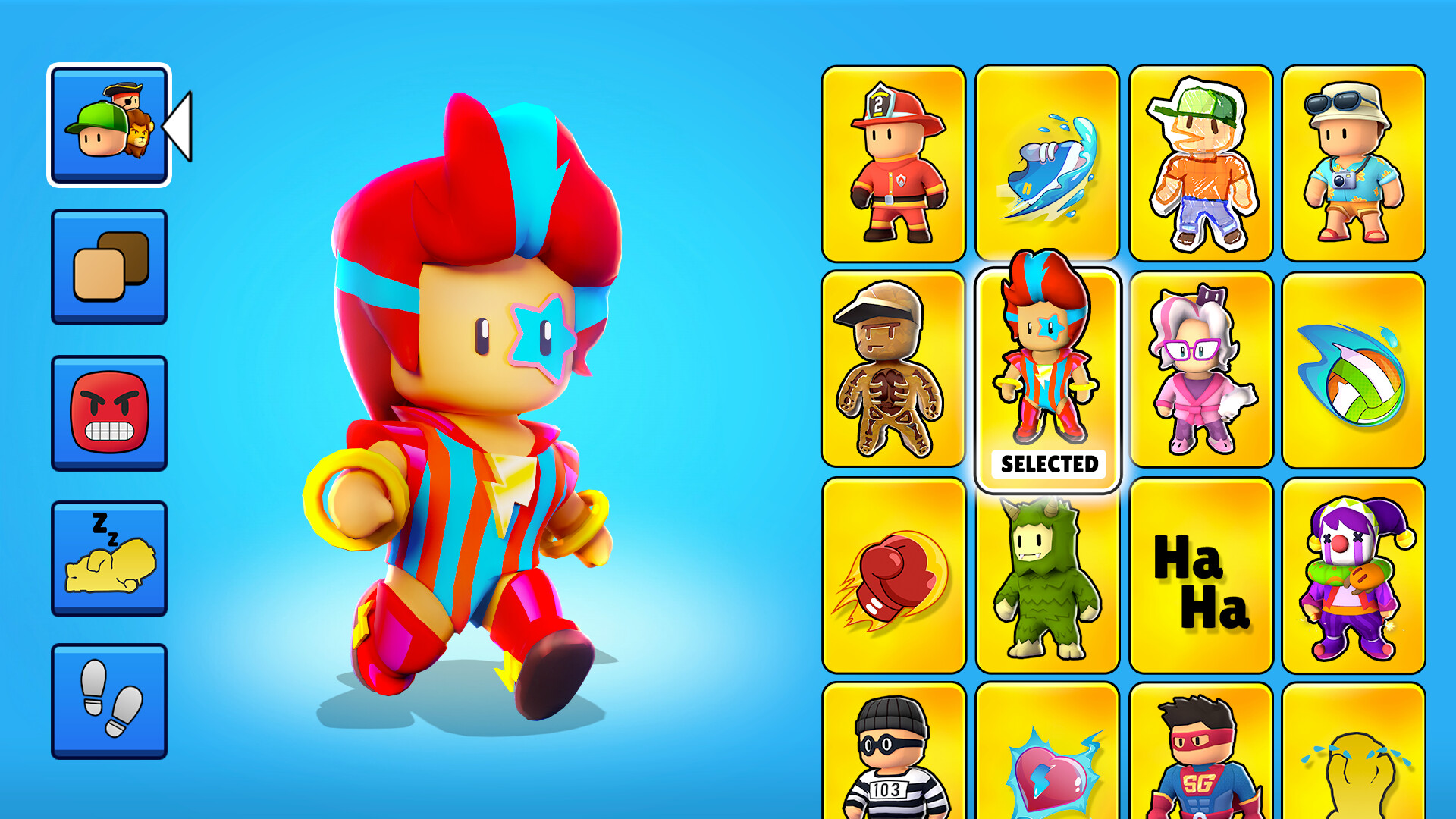
Players quickly learn that clumsiness is part of the identity. Emotes, costumes, and animations reinforce this tone. The game invites players to perform rather than compete seriously.
This makes Stumble Guys emotionally inclusive. It welcomes players who might avoid competitive games due to pressure or toxicity.
7. Social Play and Shared Laughter
Stumble Guys excels as a social experience. Playing with friends amplifies chaos and humor. Voice chat turns failure into punchlines.
Unlike games where teammates depend on each other for success, Stumble Guys allows friends to sabotage each other playfully without real consequence. Betrayal is funny, not frustrating.
This design makes the game ideal for parties, streams, and casual gatherings. It is less about winning together and more about reacting together.
8. Monetization and Identity Expression
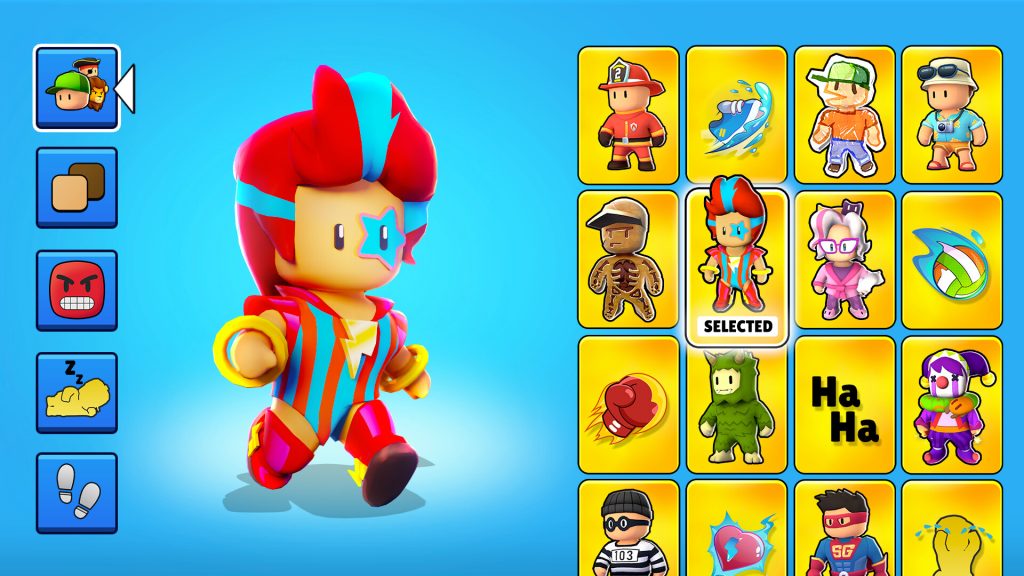
Monetization in Stumble Guys centers on cosmetics—skins, animations, and emotes. These items do not affect gameplay, but they significantly affect presence.
Costumes transform characters into visual jokes or status symbols. Emotes allow players to taunt, celebrate, or mock themselves.
This reinforces the game’s identity-first design. Players express personality rather than power. Spending money changes how you are seen—not how you win.
9. Skill Ceiling and Its Limits
While Stumble Guys is accessible, it is not skill-less. Experienced players learn optimal paths, timing, and crowd navigation.
However, the skill ceiling is intentionally soft. Mastery increases consistency, not dominance. Even the best players fail regularly.
This prevents long-term stagnation and keeps new players competitive. The game values participation over hierarchy.
10. Longevity Through Tone, Not Depth
Stumble Guys does not rely on deep systems or complex mechanics to retain players. Its longevity comes from tone, updates, and social relevance.
New maps, cosmetics, and events refresh the experience without changing its core. The game remains recognizable even as content rotates.
This stability ensures that returning players feel immediately comfortable—an underrated form of retention.
Pros
Extremely accessible and easy to learn
Failure is entertaining rather than frustrating
Strong social and party-game appeal
Short matches fit casual playstyles
Cosmetic-focused monetization avoids pay-to-win
Cons
Limited mechanical depth for long-term mastery
Randomness can frustrate competitive players
Repetition may set in without social context
Not designed for serious competitive play
Enjoyment depends heavily on player mindset
Conclusion: A Game That Laughs With You
Stumble Guys succeeds because it understands its role. It is not here to test your reflexes or prove your dominance. It is here to create shared moments of chaos, embarrassment, and joy.
By turning loss into spectacle and clumsiness into identity, Stumble Guys lowers the emotional cost of competition. It invites players to relax, participate, and laugh—often at themselves.
For players seeking lighthearted multiplayer fun, social connection, and accessible chaos, Stumble Guys delivers exactly what it promises.
It does not ask you to be the best.
It asks you to stumble together.