


RV There Yet? – Domestic Intimacy, Mobile Confinement, and the Quiet Drama of Shared Journeys







Introduction: Travel Without Escape
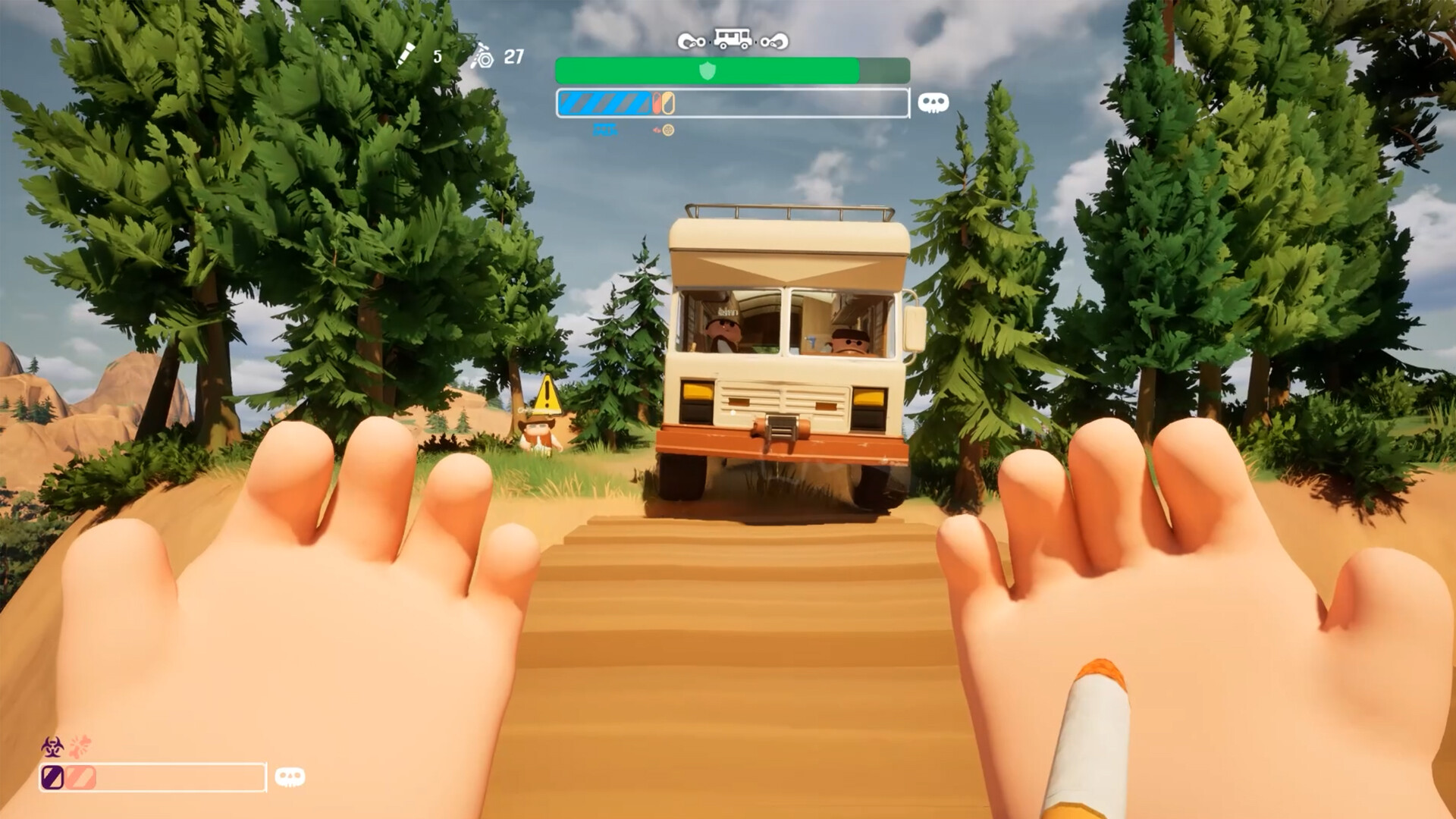
RV There Yet? begins with a premise that sounds cozy, even whimsical: take a road trip in a recreational vehicle and manage life on the move. But beneath that gentle framing lies a thoughtful exploration of togetherness under constraint. This is not a game about destinations, speed, or scenic triumph. It is a game about what happens when people share a small space, limited resources, and long stretches of time with nowhere to hide.
Rather than turning travel into spectacle, RV There Yet? turns it inward. It focuses on routines, negotiations, compromises, and the subtle friction of shared domestic life. The road is not an escape—it is a pressure chamber. This review examines RV There Yet? as a systems-driven slice-of-life experience, exploring how confinement, cooperation, and repetition create meaning without relying on high stakes or dramatic escalation.
Quick Info (Overview Box)
Release Year: 2024
Genre: Cozy simulation / Narrative management
Platforms: PC
Game Modes: Single-player, light co-op elements
Target Audience: Players who enjoy cozy games, domestic simulations, narrative-driven systems, and reflective pacing

1. Core Design Philosophy: The Journey Is the Room
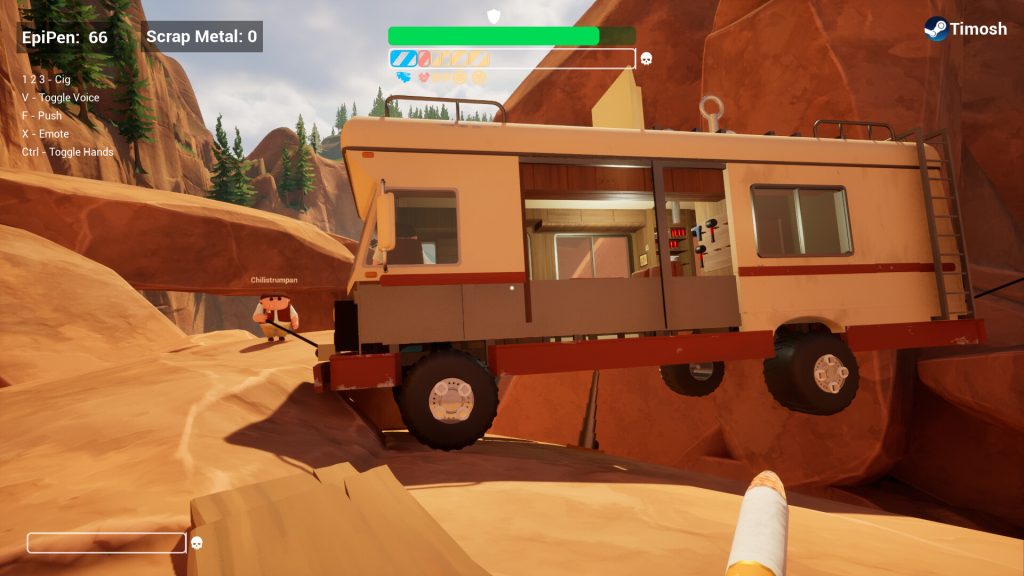
At its heart, RV There Yet? treats the RV itself as the primary play space. Unlike travel games that emphasize movement through vast environments, this game compresses experience into a confined, repeatable interior.
This design choice reframes progression. You are not advancing toward a destination so much as living inside a process. Meals must be prepared. Spaces must be maintained. Needs recur. Nothing is solved permanently.
The RV becomes both shelter and constraint. It protects the characters from the outside world while amplifying interpersonal dynamics within. The game’s philosophy is clear: closeness creates meaning, but also tension.
2. Confinement as a Narrative Tool
Confinement in RV There Yet? is not punitive—it is expressive. The limited space forces routines to overlap. Tasks interfere with each other. Privacy is scarce.
This scarcity shapes narrative tone. Conversations feel intimate because distance is impossible. Small irritations gain weight because they cannot be avoided. Moments of harmony feel earned because cooperation is constant.
By refusing to offer spatial escape, the game directs attention to emotional negotiation. Progress is measured not in miles traveled, but in how well characters coexist.
3. Daily Systems: Repetition With Variation
The core gameplay loop of RV There Yet? revolves around daily tasks: cooking, cleaning, organizing, maintaining systems, and managing energy.
On paper, these systems are simple. In practice, their repetition reveals subtle variation. Time pressure, resource availability, mood, and fatigue alter outcomes.
This repetition is intentional. The game is not about optimization—it is about rhythm. Players learn the cadence of shared life, anticipating friction points and moments of calm.
Rather than escalating difficulty, the game deepens familiarity.
4. Time Pressure Without Urgency
Time in RV There Yet? moves forward steadily, but rarely aggressively. There are deadlines, but they are soft. Consequences are gradual rather than catastrophic.
This creates a unique emotional texture. Players feel responsible without feeling rushed. Mistakes accumulate quietly rather than explosively.
The absence of sharp failure states allows players to reflect rather than react. The game trusts players to care about outcomes without threatening punishment.
5. Resource Management as Domestic Negotiation
Resources in RV There Yet?—food, water, space, energy—are limited but not scarce. The challenge is not survival, but balance.
Every choice has relational implications. Cooking something efficient may disappoint someone. Saving space may reduce comfort. Conserving energy may delay progress.
This turns resource management into a form of communication. The game subtly asks: whose needs matter right now? And why?
There is no objectively correct answer—only trade-offs.
6. Character Presence Over Character Stats
Characters in RV There Yet? are not defined by numbers or skills. They are defined by habits, preferences, and emotional states.
They react to repetition. They respond to care—or neglect. Over time, patterns emerge. Someone becomes irritable when tired. Someone needs quiet. Someone values routine.
This design resists gamification of relationships. You cannot “solve” a character. You can only pay attention.
7. Environmental Storytelling Through Wear
The RV itself evolves subtly over time. Objects move. Surfaces wear. Clutter accumulates or disappears depending on player behavior.
This environmental feedback functions as narrative memory. The space remembers what you did, even when characters do not comment explicitly.
The RV becomes a diary written in objects rather than words. Players read their own history through arrangement and condition.
Few games treat space with this kind of quiet continuity.

8. Player Psychology: Comfort, Friction, and Care
RV There Yet? engages a very specific player psychology. It appeals to those who find meaning in maintenance, not conquest.
Comfort is not given—it is maintained. Friction is not dramatic—it is persistent. Care is not rewarded instantly—it compounds.
Players who approach the game expecting progression spikes may feel restless. Players who enjoy subtle feedback loops often find it deeply absorbing.
The game does not entertain loudly. It accompanies.
9. Limitations of Scope and Intentional Narrowness
RV There Yet? is unapologetically narrow. There are no branching skill trees, no emergent combat, no high-stakes climaxes.
This focus is both its strength and its limitation. The game depends heavily on player willingness to engage emotionally with small systems.
Without curiosity about routine and relationship, the experience can feel uneventful. The game does not escalate to meet impatience.
It asks players to meet it where it is.
10. RV There Yet? as a Reflection on Shared Life
Ultimately, RV There Yet? is not about travel. It is about coexistence. The road is a metaphor for time passing while relationships persist.
The game captures something rare: the drama of ordinary life. Not the moments we remember most vividly, but the ones we live through every day.
It suggests that meaning is not found at destinations, but in how we manage space, time, and each other along the way.

Pros
Thoughtful use of confinement as a design strength
Strong focus on routine, rhythm, and domestic realism
Subtle environmental storytelling
Low-pressure pacing encourages reflection
Unique emotional tone within the cozy genre
Cons
Limited mechanical variety
Narrow appeal for action-oriented players
Relies heavily on player emotional engagement
Minimal traditional progression systems
Can feel slow for those expecting constant novelty
Conclusion: A Game About Staying, Not Arriving
RV There Yet? succeeds because it understands that shared journeys are not defined by landmarks, but by how people adapt to each other over time. It transforms a small, constrained space into a stage for care, compromise, and quiet tension.
For players who value atmosphere, routine, and the emotional texture of everyday life, RV There Yet? offers something uncommon: a game that does not rush you forward, but invites you to stay present.
It is not about asking how far you’ve gone.
It is about asking how well you’ve lived together along the way.