

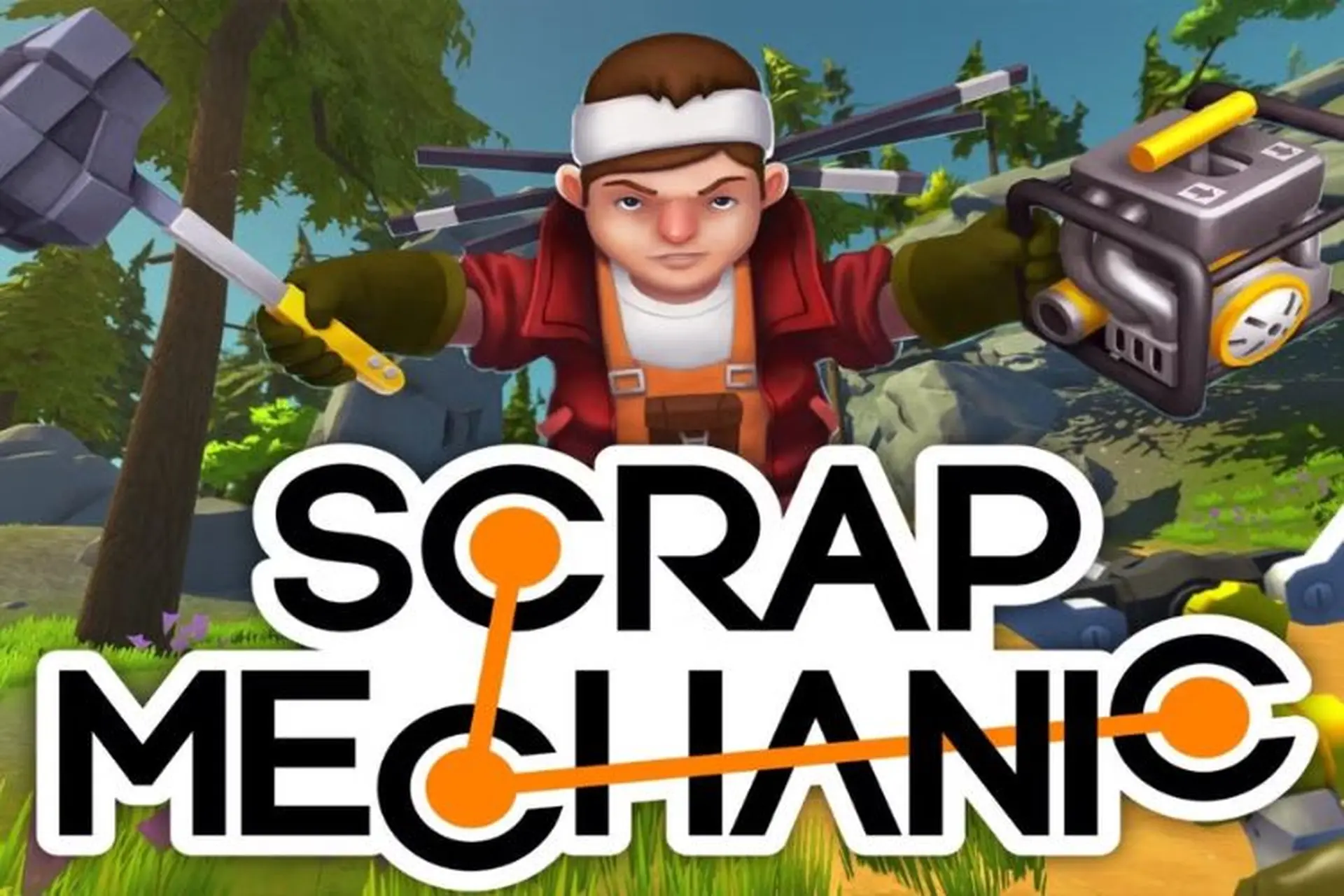
Scrap Mechanic – Creative Engineering, Emergent Problem-Solving, and the Joy of Making Things Work

Introduction: When Play Becomes Construction
Scrap Mechanic is not about winning in the traditional sense. It is about building something that functions, watching it fail, and then rebuilding it better. At its core, Scrap Mechanic is a sandbox engineering game that turns curiosity into progression and failure into instruction. There are no strict solutions, no optimal blueprints enforced by the game—only systems that react honestly to what the player creates.
Rather than presenting challenges as puzzles with fixed answers, Scrap Mechanic frames play as experimentation. Vehicles flip. Machines jam. Logic circuits misfire. And in those moments, the game reveals its true purpose: teaching players how systems interact through direct consequence. This review examines Scrap Mechanic as a creative sandbox focused on player agency, mechanical intuition, and the deep satisfaction of solving problems with self-made tools.
Quick Info (Overview Box)
Release Year: 2016 (Early Access), Survival Mode later expanded
Genre: Sandbox / Engineering / Survival
Platforms: PC
Game Modes: Creative Mode, Survival Mode, Multiplayer co-op
Target Audience: Players who enjoy building systems, mechanical experimentation, creative problem-solving, and open-ended gameplay
1. Core Design Philosophy: Freedom With Consequences
The defining philosophy of Scrap Mechanic is freedom without safety nets. The game gives players a robust set of parts—bearings, pistons, engines, logic gates—but rarely tells them how to use them.
There are no invisible constraints preventing bad designs. If a vehicle tips over, it stays tipped. If a suspension collapses, it collapses because of physics, not scripted failure.
This honesty creates trust. Players learn that when something breaks, it broke for a reason they can understand—and fix.
2. Building as Thinking
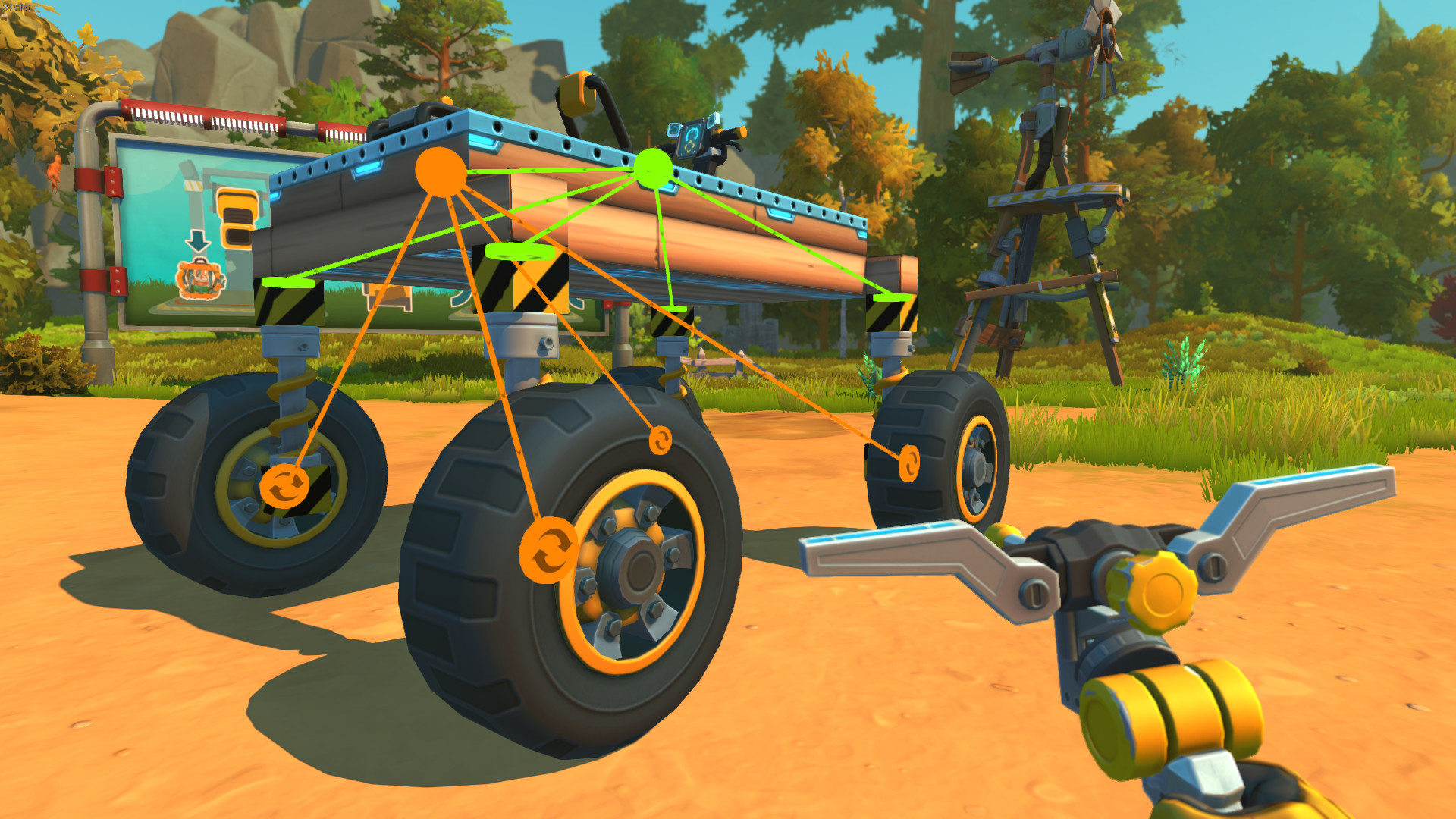
Building in Scrap Mechanic is not a cosmetic activity—it is cognitive. Every part placement implies a decision about force, balance, and timing.
Players quickly discover that aesthetics are secondary to function. A beautiful vehicle that cannot turn or stop is a liability. Over time, players internalize principles like weight distribution, center of gravity, and torque—without the game ever teaching them formally.
Scrap Mechanic turns engineering concepts into intuition rather than instruction.
3. Physics: Predictable, but Unforgiving
The physics system in Scrap Mechanic is consistent and readable. Wheels grip or slip. Bearings rotate as expected. Pistons extend and retract with force.
This predictability is crucial. It allows players to form mental models of how creations will behave. At the same time, the system is unforgiving—small design errors can cause dramatic failures.
The joy comes from refinement. Each iteration moves closer to stability, not because stats improve, but because understanding deepens.

4. Creative Mode: A Pure Sandbox
Creative Mode is Scrap Mechanic at its most expressive. Unlimited parts, no resource constraints, and complete freedom allow players to experiment wildly.
This mode encourages invention over survival. Players build flying machines, walkers, automated factories, and absurd contraptions that exist purely to test ideas.
Creative Mode is not about efficiency—it is about curiosity. It functions as a digital workshop where imagination is the only limiting factor.
5. Survival Mode: Engineering Under Pressure
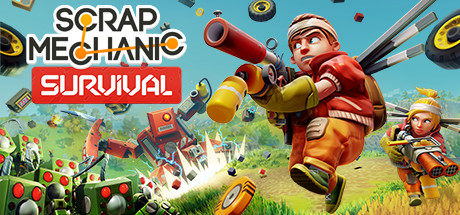
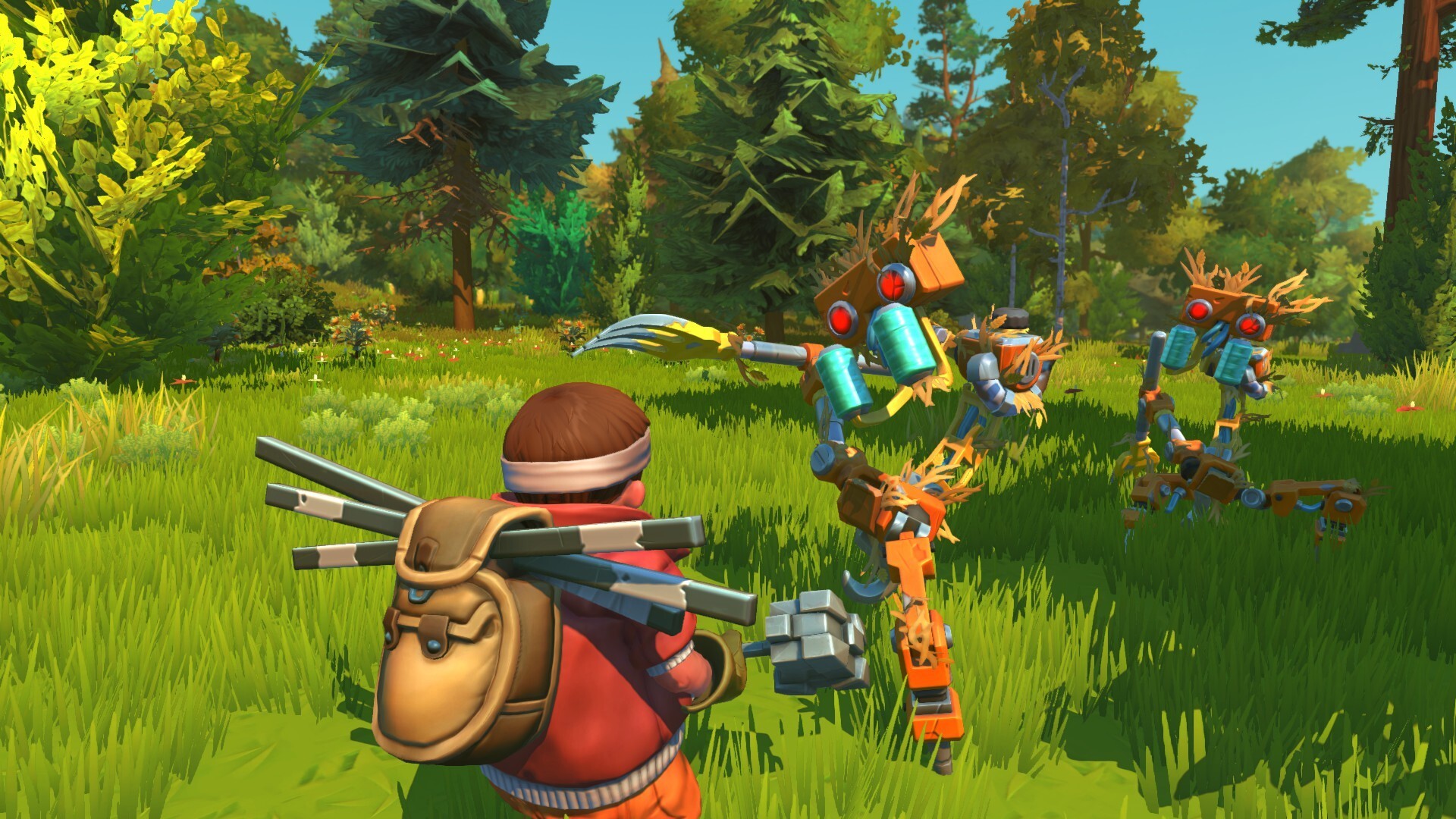
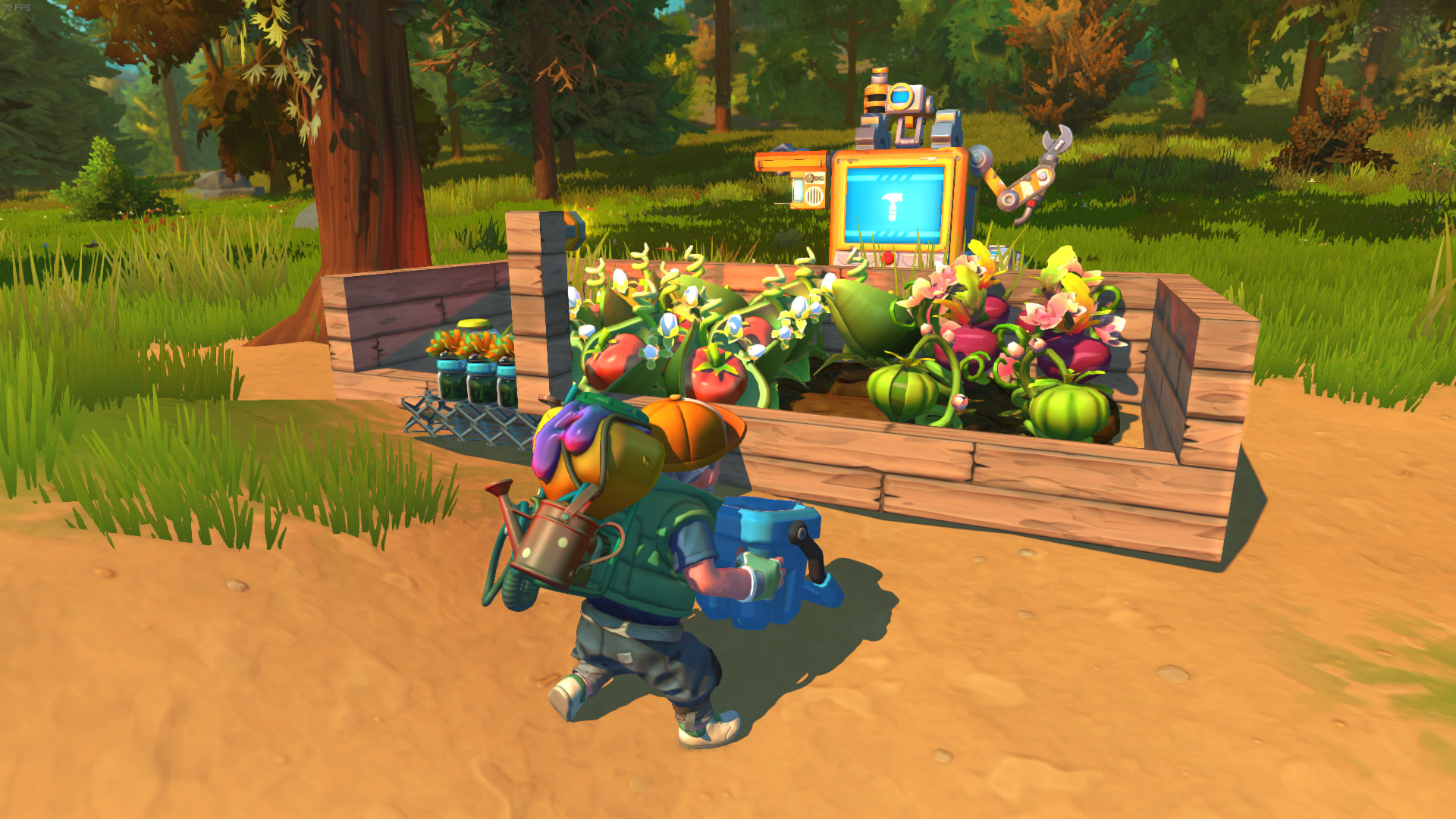
Survival Mode reframes Scrap Mechanic’s systems through scarcity. Resources must be gathered. Farming must be protected. Machines must justify their cost.
This introduces meaningful constraints. Over-engineering becomes wasteful. Simplicity gains value. Players learn to design with purpose rather than excess.
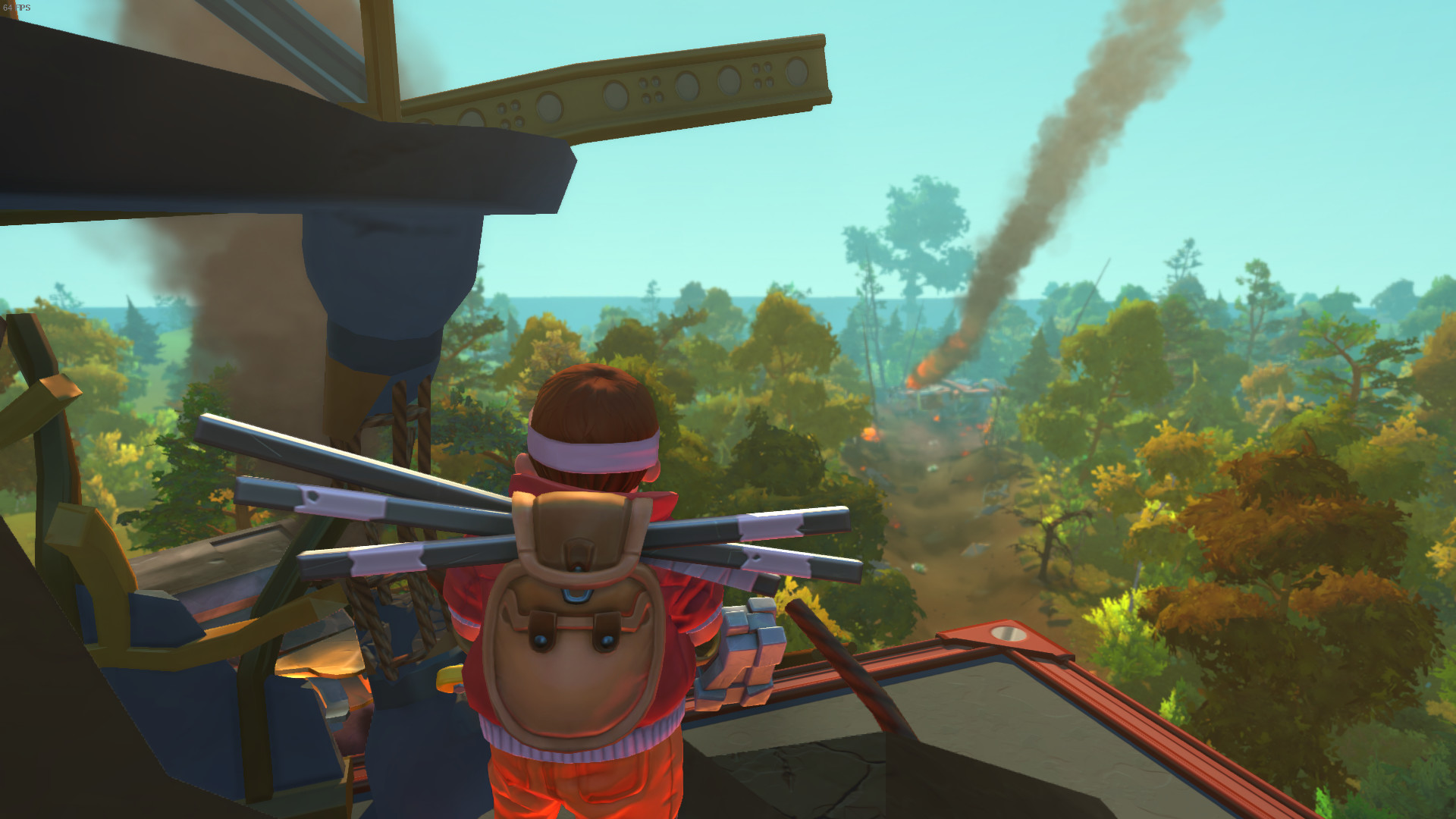
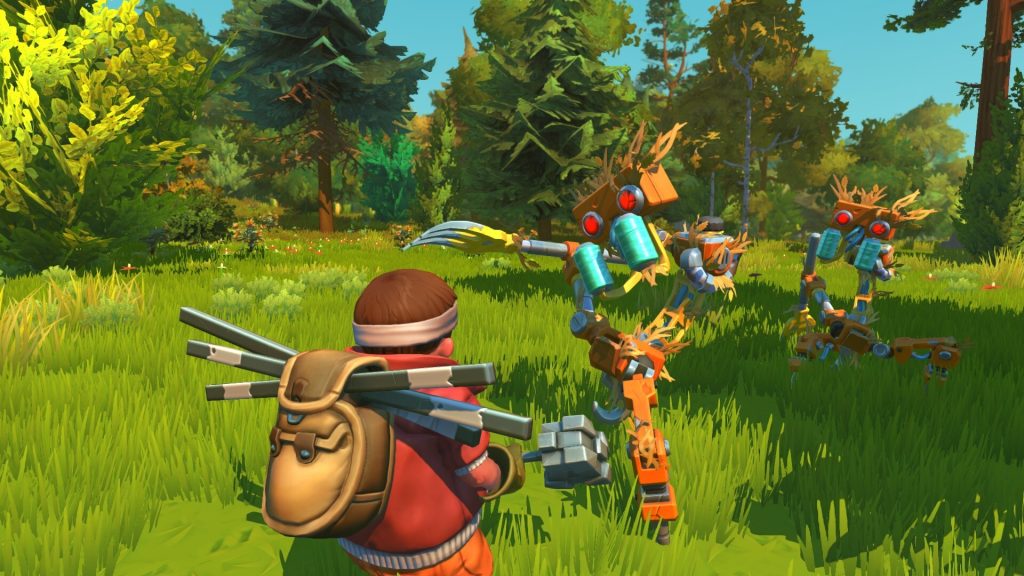
The presence of hostile robots adds urgency, but combat remains secondary. The true challenge is sustaining infrastructure under threat.
6. Automation and Logic: Systems Thinking
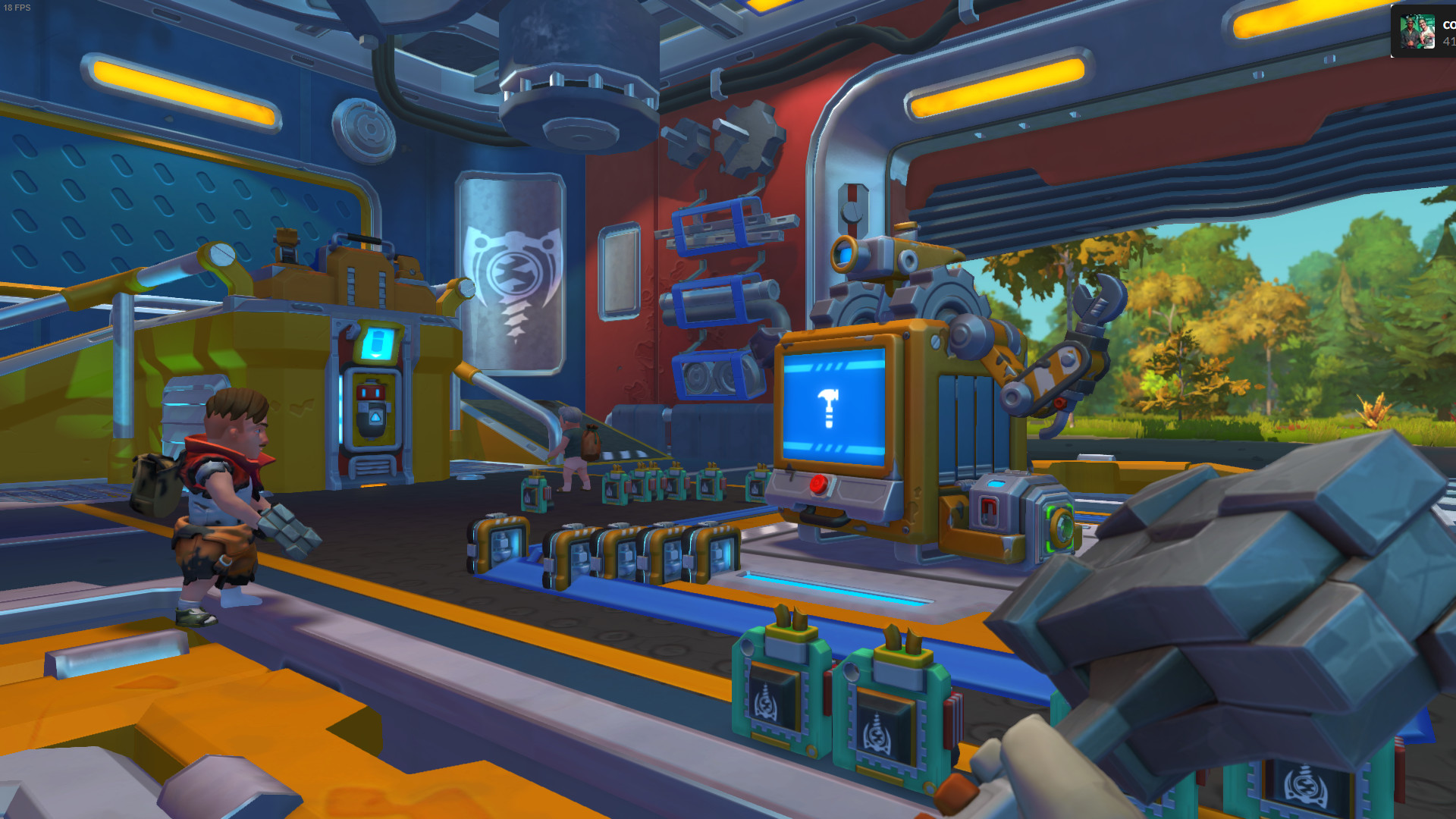
One of Scrap Mechanic’s deepest layers is its logic system. Sensors, switches, timers, and logic gates allow players to automate behaviors.
This transforms gameplay from mechanical building to systems design. Players begin thinking in flows and conditions: If this happens, then that responds.
Automation creates a sense of mastery not through dominance, but through elegance. A well-designed system feels satisfying because it removes friction.
7. Multiplayer: Shared Creativity
In multiplayer, Scrap Mechanic becomes collaborative engineering. Players divide tasks, share ideas, and troubleshoot together.
Failures become communal learning moments. Success feels shared. There is little incentive for competition; cooperation enhances creativity.
This makes Scrap Mechanic an excellent social sandbox. It supports conversation, experimentation, and collective problem-solving rather than performance.
8. Learning Curve and Player Growth
Scrap Mechanic’s learning curve is unconventional. Early progress is slow and often frustrating. Creations fail spectacularly.
But the game does not punish failure harshly. Instead, it encourages iteration. Over time, players gain confidence—not through unlocks, but through competence.
Growth feels internal rather than numerical. You know you are improving because things work.
9. Limitations and Early Access Reality
As an Early Access title, Scrap Mechanic has limitations. Content updates are slow. Some systems feel underdeveloped. Survival Mode lacks narrative depth.
However, the core sandbox is strong enough to sustain engagement. Players often create their own goals, challenges, and projects.
The game’s value lies less in content volume and more in systemic depth.
10. What Scrap Mechanic Ultimately Offers
Scrap Mechanic offers something increasingly rare: a space where creativity is not optimized, ranked, or monetized. It exists to let players think with their hands.
It does not rush. It does not guide excessively. It trusts players to be curious—and rewards them when curiosity turns into understanding.
This makes Scrap Mechanic less of a game to complete and more of a tool to explore.
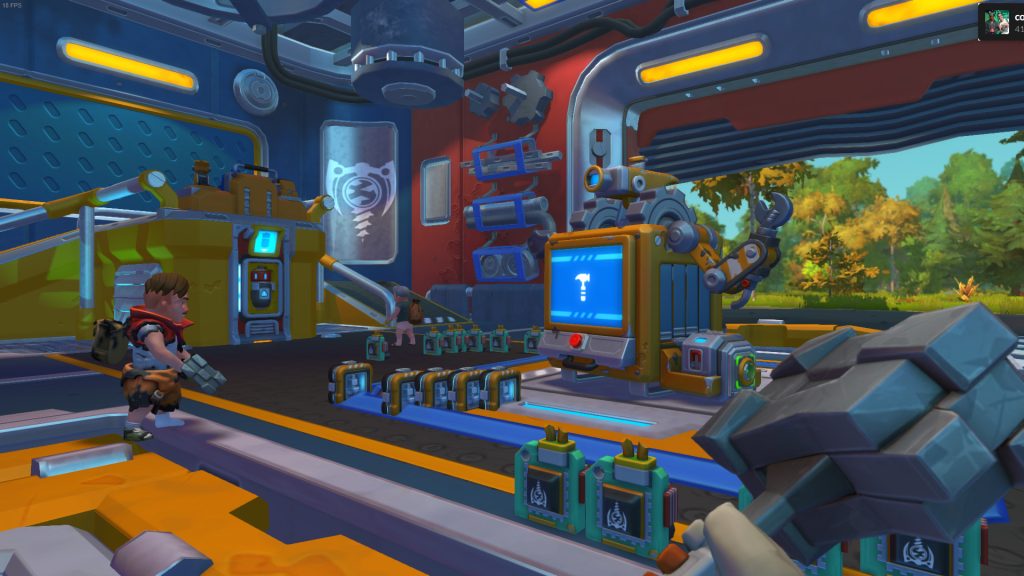
Pros
Deep, flexible building and physics systems
Encourages genuine problem-solving and creativity
Creative and Survival modes support different playstyles
Strong sense of learning through iteration
Excellent cooperative sandbox experience
Cons
Steep initial learning curve
Limited guidance for new players
Survival Mode lacks narrative structure
Slow update cadence
Can feel aimless without self-directed goals
Conclusion: The Satisfaction of Making It Work
Scrap Mechanic succeeds because it respects the player’s intelligence. It does not simplify systems to avoid failure—it embraces failure as the path to mastery.
For players who enjoy experimentation, engineering, and the quiet thrill of watching a machine finally behave as intended, Scrap Mechanic offers an endlessly rewarding sandbox. It is not about building the best thing.
It is about building something,
watching it fail,
and understanding why.